One Week in Qatar: The Complete Itinerary
Is one week enough to see all of Qatar?
Yes. Seven days covers Doha's museums and souq, Lusail, a night near the Inland Sea, Al Wakrah, the north-Qatar coast and Al Zubarah, and the west including Zekreet and Al Shahaniya, at a comfortable pace with a rental car for everything outside the dunes.
Qatar is small enough that a week lets you slow down rather than rush: city days mixed with desert nights, a coastal detour north and a rugged run west, with a rental car handling every paved road and a professional 4x4 driver taking over only where the tarmac ends.
How this week fits together
This plan spends the opening days in Doha itself, moves out to Lusail and the coast, spends a night in the desert near Khor Al Adaid, then dedicates full days to north Qatar and west Qatar before a final relaxed day back in the capital. It assumes a rental car (withCar) for every leg except the sand tracks around Sealine and the Inland Sea, which need an experienced 4x4 driver rather than a rental saloon.
Sequence at a glance:
| Day | Focus | Car needed |
|---|---|---|
| 1 | Doha orientation, Corniche, Souq Waqif | Optional, metro works |
| 2 | Museum of Islamic Art, National Museum of Qatar | Optional |
| 3 | Lusail and The Pearl | Yes |
| 4 | Sealine to overnight desert camp | 4x4 with driver |
| 5 | Inland Sea, then Al Wakrah on the way back | 4x4, then own car |
| 6 | North Qatar: Al Khor, Al Thakira mangroves, Al Zubarah | Yes |
| 7 | West Qatar: Zekreet, then Al Shahaniya camel track | Yes |
Day 1: Doha orientation, the Corniche and Souq Waqif
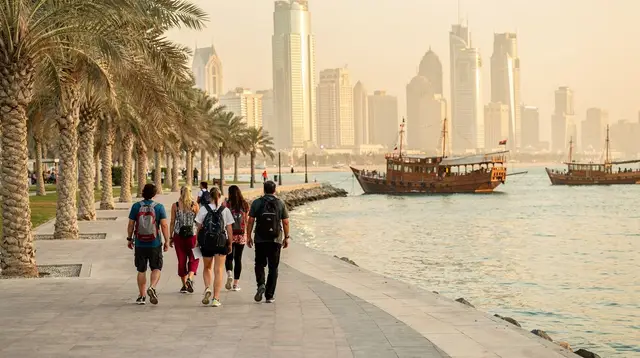
Start in central Doha to get your bearings before venturing further afield. Walk or cycle a stretch of the Corniche, Doha’s curving waterfront promenade, where traditional wooden dhows moor and the West Bay skyline forms the backdrop. Late morning is a good time for this, before the heat builds.
In the afternoon, head to Souq Waqif, the city’s restored traditional market. It was rebuilt on the footprint of the old souq in the 2000s, and it genuinely comes alive in the late afternoon and evening, so pace your visit accordingly — many stalls are shuttered in the early afternoon. Browse the spice alleys and the Falcon Souq, where working falconers and a falcon hospital sit side by side with shops.
For an easy overview of the neighborhoods you’ll be exploring this week, a guided introduction such as the Discover Doha Souq Pearl Katara Lusail tour, bookable via a combined city tour covering the souq, The Pearl, Katara and Lusail, is a useful primer if you’d rather not self-drive on day one.
In the evening, book a sunset dhow cruise from the Corniche: an hour or so around Doha Bay with the West Bay towers lit up behind you. See our dhow cruise guide for how these trips typically run.
Day 2: The Museum of Islamic Art and the National Museum of Qatar
Doha’s two landmark museums deserve a full day between them. Start with the Museum of Islamic Art, designed by I. M. Pei and opened in 2008, set on its own island just off the Corniche with the surrounding MIA Park. Give yourself two to three hours for the collection, then more time outside in the park if the weather allows.
In the afternoon, move to the National Museum of Qatar, designed by Jean Nouvel and opened in 2019. Its disc-shaped architecture, inspired by the desert rose mineral formation, is built around the preserved palace of Sheikh Abdullah bin Jassim. Both museums are ticketed and both close one day a week, so check current opening hours before you go. For a deeper look at either building, the Museum of Islamic Art visit guide and National Museum of Qatar visit guide cover practical details.
Round off the day at Msheireb Downtown, the rebuilt heritage quarter with its four Msheireb Museums housed in restored historic buildings, an easy walk in the cooler evening air.
Day 3: Lusail and The Pearl
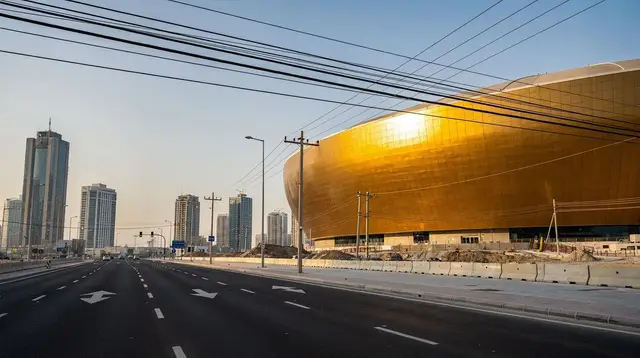
Pick up your rental car today, since Lusail and The Pearl sit north of central Doha and are more comfortably covered by road than on foot. Lusail is Qatar’s newest planned city, home to Lusail Stadium — the venue of the 2022 World Cup final — along with the Lusail Marina and the Place Vendôme shopping and entertainment complex. If stadium tours are running when you visit, they’re a good way to see the interior; check current availability. A dedicated look at the city is on a half-day tour through Lusail’s marina, stadium precinct and Place Vendôme, useful if you’d rather have a driver handle the newer road network.
In the afternoon, drive to The Pearl-Qatar, the artificial island of marinas, waterfront promenades and cafés, then finish at Katara Cultural Village for its beach and its cluster of cultural venues, restaurants and public art. For more on stitching these three areas together, see our Lusail marina and Place Vendôme and Katara Cultural Village evening guide.
Day 4: South to Sealine and an overnight desert camp
This is the day the car changes hands. Drive yourself south past Al Wakrah toward Mesaieed and the dunes of Sealine, roughly an hour from Doha, where desert safari operators are based. From here on, dune driving is not something to attempt in a rental saloon car — hand over to an experienced 4x4 driver for the sand.
The afternoon is given over to dune bashing, sandboarding and, if you want it, quad biking, before settling into an overnight desert camp for the night. See our overnight desert camp guide and dune bashing: what to expect for what these camps and drives are actually like. A structured full-day option that builds in the overnight stay is a full-day desert safari from Doha covering dune bashing, sandboarding and an overnight camp.
Day 5: The Inland Sea, then back via Al Wakrah
Wake early for a sunrise view over the dunes before heading further to Khor Al Adaid, the Inland Sea — a tidal inlet where the desert meets the Gulf directly on the Saudi border. It’s reachable only by 4x4 across the sand, never by ordinary car, bus or metro, which is exactly why it’s paired with the overnight camp rather than a standalone day trip. A guided option built specifically around this is a sunrise desert safari that includes the drive out to the Inland Sea.
Once your 4x4 driver returns you to Sealine and you’re back behind the wheel of your own rental car, stop in Al Wakrah on the drive back to Doha. Its restored souq, roughly 15–20 km south of the capital, is smaller and quieter than Souq Waqif and makes a relaxed late-afternoon stop; see the Al Wakrah souq and beach guide. Spend the evening back in Doha recovering from two days in the heat.
Day 6: North Qatar — Al Khor, the mangroves and Al Zubarah
Today is a full day north, self-driven. First stop is Al Khor, a coastal town roughly 50 km north of Doha, followed by the grey mangroves of Al Thakira and Purple Island (Jazirat Bin Ghanim), best explored by kayak if you have time and calm conditions; see the Al Thakira mangrove kayaking guide.
Continue northwest to Al Zubarah, roughly 100 km from Doha, a walled 18th-century pearling town and its later fort — Qatar’s only UNESCO World Heritage Site, inscribed in 2013. The fort holds a small exhibition and the excavated town lies beside it; budget a good hour or more here. This whole loop is a long day, so an early start matters more than on any other day this week. If you’d prefer not to navigate the northern roads yourself, a guided day tour combining northern Qatar’s heritage sites with the Sheikh Faisal Museum covers similar ground with a driver. For more structure, see the north Qatar tour: Al Zubarah and Al Khor guide.
Day 7: West Qatar — Zekreet and Al Shahaniya
Your last full day heads west, again self-driven, though the final approach tracks near Zekreet call for a 4x4. Drive to Zekreet, roughly 80–90 km from Doha near Dukhan, to see the abandoned “Film City” set — a mock Arab village built for filming, not a working studio — and the wind-carved mushroom rock formations nearby. Richard Serra’s four steel plates, East-West/West-East, stand in the Brouq Nature Reserve close by; details are in the Zekreet Film City and mushroom rocks tour guide.
On the way back toward Doha, stop at Al Shahaniya, roughly 40 km west of the capital, home to Qatar’s main camel racetrack, where robot jockeys ride and owners follow alongside in SUVs. Camel racing runs in the cooler months, but race days and times vary, so check locally before driving out — this itinerary cannot state a fixed schedule. Nearby, the Sheikh Faisal Bin Qassim Al Thani Museum is worth combining with the racetrack visit, covered by a private tour of the Al Shahaniya camel track and Bedouin heritage sites if you’d rather have a guide explain the racing culture. See Al Shahaniya camel racing and camel racing season and etiquette for more.
Spend your last evening back in Doha, perhaps returning to the Corniche or Souq Waqif for a final dinner before departure.
Planning notes for a week in Qatar
Car versus driver. A rental car covers every day of this itinerary except the sand sections at Sealine and the Inland Sea, where a proper 4x4 with an experienced driver is not optional — dune bashing in a rental saloon car is a genuine safety risk, not just an inconvenience.
Heat and timing. Outdoor days, especially the desert overnight and the north and west loops, are far more comfortable roughly November to March. In the hot season (roughly May to September), shift outdoor stops to early morning or evening and lean on the museums and indoor attractions in the middle of the day.
Distances stay short. Nothing in this itinerary is more than about two hours’ drive from Doha, which is what makes a one-week loop of the whole country realistic rather than rushed.
Camel racing is seasonal and unscheduled here on purpose. This guide will not invent a date, a season window or a price for race days — check locally once you’re in Doha or with your tour operator before building day 7 around it.
FAQ about a one-week Qatar itinerary
Is one week enough to see all of Qatar?
Yes. Qatar’s small size means a week comfortably covers Doha’s city sights and museums, an overnight desert experience near the Inland Sea, a full day in the north to Al Zubarah, and a full day in the west to Zekreet and Al Shahaniya, without feeling rushed.
Do I need a 4x4 for this whole week?
No. A standard rental car is fine for Doha, Lusail, The Pearl, Al Wakrah, the north-Qatar loop and the west-Qatar loop. Only the dune sections around Sealine and the Inland Sea require a 4x4 with an experienced driver.
Can I do the Inland Sea as a day trip instead of an overnight stay?
Yes, some operators run it as a long day trip, but combining it with an overnight desert camp is the more common way to experience it, since the drive out is long and the camp lets you see both sunset and sunrise over the dunes.
When is the best time of year for this itinerary?
Roughly November to March, when daytime temperatures are warm rather than extreme and evenings are pleasant. The hot season, roughly May to September, makes the outdoor desert and mangrove days considerably harder.
Will camel racing definitely be happening during my week?
Not necessarily. Camel racing at Al Shahaniya runs in the cooler months, but specific race days and times vary and are not fixed far in advance, so check locally before planning day 7 around it.
Do I need a car to visit Souq Waqif and the museums?
No. Central Doha, including Souq Waqif and both major museums, is walkable or reachable by the Doha Metro. A car becomes useful from day 3 onward, once the itinerary moves to Lusail, the desert, the north and the west.
Is it safe to drive yourself around Qatar for a week?
Yes, roads are generally in good condition and driving is on the right. The real risks are heat, dehydration and off-road driving — stick to paved roads in your rental car and leave the sand tracks to a professional 4x4 driver.
tours.7 days
Verified deep-linked GetYourGuide tours. Book through these links and we earn a small commission at no cost to you.
GetYourGuide does not provide a product photo for this activity — the image shows the meeting point, photographed by us.