Qanat Quartier, the marinas and life on the water
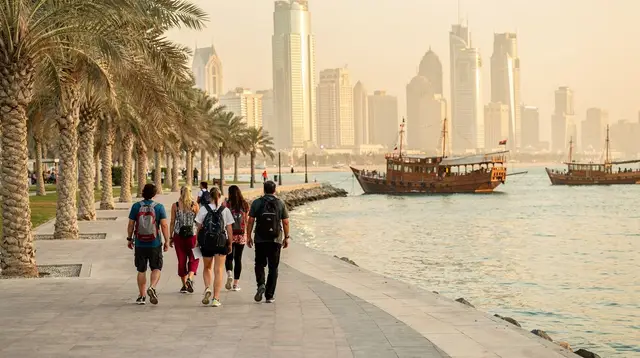
The Pearl-Qatar is a man-made island jutting into the Gulf immediately north of West Bay, reached across a short causeway and built around a network of marinas and canals rather than a single headline attraction. There is no ancient site here and no museum to tick off: the point of visiting is the setting itself — rows of yachts moored along the water, apartment towers rising behind them, and a waterfront lined with cafés, restaurants and boutiques that stays busy well into the evening. It reads less like a Gulf landmark and more like a slice of Mediterranean marina life transplanted onto reclaimed land off the coast of Doha.
The best-known corner of the island is Qanat Quartier, a residential district wrapped around a narrow canal and built in a colourful, Venetian-influenced style, with pastel façades, arched windows and small bridges crossing the water. It has become one of the most photographed spots in the city, particularly in the late afternoon when the light is soft and the canal-side cafés fill up. Walking the full loop of Qanat Quartier takes perhaps thirty to forty-five minutes at an easy pace, longer if you stop for coffee or photographs along the way.
Beyond Qanat Quartier, the island is organised into several marina precincts, each with its own concentration of restaurants, waterfront walkways and yacht berths. The overall feel shifts from quarter to quarter — some sections lean towards fine dining and designer boutiques, others towards casual cafés and family-run restaurants — but the pedestrian promenades link them together, so it is easy to wander from one atmosphere to the next without needing a car once you have arrived.
What visitors actually do at The Pearl-Qatar
Almost everything a visitor does here falls into three categories: walking, eating and photographing the boats. There is no ticketed sight, so the typical visit is unstructured by design.
Strolling the promenades. The marina walkways are flat, well lit at night and largely free of traffic, which makes them pleasant for an unhurried walk regardless of the time of day, though the heat of a Gulf afternoon in summer makes an evening visit far more comfortable than a midday one.
Café-hopping and dining. The island has one of the densest concentrations of restaurants and cafés in Doha, ranging from casual coffee shops in Qanat Quartier to higher-end restaurants along the main marina fronts, many with outdoor seating that looks directly onto the moored yachts. This is generally regarded as one of the better dinner destinations in the city, alongside Souq Waqif and the hotels of West Bay, though at a noticeably higher price point than either.
Boutique shopping. Retail here is smaller-scale and more design-focused than the large malls elsewhere in the city — independent boutiques, jewellery shops and homeware stores rather than international department stores — so it suits browsing more than a dedicated shopping trip.
Boat departures. Several of the marinas host yacht charter companies, and it is possible to arrange a private boat trip or short cruise directly from the island, in addition to the more established dhow cruises that leave from the Doha Corniche. A charter from The Pearl-Qatar tends to explore the coastline around the island and West Bay rather than the Corniche itself, so the two experiences are complementary rather than interchangeable.
Photography. Between the canal houses of Qanat Quartier, the yacht-lined marinas and the West Bay skyline visible across the water, the island is one of the more reliable spots in Doha for evening photographs, particularly around sunset when the towers catch the last light.
If you are weighing up a longer, guided way to see the island alongside the rest of the city’s landmarks, a half-day tour taking in Msheireb, West Bay, Lusail and The Pearl-Qatar covers the ground with a driver and guide, which removes the need to arrange transport between each stop yourself.
Getting to The Pearl-Qatar
The single most important practical point about The Pearl-Qatar is that it has no direct metro station. The Doha Metro’s Red, Green and Gold lines serve central Doha, the airport and the mainland districts, but the island itself sits beyond the network’s current reach. In practice this means visitors get there by:
| Option | Approximate time from central Doha | Notes |
|---|---|---|
| Taxi or ride-hailing app (Uber, Careem, Karwa) | 20–30 minutes | The simplest option for most visitors; fares are metered or fixed in-app |
| Rental car | 20–30 minutes | Useful if combining with other car-dependent sights the same day |
| Private tour transport | Varies | Included as part of a guided city tour that stops at the island |
| On foot from West Bay | Not realistic | The causeway crossing is built for vehicles, not pedestrians |
Traffic on the approach roads through West Bay can add to the journey time during the evening rush, so building in a little slack is worth it if you have a dinner reservation. Once you are on the island, walking is the only way to move between the marina precincts — there is no internal shuttle — though the distances involved are manageable on foot within any single quarter.
For visitors who prefer not to arrange transport themselves, the Doha city tour guide covers combined itineraries that typically pair The Pearl-Qatar with West Bay and Lusail, and the taxis and ride-hailing guide explains how fares and apps work in more detail. If your first stop in the city is the airport, the airport transfer guide is the relevant starting point, since the drive from Hamad International Airport to The Pearl-Qatar runs through much the same corridor as the drive to West Bay.
Dining, evenings and how it compares to Katara
The Pearl-Qatar sits at the upper end of Doha’s dining scene. Restaurant prices here generally run higher than at Souq Waqif or the standalone restaurants scattered through the mainland, reflecting the marina-front locations rather than any entry cost — the island itself is open and free to walk around. Reservations are worth making for the more established restaurants on a Thursday or Friday evening, when both residents and visitors turn the marina fronts into one of the busier dinner scenes in the city.
Evenings are, in general, the better time to visit. The island’s own light installations, the reflections of the towers on the water and the cooler air after sunset all suit the marina setting far more than the flat daylight of midday, and outdoor seating is genuinely comfortable rather than merely tolerable once the sun goes down — a point that matters for most of the year in a hot desert climate.
The Pearl-Qatar is frequently paired with Katara Cultural Village, which sits on the mainland just south of the bridge onto the island. The two are close enough to combine in a single outing: some visitors walk between them, others take a short taxi ride, and it is common to spend the earlier part of an evening at Katara’s cultural sites and beach before crossing over to The Pearl-Qatar for dinner and a walk along the marina.
A dedicated look at that pairing, along with suggested timings, is in the Pearl and Katara tour guide, and a bookable version of the same combination is available as the full-day city tour that also takes in Education City.
If you are trying to decide where to spend your time among Doha’s waterfront districts, the comparison of West Bay, Souq Waqif and The Pearl-Qatar sets out how each one suits a different kind of stay, and the Katara Cultural Village evening guide goes into more detail on that neighbouring district specifically.
Where The Pearl-Qatar fits into a wider Doha trip
For a first-time visitor working through Doha’s main sights — Souq Waqif, the Corniche, Msheireb and the museums — The Pearl-Qatar is best treated as an evening addition rather than a full day’s plan on its own. It slots naturally after a day spent elsewhere in the city, since its main appeal (walking, eating, photographing the marina) comes into its own once the temperature drops and the lights come on.
Visitors basing their itinerary around a short stay might combine it with Lusail to the north, since both are modern, marina-and-tower districts built in the last two decades and often appear together on the same half-day tour, including the one above covering Msheireb, West Bay, Lusail and The Pearl-Qatar. Those planning a broader look at Doha’s contemporary districts, as opposed to its historic core, may also find the Lusail Marina and Place Vendôme guide and the Msheireb Downtown walking guide useful points of comparison, since all three represent different generations of Doha’s post-2000s building boom.
For a broader sense of how much time to set aside across the whole city, the Doha for first-timers guide and the two-day Doha luxury weekend itinerary both build The Pearl-Qatar into a wider schedule rather than treating it in isolation. Travellers weighing up when to come at all should also check the best time to visit Doha guide, since the island’s outdoor terraces are considerably more comfortable in the cooler months than during the peak of summer.
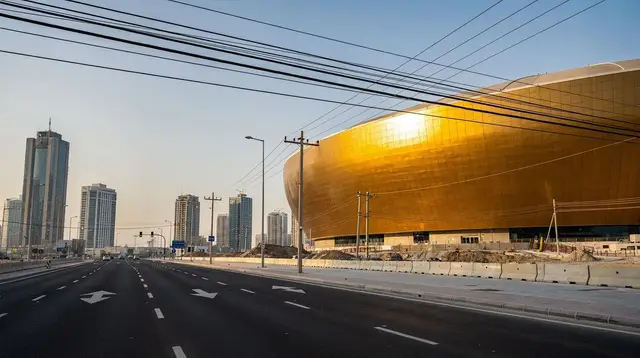
Visitors who prefer a fuller overview of Doha’s skyline and districts before deciding how to spend an evening may also want the wider city sightseeing tour covering Doha’s key landmarks, which typically includes a stop at or near The Pearl-Qatar alongside the Corniche and West Bay. And for those interested in the country’s newer sporting landmarks nearby, the stadium photography tour built around Qatar’s 2022 World Cup legacy venues is a different, but complementary, way to see the modern side of the city.
Frequently asked questions about The Pearl-Qatar
What is The Pearl-Qatar?
It is an artificial island built out into the Gulf just north of West Bay, developed as a residential and leisure district around a series of marinas and canals, with apartment towers, waterfront promenades, cafés, restaurants and boutiques.
Is The Pearl-Qatar worth visiting if I am not staying there?
Yes, for a few hours. Most visitors come for an evening walk along the marina, a meal, and photographs of the yachts and towers rather than for a specific sight, since the appeal is the setting itself.
How do I get to The Pearl-Qatar from central Doha?
The Doha Metro does not reach the island directly, so the practical options are a taxi, a ride-hailing app such as Uber or Careem, or a rental car; the drive from West Bay or the Corniche takes roughly twenty to thirty minutes depending on traffic.
What is Qanat Quartier?
Qanat Quartier is the most photographed corner of The Pearl-Qatar, a residential quarter built around a small canal with brightly painted, Venetian-influenced façades, cafés at ground level and a walkway along the water.
Can you take a boat trip from The Pearl-Qatar?
Yes, the marinas host yacht charter operators and some dhow and boat excursions departing directly from the island, in addition to the more traditional dhow cruises that leave from the Doha Corniche.
Is The Pearl-Qatar good for families?
It works well for a relaxed family evening of walking and eating, since the promenades are flat, stroller-friendly and traffic-free in the pedestrian sections, though it has no dedicated children’s attractions of its own.
Should I combine The Pearl-Qatar with Katara Cultural Village?
Many visitors do, since Katara sits on the mainland immediately south of the bridge to The Pearl-Qatar, making it easy to walk or take a short taxi ride between the two in the same outing.
Do prices at The Pearl-Qatar reflect its upmarket reputation?
Dining and retail at The Pearl-Qatar generally sit at the higher end of Doha’s price range compared with Souq Waqif or the malls of West Bay, reflecting the marina-front real estate rather than any entry fee, since the island itself is free and open to walk around.