Qatar's Cool Season: What Opens Up Outdoors, Roughly November to March
What can you do outdoors in Qatar during the cool season?
Roughly November to March, mild conditions make desert safaris, dune bashing, mangrove kayaking, camel racing, beach time and long neighbourhood walks comfortable across most of the day, not just at dawn and dusk. This is also Qatar's busiest tourism window, so outdoor tours, desert camps and popular time slots fill up well ahead.
Why the cool months change what’s possible in Qatar
Qatar’s outdoor life is shaped by its climate more than by any calendar of events. For a stretch of the year, roughly November through March, the outdoor day widens: activities that would otherwise be squeezed into the early morning or the evening become workable across long stretches of daylight. That single fact reorganises how a Doha trip gets planned, which is why this guide focuses on what becomes possible rather than on specific numbers. For exact monthly conditions, month-by-month notes and how to weigh them against your own travel dates, see Best Time to Visit Doha — this page deliberately stays qualitative.
What follows is organised by activity type: desert, water and kayaking, camels and horses, and walking the city itself. Each section explains why the season matters for that particular activity, not just that it does.
The desert opens up
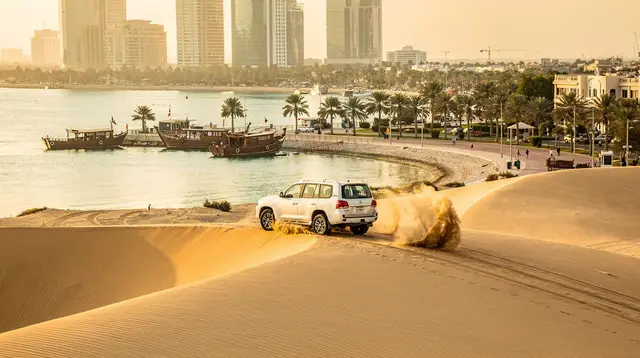
Qatar’s desert experiences, desert safaris out of Sealine, dune bashing, sandboarding, quad biking and the long run out to the Inland Sea at Khor Al Adaid, are physical, exposed activities that unfold over several hours with no shade beyond the vehicle.
Outside the cool months, operators compress these trips toward the start or end of the day, when the desert is at its most bearable, and midday options largely disappear. During the cool season, that constraint eases. Full-day itineraries become realistic, midday dune bashing stops feeling punishing, and a single tour can combine dune driving, a stop at the Inland Sea, sandboarding and a barbecue dinner without needing to route around the hottest hours.
This is also when overnight desert camps make the most sense. Spending a night in the dunes near the Inland Sea, watching the light change over the sand at both ends of the day, only works comfortably when the overnight hours themselves are pleasant rather than merely tolerable. See Doha Desert Safari Guide: Which Format to Choose for how the different formats (sunset, sunrise, overnight, private) compare, and Overnight Desert Camp in Qatar: What a Night in the Dunes Is Really Like for what an overnight stay actually involves.
A practical note that applies in every season, but matters more when operators are running fuller schedules: the Inland Sea is reachable only by 4x4 across open sand, never by ordinary car, bus or metro, and dune driving should always be with an experienced local driver in a proper vehicle. Booking through an established operator, rather than freelancing a route, is not a cool-season-specific rule, but it becomes more relevant when demand is high and standards vary more between operators.
The route south also passes through a gentler introduction to the desert coast before the dunes themselves begin. Al Wakrah, a fishing town with a restored souq, sits closer to Doha than Sealine or the Inland Sea, and its waterfront and market lanes are far more comfortable to walk during the cool months, whether as a standalone stop or a short detour on the way further south toward Mesaieed and the dune fields. It’s a useful way to break up a longer desert day without adding much driving time, since it sits well before the turn-off toward the sand itself.
The cool season also changes what an evening in the desert looks like. Once the sun is down, temperatures drop further and staying out after dark stops being a discomfort to plan around. That makes a dedicated night departure, rather than only a sunset stop on the way back, a realistic option in a way it generally isn’t for the rest of the year.
a guided night desert safari built around the dunes after dark, under a clear moonlit sky is worth considering specifically for this window, when a full evening outdoors, rather than a rushed sunset stop, is comfortable.
a combined desert safari covering dune bashing, sandboarding and quad biking is the most common way to pack the classic Sealine experience into a single outing, and it runs comfortably across a full afternoon during these months.
For travellers who want the Inland Sea itself as the centrepiece rather than one stop among several, a guided Inland Sea tour that bundles the drive out with the main desert activities is built around that longer, unhurried format the season allows.
West Qatar benefits in the same way. The routes out to Zekreet, the abandoned Film City set, the wind-carved mushroom rocks, and Richard Serra’s East-West/West-East sculpture in the Brouq Nature Reserve involve walking across open, unshaded ground with no built shelter nearby. A private West Qatar tour that lingers at each stop for photography, rather than rushing between them, is far more enjoyable when the outdoor stretches themselves are comfortable.
a private tour through Zekreet’s mushroom rocks and the Serra sculpture installation suits travellers who want to set their own pace at each stop rather than follow a fixed group schedule.
Photographers in particular gain from the wider window: soft, workable light extends further into the morning and starts earlier in the afternoon, so a shoot among the dunes doesn’t have to be squeezed into the last twenty minutes before sunset.
a desert photography session built around the dunes and sand formations is worth booking specifically in this window, when there is more usable light to work with.
Kayaking the mangroves and Purple Island
North of Doha, the grey mangroves at Al Thakira and the channels around Purple Island (Jazirat Bin Ghanim) are explored by kayak, paddling low, narrow waterways between the mangrove stands. This is a shaded, water-based activity, so it is less punishing in warmer months than the open desert, but the cool season still makes a meaningful difference: longer paddling sessions, more comfortable time spent stopped for photos or narration, and less urgency to finish before conditions turn uncomfortable.
Tide timing matters here in every season; the channels are only navigable at certain points in the tidal cycle, which is why Mangrove Kayaking in Qatar: Tides and Timing Explained is worth checking regardless of when you go. What the cool season adds is flexibility around when in the day that tide window falls, since paddling at midday is no longer something to avoid on principle.
Because the mangroves and Purple Island both sit within the same stretch of coast north of Doha, and share the same tidal constraint, several operators build the two into a single itinerary rather than treating them as separate outings. That approach also tends to suit the cool season well: with more of the day comfortable outdoors, there’s less pressure to rush the paddling portion to make room for the drive home before conditions turn.
a guided kayaking route through the Al Thakira mangrove channels is the standard way to see the mangroves, paddling rather than viewing them from a boardwalk.
Purple Island adds a cultural layer to the same outing: the site carries archaeological and pearling-era history alongside its ecology, and a guided visit typically covers both.
a Purple Island tour combining the eco-kayaking route with the site’s cultural history works well as a half-day extension to a north-Qatar itinerary that also takes in Al Zubarah and Al Khor; see Combining Mangrove Kayaking with Al Zubarah and Al Khor for how that combination is usually structured.
Camel racing and life on the track
Camel racing at Al Shahaniya, Qatar’s main racetrack, with robot jockeys and owners following alongside in SUVs, runs specifically in the cooler months. This isn’t a matter of visitor comfort so much as conditions for the animals and for a track built with no shelter; racing simply isn’t scheduled outside this window. That makes Al Shahaniya one of the few Qatar attractions where the cool season isn’t just more pleasant, it’s the only time the activity exists at all.
Race days and start times vary through the season, so this is one attraction where checking a current schedule before driving out roughly 40 km west of Doha genuinely matters, rather than being a routine caution. See Camel Racing Season and Etiquette: A Visitor’s Guide for how race mornings typically run and how to watch respectfully from the sidelines.
Horse riding and falconry experiences around Doha are less strictly seasonal than camel racing, but they share the same underlying logic: sessions held outdoors, on sand or open ground, are simply more comfortable to extend when the season allows it. See Horse Riding in Qatar: Desert and Coastal Rides and Falconry Experiences in Doha: Shows, Glove Holds and the Falcon Souq for what each involves.
Walking Doha’s neighbourhoods properly
It’s easy to treat Doha as a city you drive between air-conditioned stops in, but several of its best areas are built for walking, and the cool season is when that intention actually works as designed. The 7 km Corniche waterfront promenade, where the traditional wooden dhows moor, is meant to be walked start to finish, not sampled from a car window.
Souq Waqif, with its Falcon Souq and narrow lanes, rewards slow wandering in the late afternoon and evening when stalls are open and busy. The rebuilt heritage quarter of Msheireb Downtown, with its four Msheireb Museums, is a genuinely walkable district in a way much of car-oriented Doha isn’t; see Msheireb Downtown Walking Guide for a route through it.
Katara Cultural Village combines cultural sites with its own beach, and is worth an unhurried evening walk followed by time on the sand; see Katara Cultural Village in the Evening: Beach, Culture and Dinner for how that evening typically unfolds. Further north, Lusail, the new city built around Lusail Stadium, the Marina and Place Vendôme, is best appreciated on foot along the waterfront rather than from a passing car; see Lusail Marina and Place Vendôme: A Visitor’s Guide.
For visitors building a full day around walking rather than driving between sights, Guided Walking Tours of Doha: Souq Waqif, Msheireb and the Corniche lays out several self-guided and guided routes that make the most sense in this season.
Beaches and time on the water
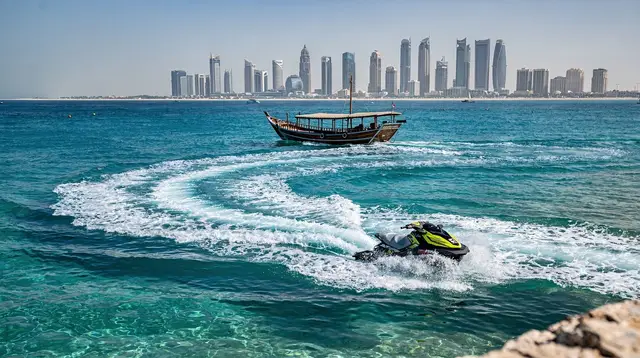
Doha’s licensed beaches, along the Pearl-Qatar, Katara and various hotel stretches, operate year-round, but extended time on the sand, rather than a brief dip, is one of the more visibly seasonal outdoor activities. The same applies to jet skiing, parasailing and casual fishing trips out of Doha’s marinas: all are available across the year, but sessions stretch longer and feel less like an errand between air-conditioned breaks during the cool months. See Doha Beaches Guide: Katara, Hotel Beaches and Al Wakrah for which stretches suit swimming, which suit watching the dhows, and which are quieter.
For a broader sense of what to prioritise if outdoor time is the main goal of a trip, see doha-cool-season-guide, which covers the season as a whole rather than activity by activity.
Why this is also Qatar’s busiest booking window
The same conditions that open up the desert, the mangroves, the racetrack and the walking districts also draw the largest number of travellers to Doha at once. That has a direct practical consequence: this is the period when desert safari departures, Inland Sea tours, kayaking slots and popular sunset time windows are most likely to sell out, especially for smaller-group or private formats. Hotels, desert camps and evening dhow cruises follow the same pattern.
The practical takeaway is straightforward: if a cool-season trip is on the calendar, book the activities that depend most on time-of-day, sunset dhow cruises, sunrise desert safaris, popular kayak slots, well ahead rather than on arrival. Flexible, less time-sensitive activities, such as museum visits or souq wandering, can reasonably be left to firm up once in Doha. See doha-trip-planning-checklist and how-to-book-tours-in-doha for a fuller planning sequence.
The same demand pattern applies to activities that combine several of the season’s strengths into one outing. A single day that pairs dune bashing and sandboarding near Sealine with the drive out to the Inland Sea, for instance, draws on the same limited pool of vehicles, drivers and preferred morning departure times as the standalone versions of each, so it fills at the same pace, if not faster.
a combined desert safari covering dunes, camels, sandboarding and the Inland Sea illustrates the kind of multi-activity format that only really works as a relaxed, unhurried day when the season allows it, which is exactly why its preferred time slots move first.
For a full day built specifically around this season’s strengths, combining city sights in the morning with a north-Qatar run to Al Zubarah and Al Khor, a full-day tour pairing Doha’s city sights with north Qatar’s coastal and heritage stops is one way to make efficient use of a single well-timed day, and this style of longer, multi-stop itinerary is exactly the format the cool season makes practical.
Qatar’s cool-season activities: quick answers
When exactly is Qatar’s cool season?
It runs roughly from November to March, though the edges shift a little year to year. For specific month-by-month conditions, see best-time-to-visit-doha rather than relying on a fixed date range.
Is the cool season the only time to visit Doha?
No. Doha’s indoor attractions, museums and malls operate year-round. The cool season specifically widens what is comfortable outdoors for extended periods, which is why it concentrates demand for desert, kayak and walking activities.
Do I need to book desert safaris and kayak tours in advance during this period?
Yes, well in advance for popular slots. This is Qatar’s peak outdoor season, and operators running Sealine desert trips, Inland Sea routes and Al Thakira kayak tours fill their preferred morning and sunset departures first.
Can you still do desert safaris outside the cool season?
Yes, safaris run year-round, but the cool season is when the format is comfortable across a longer stretch of the day rather than concentrated at the edges of daylight.
Is camel racing only a cool-season activity?
Camel racing at Al Shahaniya is scheduled in the cooler months, tied to conditions for the animals and the outdoor track rather than to tourist demand alone. Race days and times vary, so check before driving out.
Are Doha’s outdoor neighbourhoods better explored on foot during this period?
Yes. Areas built for walking, such as the Corniche, Souq Waqif, Msheireb Downtown and Katara, are far more comfortable to cover on foot for extended stretches, rather than in short bursts between air-conditioned stops.
Does the cool season affect Doha’s beaches and water activities?
It makes daytime beach time and water activities more comfortable for longer sessions, though Doha’s licensed beaches and pools operate throughout the year.
Seasonal Guide
Verified deep-linked GetYourGuide tours. Book through these links and we earn a small commission at no cost to you.
GetYourGuide does not provide a product photo for this activity — the image shows the meeting point, photographed by us.