Horse Riding in Qatar: Desert and Coastal Rides
Is horse riding available in Qatar for tourists?
Yes. Several operators near Doha offer guided horse rides through desert dunes or along the coast, usually as a fixed-length session with a guide rather than an open trail ride. Sessions are typically scheduled for early morning or late afternoon to avoid the midday heat, and most are suitable for beginners as well as experienced riders.
Riding in the Qatari Desert: What to Expect
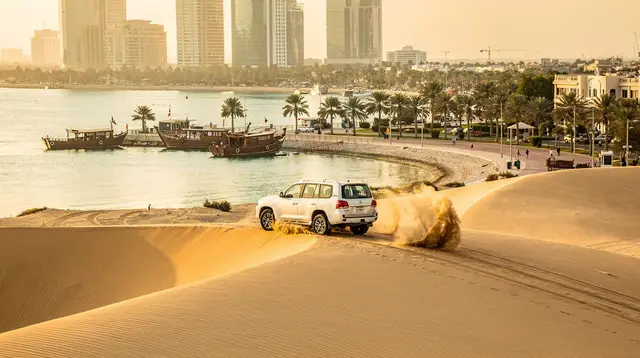
Qatar’s flat, sandy interior turns out to be well suited to horse riding, and a handful of stables and tour operators working out of Doha now offer guided sessions through the dunes south and west of the city, or along stretches of coastline. It is a quieter, slower alternative to a dune-bashing safari: instead of a 4x4 throwing up sand at speed, you are on a horse, moving at a walk or a gentle trot, with time to actually look at the landscape. For visitors who want a desert experience without the jolting ride of dune bashing, or who simply like horses, it is one of the more relaxed ways to spend an hour or two outside Doha.
This guide covers what a booked ride typically involves, the rider levels operators plan for, what to wear, and why timing matters so much in a desert climate. It does not promise a specific breed of horse, a specific beach, or a specific duration, because these details vary by operator and by the exact tour you book. Always check the listing for the ride you are considering rather than assuming details from a different provider or a different country.
Where the rides happen
Most horse riding aimed at visitors is based either inland, in the dune country around Sealine and Al Shahaniya, or along accessible stretches of Qatar’s coast. Sealine, roughly an hour south of Doha near the industrial port of Mesaieed, is the country’s main hub for desert-based activities in general, including dune bashing, sandboarding and quad biking, and some horse riding operators work from the same general area. Al Shahaniya, west of Doha, is best known for its camel racetrack, but the wider area also has stables and horses used for tourism.
Coastal rides, where offered, tend to run along quieter beach sections rather than in central Doha, since the working parts of the Corniche and the city beaches are not set up for horses. If a specific beach matters to you — for a photograph, for instance — check the tour listing directly. Do not assume a named beach unless the operator states it, since the same general activity can be based at different locations depending on the season and the operator’s own arrangements.
A few tours combine riding with another desert activity on the same outing, most commonly sandboarding, so that a single booking covers two forms of activity in one session. If you are short on time in Doha, a combined booking can be a practical way to fit more into one desert excursion.
What breed of horse will I ride
Qatar has a genuine tradition of Arabian horse breeding, and it is a fair question whether a tourist ride involves a purebred Arabian. In practice, the honest answer is: it depends on the operator, and often it does not. Many horses used for day-to-day tourist rides are chosen for calm temperament, tolerance of heat, and suitability for riders of mixed experience, which does not always mean a purebred Arabian. Some stables do keep Arabians and may use them for photography-focused experiences or higher-end bookings, but this should be stated by the operator, not assumed from the country’s reputation.
If riding a specific breed matters to you, message the operator before booking and ask directly. Treat any generic marketing image of a sweeping white Arabian stallion with some caution unless the specific tour description backs it up — the horse you are actually paired with on the day may look quite different, and that does not make it a lesser experience.
Rider levels and what a session actually involves
Operators generally plan sessions around visitors with little or no riding background, since that describes most tourists booking a one-off activity. Expect:
| Rider level | What to expect |
|---|---|
| First-time rider | Walking pace, horse often led or closely guided by a handler, short introduction to mounting and basic control |
| Some experience | Walk and possibly trot, more independent control, still usually within a guided group |
| Experienced rider | Faster paces sometimes available on request; not guaranteed by every operator, so ask before booking |
Group sizes, the ratio of handlers to riders, and how much independent control you are given all vary by operator. If you have ridden before and want more than a slow walk, say so at the time of booking rather than assuming it will be offered automatically — many sessions are deliberately kept gentle because most participants are first-timers.
Children are often welcome, sometimes led on a lead rein by a handler or riding alongside a parent, but minimum ages and any weight limits differ between operators. Confirm this directly if you are booking for a family, rather than assuming a blanket policy across all Qatar-based operators.
Why rides run early morning or late afternoon
Qatar has a hot desert climate, and the ground and air heat up fast once the sun climbs. Outdoor activity in the middle of the day, especially anything involving physical exertion for an animal as well as a rider, becomes genuinely uncomfortable and can be a health risk during the warmer months, which run roughly from May to September. For this reason, horse riding sessions — like most outdoor desert activities in Qatar — are almost always scheduled for early morning or the couple of hours before and after sunset.
Late-afternoon sessions have the added appeal of softer light for photographs and cooler temperatures for both horse and rider as the sun drops. Early-morning sessions offer calmer conditions and, in the desert, a good chance of seeing the dunes before the heat haze sets in. Outside the hottest months — roughly November through March is Qatar’s best season for any outdoor activity — timing is more flexible, though most operators keep the same early or late slots as standard practice rather than adjusting seasonally.
If you are visiting during summer, do not expect a midday booking to be available, and be wary of any operator willing to run one — that is a sign of poor animal welfare practice as much as visitor discomfort.
What to wear and bring
A modest, practical outfit works for both riding and Qatar’s general dress expectations:
- Long trousers, to prevent chafing against the saddle and stirrup leathers.
- Closed-toe shoes with at least a small heel; flip-flops or sandals are unsafe in stirrups and most operators will not let you ride in them.
- A top that covers the shoulders, in line with the modest dress generally expected in public places in Qatar.
- A hat or cap and sunglasses for daytime sessions; sun exposure is a real factor even in the gentler light of early morning or late afternoon.
- Sunscreen, applied before you arrive.
- A bottle of water, since desert locations are not always close to a shop.
Most operators provide a riding helmet as standard equipment, and you should wear it even if you have ridden before. If you plan to bring a camera or phone for photographs, check whether the operator allows this while mounted, since some prefer photos to be taken from the ground for safety reasons.
Booking a ride from Doha
Several tours bookable from Doha include horse riding, either as the main activity or paired with another desert experience. A dedicated desert ride can be arranged with a guided horse riding excursion into the desert from Doha, which is built specifically around riding time rather than folding it into a longer itinerary.
For a similar dune-based session with pickup handled directly from the city, a Doha-based desert horse riding experience covers much the same ground with its own group setup and timing.
If you would rather combine riding with another activity in one outing, a guided horseback ride paired with sandboarding lets you split a single desert trip between two activities, which suits visitors trying to cover more ground in a short Doha stay.
Riders who care more about the visual result than the length of time in the saddle might prefer a desert photography session built around horses and the dune landscape, aimed at getting strong images rather than maximising riding time.
As with any desert booking, check the meeting point, included transport, and stated duration on the specific listing before you pay — these details differ between otherwise similar-sounding tours.
Horse riding compared with other desert activities
Qatar’s desert activity scene mostly centres on dune bashing, sandboarding, quad biking and camel riding, alongside horse riding. They are not interchangeable:
| Activity | Pace | Physical demand | Best suited to |
|---|---|---|---|
| Horse riding | Slow to moderate | Low to moderate | Visitors who want a calmer, scenic desert experience |
| Camel riding | Slow | Low | Short novelty rides, often paired with a safari stop |
| Dune bashing | Fast | Low physically, jarring | Visitors wanting an adrenaline-focused 4x4 experience |
| Sandboarding | Short bursts | Moderate | Visitors wanting an active, hands-on dune activity |
| Quad biking | Moderate to fast | Moderate | Visitors comfortable driving themselves |
If you are unsure which activity suits you, a horse riding session is a reasonable choice for anyone put off by the speed of dune bashing or the jolting motion of a 4x4 on soft sand, while still delivering time out in genuine desert terrain.
Safety and practical notes
Horse riding in Qatar is generally a low-risk activity compared with dune bashing or driving in the Inland Sea, but a few practical points matter. Tell your guide about any back or joint issues before mounting, since even a gentle walking pace can be uncomfortable for some riders over an extended session. Stay hydrated before and after the ride rather than only during it, since the desert heat affects riders even when the activity itself is not strenuous. Follow the handler’s instructions around approaching, mounting and dismounting the horse, and do not attempt to speed up or change direction independently unless you have been told it is appropriate for your level.
If you are combining horse riding with a longer day out in the desert — for instance on a wider south-Qatar itinerary that also covers dune bashing or a run to the Inland Sea — pace yourself and the group’s schedule so that the riding portion does not fall in the hottest part of the day, even if other parts of the trip do.
Planning the rest of your desert day
A horse riding session rarely fills a whole day on its own, so most visitors pair it with other stops nearby or on the way back to Doha. The dunes and desert camps around Sealine sit close to several other activities worth combining into one trip; further detail on the wider area, including dune bashing and sandboarding options, is covered in the main Doha desert safari guide. If riding is the only activity you want and you would rather skip the faster-paced options, it is worth reading through general desert safari safety tips for Qatar before you go, since the heat and hydration guidance applies to riding as much as to dune bashing.
For a broader look at what to wear across desert activities generally, not just riding, see the guide on what to wear and bring on a desert safari. If you want to compare riding with the country’s other animal-based experiences, both camel riding in Qatar and Al Shahaniya camel racing cover related activities in the same general area, while a falconry experience in Doha covers a different but comparably traditional activity closer to the city.
Anyone building a full day out west of Doha, where Al Shahaniya sits, can read more about the wider area in the Al Shahaniya destination page, and the Sealine dune area is covered in the Sealine destination page. A ready-made one-day plan that includes desert time is laid out in the one-day desert safari and Inland Sea itinerary, which can be adapted to swap in a horse riding session instead of, or alongside, dune bashing.
Timing your visit around the cooler months makes any desert activity, including riding, considerably more comfortable; see the best time to visit Doha guide for a season-by-season breakdown, and if you are travelling in summer regardless, the Doha summer survival guide has practical heat-management advice that applies directly to a summer riding booking.
General dress expectations, relevant to what you wear on a ride, are covered in the Doha dress code guide. For visitors specifically targeting the cooler season for outdoor activities, the Doha cool season guide is worth reading alongside this page. A wider list of horse, camel and falconry activities across the country sits on the horses, camels and falconry category page.
Horse Riding in Qatar: Frequently Asked Practical Questions
Do I need previous riding experience?
No. Most operators near Doha run guided sessions at a walk or gentle pace suitable for first-time riders, with an experienced handler leading or accompanying each horse. If you have more experience and want a faster pace, say so when booking, since not every operator can accommodate cantering or trotting on every ride.
Will I ride a purebred Arabian horse?
Not necessarily. Some stables in Qatar do keep Arabian horses, but many working horses used for tourist rides are mixed breeds chosen for temperament and stamina in the heat. Do not assume a breed unless the specific listing states it, and ask directly before booking if this matters to you.
Why are rides scheduled so early or so late in the day?
Qatar’s desert surface heats up quickly once the sun is high, and both horses and riders tolerate exertion far better before roughly 9am or after about 4pm, especially outside the cooler winter months. Midday rides are rarely offered for this reason, and any operator proposing one in summer should be treated with caution.
What should I wear for a horse riding session?
Closed-toe shoes with a small heel are safest, along with long trousers to protect against saddle chafing, and a top that covers the shoulders in line with general modest-dress expectations in Qatar. A hat and sunglasses help during daylight sessions, and operators normally provide a riding helmet.
Is the ride on a beach or in the desert?
It depends entirely on the operator and the specific tour listed. Some rides take place on inland dune terrain near Sealine or Al Shahaniya, others run along a stretch of coastline; a few combine both. Check the listing’s location details rather than assuming a beach ride, since not every provider offers one.
How long does a typical ride last?
Session lengths vary by operator, from short introductory rides of well under an hour to longer combined desert experiences that pair riding with other activities such as sandboarding. Always check the duration stated on the specific tour you are booking rather than assuming a standard length.
Can children ride?
Many operators accept children, often with a minimum age or a requirement that a child ride alongside an adult or a handler, but policies differ. Confirm the minimum age and any weight limits directly with the operator or through the tour listing before booking for a family.
Is horse riding safe for someone unused to desert heat?
It can be, provided the timing and hydration guidance are followed. Ride during the cooler parts of the day, drink water before and after, wear sun protection, and tell the guide about any medical conditions. Riding is generally a lower-intensity activity than dune bashing or quad biking, but heat exposure is still the main risk.
Camel Rides, Horse Riding and Falconry
Verified deep-linked GetYourGuide tours. Book through these links and we earn a small commission at no cost to you.
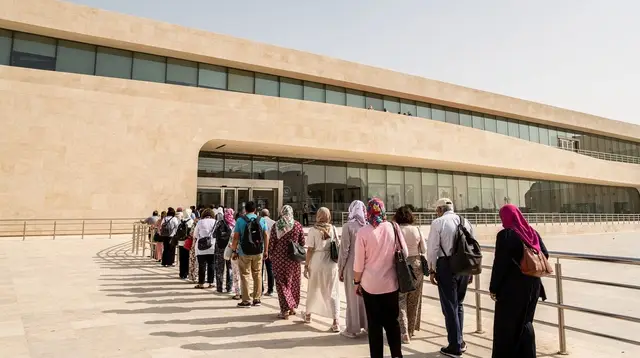
GetYourGuide does not provide a product photo for this activity — the image shows the meeting point, photographed by us.