Doha for Seniors and Low-Effort Sightseeing
Can seniors or travellers with limited mobility enjoy Doha without a lot of walking?
Yes. Doha's main sights sit close together and are well served by private cars, air-conditioned museums and a sunset dhow cruise, so a full day can be built around short walks with plenty of shade and rest. The main adjustment is timing: heat is the real limiting factor, not distance.
Seeing Doha at a comfortable pace
Doha rewards a slower visit as well as a fast one. The city’s main landmarks sit close together along or near the Corniche, most of them are modern, air-conditioned buildings with lifts and seating, and a private car or taxi can take you from door to door without stairs or long walks. For seniors and for anyone travelling with limited mobility, joint pain, reduced stamina or a heart or breathing condition that makes heat or exertion risky, the question is less “can I see Doha” and more “in what order, and at what time of day.” This guide sets out a version of the city built around short outings, plenty of shade and air conditioning, and evenings that make the most of Doha’s best light and coolest hours.
None of this means ruling activities out. A desert safari with dune bashing is genuinely physical and involves being jolted around in a 4x4, so it will not suit everyone, but it is not something to dismiss purely because of age. The right approach is to judge each activity against your own tolerance for heat, motion and rough ground, and to pick accordingly. The rest of this page lays out what is genuinely easy, what needs more care, and how to build a day that fits.
Base yourself somewhere central
Where you stay affects how much effort the trip takes. A hotel in or near West Bay or along the Corniche puts you within a short drive of Souq Waqif, the Museum of Islamic Art and the dhow jetties, which cuts down on transfer time and means you can return to your room to rest between outings rather than pushing through a long day. The Pearl is another comfortable, walkable base, with flat promenades and cafés at ground level. Wherever you stay, ask the hotel to arrange a car with a driver for the day rather than relying on walk-up taxis; it is a small cost that removes a lot of friction.
A private car does most of the work
The single most useful decision for a low-effort visit is to use a private car for the day rather than the metro, walking, or a mix of ride-hailing apps. A car with a driver goes directly to each entrance, waits while you visit, and moves on to the next stop without you needing to navigate stations, cross roads in the heat, or carry bags between transfers. It also means you set the pace: linger at a museum, cut a stop short if you are tired, or ask to sit somewhere shaded for twenty minutes without holding anyone up.
a private guided day covering West Bay, the Corniche, Souq Waqif and the main museums by car is built exactly around this idea: short stops at each landmark with a car waiting between them, rather than a long walking circuit. A similar option, a private sightseeing tour of Doha’s main attractions, covers comparable ground with a driver-guide, and both can usually be adjusted on request to spend more time at the stops that interest you and less at the ones that do not.
The Doha Metro is a genuine alternative if you would rather move independently: it is modern, clean, air-conditioned, and its stations have lifts rather than stairs-only access. It suits a traveller who is happy to walk short distances between a platform and a street exit. A private car simply removes more of that walking, which is the point for a slower or more limited day.
Museums: the easiest and coolest part of the day
The two big museums are the natural core of a low-effort Doha itinerary, because both are large, modern, climate-controlled buildings designed for visitors to move through at their own pace, with lifts, benches and café seating throughout.
The Museum of Islamic Art, designed by I. M. Pei, sits on its own island just off the Corniche, with a flat approach from the car park and a waterfront park around it if you want a short, level stroll afterwards rather than more walking indoors. The National Museum of Qatar, designed by Jean Nouvel around the old palace of Sheikh Abdullah bin Jassim, is larger and its desert-rose form means longer corridors between galleries, so it suits a visit of an hour or two rather than trying to see the whole building in one pass.
Both close one day a week, so check current hours before you go. Full detail on each is in our Museum of Islamic Art visit guide and National Museum of Qatar visit guide, and a direct comparison of the two is in Museum of Islamic Art vs National Museum.
A practical rule: put a museum visit in the middle of the day. It is the single best way to turn the hottest hours, when outdoor sightseeing is genuinely uncomfortable and can be risky for anyone with a heart or breathing condition, into some of the most enjoyable time of the trip.
The Corniche and Souq Waqif, at the right hour
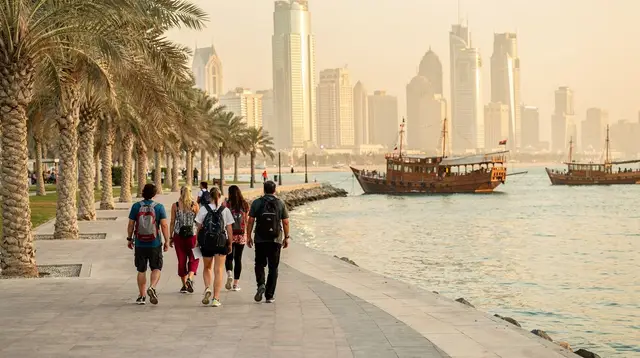
The Corniche is Doha’s 7 km waterfront promenade, and it is flat, paved and easy on the legs, but it is also fully exposed to the sun. The comfortable way to see it is in the early morning, when the light is soft and the temperature is at its lowest, or in the evening, when the West Bay skyline lights up. A short stretch on foot, with a bench stop or a café along the way, gives the same views as a long walk without the fatigue.
Souq Waqif works the same way in reverse: many stalls close in the early afternoon and the market only really comes alive in the late afternoon and evening, so an evening visit is both more atmospheric and cooler. The souq’s lanes are mostly flat and shaded by awnings, and there are plenty of cafés to sit down in along the way, including around the Falcon Souq. Our Souq Waqif shopping guide covers the layout in more detail, and a food-focused option, the Souq Waqif food and karak walk, turns the evening into a series of short stops rather than a long walk.
A sunset dhow cruise: sitting down with a view
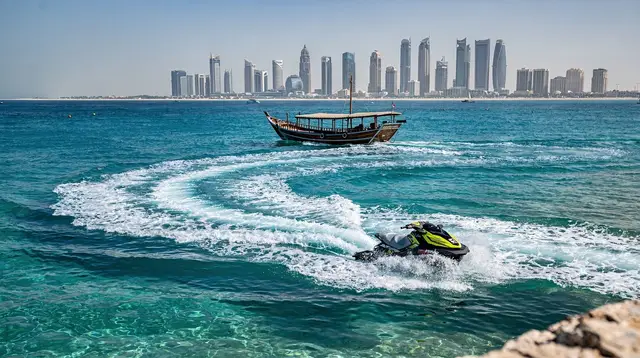
One of the best low-effort experiences in Doha is also one of the most scenic: a dhow cruise along the Corniche in the evening. You board a traditional wooden dhow, take a seat on deck, and spend an hour or so on the water as the sun sets and the West Bay towers light up, with no walking involved beyond boarding.
a relaxed evening boat cruise along the Corniche with West Bay skyline views is built around exactly this kind of seated, scenic outing, and it pairs naturally with dinner at Souq Waqif or a hotel restaurant afterwards. Our dhow cruise guide and the sunset dhow cruise page cover departure points and timing in more detail.
Cultural villages and modern Doha, without much walking
Katara Cultural Village and Lusail both suit a car-based visit: Katara’s amphitheatre, galleries and beachfront can be seen from a short, flat walk between a few main points, and its evening atmosphere is worth timing around, as covered in the Katara Cultural Village evening guide.
Lusail’s Marina and Place Vendôme are modern, walkable, largely shaded promenades with cafés throughout, detailed in Lusail Marina and Place Vendôme. The restored heritage quarter of Msheireb is compact and mostly shaded by its buildings, and its free tram loop is a genuinely easy way to move between the four Msheireb Museums without walking the whole quarter on foot; see the Msheireb Downtown walking guide for a route sized to a shorter visit.
What to weigh up before booking a desert trip
A desert safari to Sealine is the one classic Doha activity that genuinely does not suit every traveller, and it is worth being specific about why rather than ruling it out for everyone over a certain age. Dune bashing involves fast, bumpy off-road driving in a 4x4 for perhaps 20 to 30 minutes, which can be uncomfortable or unwise for anyone with back or neck problems, a pacemaker, or motion sensitivity, and the Inland Sea (Khor Al Adaid) is only reachable by that same off-road drive. Heat is a second factor, since Sealine sits an hour south of Doha and much of the visit happens outdoors.
The honest way to decide is by your own tolerance for motion and rough ground, not by age on its own. If dune bashing itself is the concern rather than the desert generally, look for a tour that frames the drive as gentle rather than a thrill ride, ask the operator directly before booking, and consider going in the cooler months and earlier in the day.
If you would rather skip the dunes altogether, a heritage-focused alternative such as a west Qatar heritage and desert landscape tour by car spends more time at fixed sites and less on off-road driving, and a city-based day, such as a city tour with a seated buffet lunch included, is a comfortable way to fill a day without any off-road element at all. Our desert safari safety tips and dune bashing: what to expect pages go into the physical side in more detail so you can judge it for yourself.
Managing heat across the day
Heat, not distance, is the real constraint on a low-effort visit to Doha, and it is manageable with a simple pattern: outdoors in the cooler hours, indoors in the middle of the day.
| Time of day | Suggested activity | Why |
|---|---|---|
| Early morning | Corniche walk, hotel breakfast terrace | Coolest hours, softest light |
| Mid-morning to early afternoon | Museum of Islamic Art or National Museum of Qatar | Air-conditioned, seated rest available |
| Early afternoon | Hotel rest, long lunch | Hottest part of the day |
| Late afternoon | Souq Waqif, Msheireb Museums | Stalls reopen, shaded lanes |
| Evening | Sunset dhow cruise, dinner at Souq Waqif or Katara | Coolest outdoor hours, best light |
From roughly May to September, treat this pattern as closer to a rule than a suggestion: midday heat routinely passes 40°C and is a genuine health risk, not just a discomfort, for anyone with reduced heat tolerance. From November to March the same schedule is more of a comfort choice than a necessity, and outdoor time can safely run longer. Carry bottled water throughout the day regardless of season, since most visitors drink bottled rather than tap water in Qatar, and dress in light, loose, modest clothing that covers shoulders and knees, which is expected in malls, museums and souqs in any case.
A sample low-effort day
A private guided day works well split roughly as follows: a morning stop at the Corniche or West Bay waterfront, a late-morning to early-afternoon museum visit with lunch worked in, a rest back at the hotel, then Souq Waqif in the late afternoon and a sunset dhow cruise or Katara evening to close the day.
a full-day private tour combining the city’s landmarks with flexible pacing follows a similar shape and can usually be adjusted with the driver-guide on the day if a stop is running long or you would rather cut one out. For a version of this built specifically around private transport and a slower pace throughout, see the private Doha city tour, which pairs well with everything described on this page.
Frequently asked questions about seniors and low-effort sightseeing in Doha
Is Doha a good destination for older travellers or people with limited mobility?
Yes, with planning. Distances between the main sights are short by car, the museums are air-conditioned and modern, and hotel-based transport is easy to arrange. The main thing to manage is heat rather than distance or terrain.
What is the biggest risk for seniors sightseeing in Doha?
Heat and dehydration, especially outdoors in the middle of the day from roughly May to September. The fix is simple: keep outdoor time to the morning or evening, carry water, and move indoor activities into the hottest hours.
Do I need to walk long distances between Doha’s main attractions?
No. West Bay, the Corniche, Souq Waqif and the museums are all a short private-car ride apart, and each site itself can be seen at a slow pace with benches, seating areas and air conditioning available.
Is a private car better than public transport for older visitors?
A private car or taxi is usually easier, since it goes door to door and avoids stairs, transfers and standing. The Doha Metro is modern and has lifts, so it remains an option for a shorter, less strenuous day, but a private driver removes more of the walking.
Are the Museum of Islamic Art and the National Museum of Qatar accessible for slower visitors?
Both are large, modern, air-conditioned buildings with lifts and seating, and both can be seen at a gentle pace over one to two hours each without needing to cover the whole museum in one visit.
Is a desert safari suitable for seniors?
It depends on the person, not on age alone. Dune bashing is physical and jolting, so travellers should judge it by their own comfort with motion and rough ground rather than ruling it out on principle; a calmer alternative is a short guided desert visit timed for the cooler hours, or skipping the dunes and keeping to the city and coast instead.
What is the best time of day for sightseeing in Doha for older travellers?
Morning for outdoor spots such as the Corniche, and late afternoon into evening for Souq Waqif and a sunset dhow cruise. The middle of the day is best spent indoors, in a museum or over a long lunch.
When is the most comfortable season to visit Doha for low-effort sightseeing?
Roughly November to March, when daytime temperatures are warm rather than extreme and evenings are pleasant. Visits in the summer months are still workable if outdoor time is kept short and scheduled around the cooler hours.
Accessibility Guide
Verified deep-linked GetYourGuide tours. Book through these links and we earn a small commission at no cost to you.
GetYourGuide does not provide a product photo for this activity — the image shows the meeting point, photographed by us.