Doha Stopover: Museums and Souq Waqif Instead of the Desert
Can you do museums and Souq Waqif on a Doha stopover?
Yes. The Museum of Islamic Art sits a short taxi or metro ride from Souq Waqif, and both can realistically be combined in a four-to-six hour layover. Museums close one day a week and keep specific opening hours, so check the current schedule before you land rather than assuming they will be open.
Culture over dunes: the other kind of Doha layover
Most stopover guides push travellers straight toward the desert: dune bashing at Sealine, a run out to the Inland Sea, sand in your shoes before your next flight. That is a fine plan if you have a full day and want adventure. It is the wrong plan if you have four to six hours, are travelling with limited mobility, or simply prefer galleries and a market to a 4x4 on dunes.
Doha’s compact centre makes a culture-first layover genuinely realistic: the Museum of Islamic Art and Souq Waqif sit close together on and around the Corniche, and both can be covered without ever leaving paved roads or air conditioning for long.
This guide sets out what that loop looks like, what it cannot promise about opening hours, and what to wear. If you want the fuller context on stopovers generally, the Doha stopover guide and short layover priorities are worth reading alongside this one.
Why museums instead of the desert make sense on a short layover
A desert safari to Sealine is roughly an hour’s drive each way before you even start dune bashing, which leaves little slack if your connection is tight. The museum-and-souq loop, by contrast, keeps you within about twenty minutes of Hamad International Airport (DOH) for most of the visit. If your flight schedule is unforgiving, or you would simply rather spend a stopover indoors in air-conditioned galleries than bouncing over sand, this is the lower-risk option.
It also suits a specific kind of traveller: someone who wants a real sense of the country’s history and culture in a short window, not just a skyline photo. The Museum of Islamic Art alone holds one of the strongest collections of its kind anywhere, and Souq Waqif next door gives you the market atmosphere that a desert day trip does not.
The core loop: Museum of Islamic Art plus Souq Waqif
The anchor of this stopover is the Museum of Islamic Art visit guide: the building itself, designed by I. M. Pei, sits on its own island off the Corniche with MIA Park around it, and the collection inside spans centuries of Islamic art and craftsmanship from across the Islamic world. It is compact enough to see the highlights in an hour or two without exhausting a jet-lagged traveller.
From there, Souq Waqif is a short taxi ride or a walk along the Corniche. The souq you see today is a careful reconstruction, rebuilt in the 2000s on the footprint of the old market — not a preserved ancient bazaar — and it works best in the late afternoon and evening, when stalls that were shuttered at midday reopen and the alleys fill with people. If your stopover falls in the early afternoon, you will still find the architecture, spice stalls and the Falcon Souq worth a look, but temper your expectations: full evening energy needs evening timing.
A reasonable half-day sequence looks like this:
| Stop | Approximate time needed | Notes |
|---|---|---|
| Airport to Museum of Islamic Art | 15–25 minutes by taxi or metro | Red Line metro or taxi/ride-hailing both work |
| Museum of Islamic Art | 1–2 hours | Closes one day a week; verify hours before you go |
| Museum of Islamic Art to Souq Waqif | 5–10 minutes by taxi | Or a longer walk along the Corniche if time allows |
| Souq Waqif and Falcon Souq | 1–2 hours | Livelier in late afternoon/evening than at midday |
| Souq Waqif back to airport | 15–25 minutes | Build in extra buffer for security and check-in |
This fits comfortably inside a four-to-six hour window once you allow for airport processes on both ends. For the tighter end of that range, the short layover Doha guide is worth checking before you commit to leaving the terminal at all.
If you would rather not manage the logistics yourself, a fixed-route transit tour removes the guesswork: an express highlights tour built specifically for passengers on a short layover typically covers the museum-and-souq combination with airport pickup and drop-off built into the timing.
Adding the National Museum of Qatar — only with more time
The National Museum of Qatar, designed by Jean Nouvel and built around the old palace of Sheikh Abdullah bin Jassim, is Doha’s other landmark museum. Its desert-rose form and the scale of the site make it worth a dedicated visit, but folding it into the same short stopover as the Museum of Islamic Art and Souq Waqif is ambitious. Between transfers, security queues on both ends of the flight and the museum’s own scale, most travellers need closer to a full day to do all three justice.
If your layover genuinely allows for it, read the National Museum of Qatar visit guide before deciding, and consider dropping either the National Museum or a leisurely pass through the souq rather than rushing all three. A tour built around city highlights, such as a guided city tour that pairs museum time with a stop at the fish market and lunch, can make a longer layover feel structured rather than improvised.
The one thing this guide will not give you: fixed hours
Both the Museum of Islamic Art and the National Museum of Qatar close one day a week, and both keep opening hours that are subject to change — around public holidays, Ramadan, or simple scheduling updates from Qatar Museums. This guide deliberately does not state a specific closing day or a specific opening time for either museum, because printing a number that is wrong is worse than printing nothing: a stopover traveller who plans an entire loop around a museum that turns out to be closed that day has no slack to recover, unlike someone on a week-long trip who can simply come back tomorrow.
Check the current hours directly with Qatar Museums or through your tour operator in the days before you fly, not weeks in advance. The same caution applies to Souq Waqif’s stall-by-stall hours, which vary by shop and by day of the week — Friday, the main day of prayer, sees many businesses open later than usual. For a longer discussion of how the weekly rhythm affects sightseeing, see Fridays in Doha: opening hours.
Dress code: shoulders and knees, every time
Modest dress is expected across Doha’s public and cultural sites, and it matters more, not less, on a short stopover where you will not have time to go back to a hotel and change. The practical standard for both museums and Souq Waqif is straightforward: shoulders and knees covered. Swimwear, very short shorts and sleeveless tops that would be fine on a hotel pool deck are not appropriate inside the Museum of Islamic Art, the National Museum of Qatar or the souq’s covered alleys.
If your stopover plan also includes stepping into a mosque, note that the bar is higher there: covered arms and legs for everyone, plus a headscarf for women. None of the sites in this particular loop require that stricter standard, but it is worth knowing if you are tempted to add a mosque visit — see Doha mosques for visitors for what that involves. For the general rules, what to wear in Doha covers the dress code beyond just this stopover loop.
Pack a light scarf or shawl in your carry-on if you are flying straight from a beach holiday or a very casual outfit — it solves the dress-code question for both museums and the souq without requiring a change of clothes.
Getting there and back within your layover window
The Doha Metro’s Red Line runs directly to and from Hamad International Airport, and it is a genuinely practical option if you are travelling light and want a cheap, air-conditioned ride into the centre. Taxis and ride-hailing apps such as Uber and Careem cover the same route in about fifteen to twenty-five minutes depending on traffic, and are the more flexible choice if you are short on time or carrying luggage. The Doha Metro and tram guide and Hamad Airport to city centre guide both go into the specifics.
Whichever way you travel, build in a real buffer before your return flight. Airport security and check-in on a stopover can take longer than you expect, and a culture-first layover is only stress-free if you leave enough margin at the end. If you would rather not watch the clock yourself, a fixed four-hour stopover highlights tour or a dedicated transit-focused itinerary such as a stopover tour designed around transit passengers’ time limits both build the airport buffer in for you, which removes one source of stress from an already tight window.
Before you decide whether you can leave the airport at all
None of the above matters if your nationality or visa status does not allow you to leave Hamad International Airport during your layover. Entry rules depend on nationality and change over time; many nationalities receive a visa waiver on arrival, but this is not universal and should never be assumed. Check the official Qatari Ministry of Interior or Hayya portals, or your own government’s travel advisory, before you fly — not after you land. The Qatar visa and entry requirements guide and can you leave Hamad Airport on a layover both cover this in more depth, and are worth reading before you finalise any stopover plan built around this guide.
If you would rather have someone else manage the whole loop — timing, transfers, dress-code reminders and the airport buffer — a guided option such as a cultural tour covering the museums, Souq Waqif and further stops like Katara and The Pearl extends the same idea for travellers with a longer layover or an overnight stopover, and pairs well with the broader Doha stopover museums and souq approach of prioritising culture over the desert.
FAQ: Museums and Souq Waqif on a Doha Stopover
Do I need a visa to leave Hamad Airport for a few hours?
It depends on your nationality and the entry rules in force when you travel. Many nationalities get a visa waiver on arrival, but you should check the Qatari Ministry of Interior or Hayya portals, or your own government’s travel advisory, before assuming you can leave the airport.
Are the Museum of Islamic Art and the National Museum of Qatar open every day?
No. Both museums close one day a week and keep set opening hours that can change, so this guide does not state fixed days or times. Check the current schedule shortly before your stopover, since a missed day matters far more on a layover than on a full holiday.
How far is the Museum of Islamic Art from Souq Waqif?
They sit close together on and near the Corniche, only a few minutes apart by taxi or a short walk along the waterfront. This is exactly why the two combine so easily into a single short stopover loop.
What should I wear to the museums and the souq?
Modest dress: shoulders and knees covered is the safe standard for museums, the souq and any government or religious building in Doha. Swimwear and very short hemlines belong to beaches, pools and hotels, not to these cultural sites.
Is Souq Waqif worth visiting in the early afternoon?
It is quieter than in the evening, since many stalls open later in the afternoon and the souq comes properly alive after sunset. A short daytime pass is still worthwhile for the architecture and the Falcon Souq, but do not expect full evening energy.
Can I fit the National Museum of Qatar into a short layover too?
It is possible but tight. The Museum of Islamic Art plus Souq Waqif is the realistic core for a four-to-six hour stopover; adding the National Museum of Qatar as well usually needs closer to a full day, given transfers, security and airport buffer time.
How do I get from Hamad International Airport to the Corniche?
The Doha Metro’s Red Line runs directly from the airport toward the city centre, and taxis or ride-hailing apps cover the same route in roughly fifteen to twenty-five minutes depending on traffic.
Getting Around Doha
Verified deep-linked GetYourGuide tours. Book through these links and we earn a small commission at no cost to you.
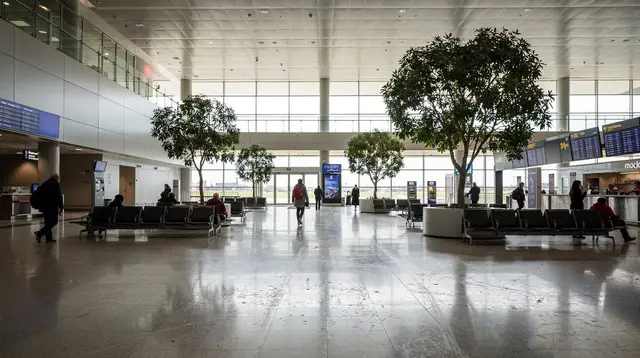
GetYourGuide does not provide a product photo for this activity — the image shows the meeting point, photographed by us.