Doha Metro and Tram Guide
Does the Doha Metro go everywhere in Qatar?
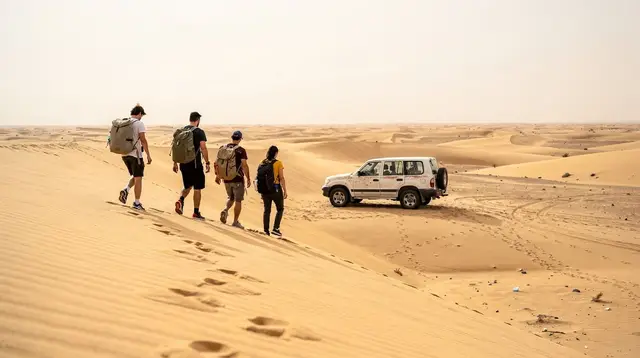
No. The Doha Metro (Red, Green and Gold lines) covers Doha, West Bay, Msheireb, Lusail, Education City and the airport. It does not reach the desert, Sealine, the Inland Sea, Al Zubarah, Al Khor or west Qatar; those need a car, taxi or tour.
How the Doha Metro is built
Doha opened its metro network in 2019, and it is now the backbone of getting around the built-up parts of the city without a car. The system has three lines, each identified by colour: Red, Green and Gold. The Red Line is the main coastal spine, running from the southern suburbs up through Msheireb and West Bay and out to Lusail in the north, with a branch serving Hamad International Airport (DOH) to the east.
The Green Line runs through the western and southern residential districts, including areas near Al Rayyan and Education City. The Gold Line cuts east-west through the older, central part of the city, with a stop close to Souq Waqif and the Corniche area.
The trains are modern, air-conditioned, driverless and generally run at close intervals through the day. Stations are large, clearly signed in Arabic and English, and step-free, which makes the system genuinely usable for a first-time visitor without a car. For a broader look at moving around the whole city, including taxis and ride-hailing, see the companion piece on getting around Doha; this page focuses specifically on the rail and tram network and where its edges actually are.
Because fares, service hours and any temporary line closures can change, this guide will not print numbers that go stale. Always check the operator’s current information (Qatar Rail / Doha Metro) or the official Qatar Tourism site before relying on a specific fare or last-train time.
Classes on board: standard, Gold Club and family carriages
Doha Metro trains carry more than one class of seating, similar in spirit to an airline cabin layout rather than a typical metro.
- Standard class is the default class, open to all ticket holders, and makes up most of each train.
- Gold Club class is a premium carriage with a higher fare, generally quieter and less crowded, aimed at commuters and visitors who want a calmer ride.
- Family carriages, within standard class, are reserved for women and children; men travelling alone are asked to use the other standard carriages.
Ticket gates and platform signage indicate where each class boards, and it is worth pausing to check the floor and wall markings before the doors open, since boarding in the wrong carriage is a common first-time mistake. If you are planning to use the metro heavily over a short stay, a short-term unlimited pass can work out simpler than buying single tickets for every trip; one option covering a few days is the Doha 3 Day Unlimited Metro Pass, useful for visitors who intend to base most of their sightseeing around the metro stations described below.
What the metro actually serves
The three lines between them connect most of the places a first-time visitor in Doha wants to see without a car:
| Area | Line | Notes |
|---|---|---|
| Hamad International Airport | Red | Direct service, roughly 15–25 minutes by road equivalent from the city centre |
| West Bay | Red | Skyscraper district, close to the northern Corniche |
| Msheireb Downtown | Red / Gold interchange | Restored heritage quarter, connects to the free Msheireb tram |
| Souq Waqif area | Gold | Station within walking distance of the souq and Corniche |
| Lusail | Red | Newer city to the north, connects to the Lusail Tram |
| Education City / Al Rayyan | Green | Serves the university district and the Aspire Zone area |
| The Pearl-Qatar | Not served | Nearest station is some distance away; taxi or ride-hailing needed for the final stretch |
| Katara Cultural Village | Not served directly | Nearest stations require a short taxi or ride-hailing connection |
Visitors staying near West Bay, Msheireb or along the Corniche can realistically do a large share of central sightseeing by metro alone, including a first visit to the Museum of Islamic Art or the National Museum of Qatar, both close to stops with a short onward walk or taxi ride from the station forecourt.
What the metro does not serve — the desert, the north and the west
This is the point most first-time visitors miss: the Doha Metro is a city network. It ends at the edge of the built-up area, and it does not, and will not, reach the sites that make up most of the rest of Qatar’s day-trip itinerary.
The metro and trams do not serve:
- Sealine and the dune area near Mesaieed, where desert safaris are based.
- Khor Al Adaid, the Inland Sea, reachable only by 4x4 across sand.
- Al Khor and the mangroves at Al Thakira in the north.
- Al Zubarah, Qatar’s UNESCO World Heritage Site, roughly 100 km north-west of Doha.
- Zekreet and Al Shahaniya in the west.
- Al Wakrah, just south of Doha, which is close enough to tempt visitors into assuming a rail connection exists — it does not.
For all of these, plan on a car, a taxi, a ride-hailing app, or an organised tour with pickup from your hotel. A guided option covering the city centre itself, for context before or after a longer desert or northern day, is the Doha Guided City Tour, which runs by road rather than rail and can combine stops the metro cannot link directly, such as The Pearl-Qatar and Katara on the same outing.
If your priority on a short trip is the souqs and old town rather than the wider country, a walking-focused option departing from the same central area is the Doha Guided Walking Tour of Souq Waqif, which starts near the Gold Line station and needs no further transport once you arrive.
Buying tickets and travel cards
The Doha Metro uses its own smart-card ticketing rather than cash payment at the gates, and single journeys, day passes and longer multi-day passes are all sold at station ticket machines and counters. Because fare tables and card types are updated from time to time, this guide will not print a number that could go stale within months of publication — check the operator’s own site for the current price list before you travel.
What stays true regardless of the exact fare is the shape of the choice: a single-journey card suits an occasional rider, while a visitor planning to move around Doha city, West Bay, Msheireb and Lusail on most days of a short trip is usually better off with an unlimited multi-day pass bought once at the airport or a central station, rather than queuing at a machine for every ride. For a trip built mostly around the metro network described above, the Doha 3 Day Unlimited Metro Pass removes that daily ticketing step entirely.
Gold Club fares are higher than standard class and are usually sold as a separate card or top-up rather than an add-on to an existing standard ticket, so decide before you tap through the gate rather than trying to upgrade mid-journey. Family carriage seating does not cost extra; it is simply a reserved section of the standard-class car for women and children, and solo male travellers are asked to use one of the other standard carriages instead.
An organised way to see the metro-served sights
Visitors who would rather have a guide narrate the city than work out interchanges themselves have a metro-based tour option too: the Qatar Express Metro Tour Culture and Heritage in 4 Hours uses the rail network itself to move between central sights in a single short outing, which can be a useful way to get oriented on a first day before deciding which stations to revisit independently later in the trip.
Practical tips for first-time riders
A handful of details catch out visitors who are used to a different metro system:
- Stations are large and air-conditioned, with the platforms often a longer walk from the street entrance than in older metro systems elsewhere; build in a few extra minutes, especially at interchange stations like Msheireb where the Red and Gold lines meet.
- Signage is bilingual in Arabic and English throughout, including line colours, direction boards and the floor markings that indicate where each class of carriage stops.
- Trains are frequent through most of the day, so there is little benefit to rushing for a specific departure the way you might on a less frequent regional line.
- Interchange stations require a short walk between platforms for different lines rather than a same-platform transfer, so allow a few minutes when changing between the Red, Green and Gold lines.
- The metro does not run to the desert, the coast north of the city, or west Qatar under any circumstances — see the section above — so do not plan a station-to-station route for Sealine or Al Zubarah expecting the network to eventually reach that far; it will not, at any fare or time of day.
Getting from the airport
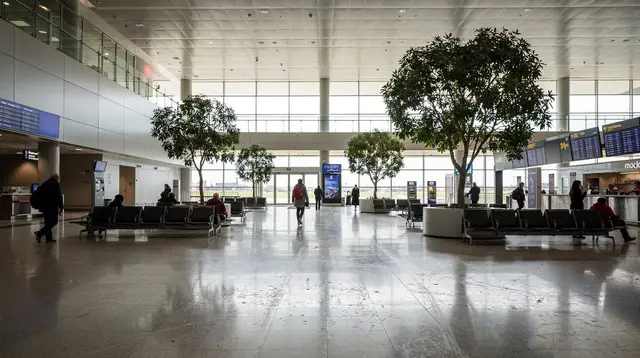
Hamad International Airport sits on the east side of the city, and the Red Line runs directly into it, making the metro one of the simplest ways to reach West Bay or the Souq Waqif area on arrival, provided you are travelling light and your hotel is within reasonable walking distance of a station. Anyone arriving with heavy luggage, arriving late at night, or heading somewhere the metro does not reach directly may prefer a pre-booked transfer instead; see the dedicated piece on Hamad Airport to the city centre for a fuller comparison, or book ahead with the Hamad Airport Private Transfer for a fixed door-to-door option regardless of the hour.
The trams: Lusail, Msheireb and Education City
Doha’s trams are separate systems from the metro, each covering a much smaller area, and none of them uses the same ticket type as the metro.
- Lusail Tram: serves the new city of Lusail north of Doha, including the Marina and Place Vendome shopping district, and connects into the Lusail metro station on the Red Line. Useful once you are already in Lusail rather than as a way of getting there.
- Msheireb tram loop: a free tram circulating through Msheireb Downtown, Doha’s rebuilt heritage quarter. It links the Msheireb Museums and is a convenient way to cover the district’s low-rise streets without walking the whole loop in the heat.
- Education City Tram: a smaller network serving the university campuses and the Aspire Zone area in Al Rayyan, aimed mainly at students, staff and visitors to specific campus venues such as the 3-2-1 Qatar Olympic and Sports Museum.
None of the three trams connects to the desert, the north coast or west Qatar; they exist purely to move people around already-built districts.
Planning your route around the network’s limits
A workable approach for a short stay is to split your itinerary in two: a metro-and-tram day (or two) covering Doha city centre, West Bay, Msheireb and Lusail, and a separate car-based day (or days) covering everything south, north or west of the city, ideally by taxi, ride-hailing app or a booked tour rather than a rental car if you plan to go off-road. Visitors curious about the Corniche’s dhows alongside the museums nearby can pair a metro-based museum morning with a short taxi ride to the waterfront in the same afternoon, since the two are close but not on the same station.
For the wider question of how residents and visitors get around day to day, including taxis, ride-hailing apps and driving yourself, see getting around Doha and taxis and ride-hailing in Doha. If you are considering a rental car specifically for reaching the desert or west Qatar, read renting a car in Qatar first, since several of the sites this metro cannot reach also require an experienced driver and a proper 4x4 rather than a standard saloon.
Doha metro and tram FAQ
How many metro lines does Doha have?
Three: the Red Line (the main coastal line, running through West Bay and out to Hamad International Airport), the Green Line (running through the western and southern suburbs) and the Gold Line (running east-west through central Doha, including Souq Waqif).
Does the metro go to Hamad International Airport?
Yes. The Red Line serves Hamad International Airport directly, and it is the way most visitors travel between the airport and central Doha or West Bay.
Can I take the metro to the desert or Sealine?
No. The metro network stops at the edge of the city. Sealine, the Inland Sea, Al Zubarah, Al Khor and the sites in west Qatar are reached by car, taxi, ride-hailing app or an organised tour, not by metro or tram.
What is the Gold Club class on the Doha Metro?
Gold Club is a premium class of carriage on the metro, separate from standard class, with a higher fare and a quieter, less crowded car. Family carriages are also available for women and children within standard class.
What is the difference between the Lusail Tram and the Doha Metro?
The Doha Metro is the underground and elevated rail network across greater Doha. The Lusail Tram is a separate, shorter surface tram serving the newer city of Lusail north of Doha, including the Marina and Place Vendome. They are different systems and are not used with the same physical ticket.
Is there a free tram in Doha?
Yes, the Msheireb tram loop in Msheireb Downtown is free to ride and covers the restored heritage quarter and its museums.
Where do I check current metro and tram fares and hours?
Fares, opening hours and route maps change, so check the operator’s own site (Qatar Rail / Doha Metro) or the current Qatar Tourism site before you travel, rather than relying on a fixed number here.
Getting Around Doha
Verified deep-linked GetYourGuide tours. Book through these links and we earn a small commission at no cost to you.
GetYourGuide does not provide a product photo for this activity — the image shows the meeting point, photographed by us.