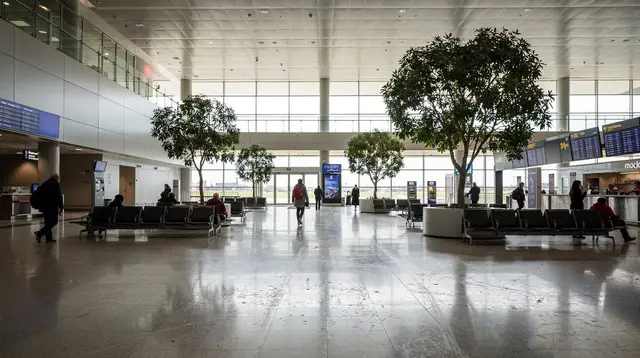
Short Layover in Doha: What Is Actually Possible
Is a short layover in Doha enough time to leave Hamad International Airport and see the city?
It depends on how much of your connection time is eaten by immigration, transport and re-entry security rather than on the clock alone. A short layover can work well for one focused stop close to the airport, or it can leave you rushing back with nothing seen; the deciding factors are queue length, traffic and how far your chosen sight sits from Hamad, not a fixed number of hours.
Doha shows up on a lot of itineraries by accident. Qatar Airways routes a huge share of its long-haul network through Hamad International Airport (DOH), so if you’re flying between Europe and Southeast Asia, or North America and Africa, there’s a fair chance your ticket includes a stop here whether you asked for it or not. The question that follows is always the same: is there enough time to actually leave the airport, or should the layover just be endured?
The honest answer is that it depends on arithmetic you can’t fully know until the day itself, not on a round number of hours. This page walks through what actually consumes the time, what a stopover realistically buys you, and how to decide — for your specific connection — whether stepping outside Hamad is worth it.
Why there’s no clean hours threshold
It would be convenient to say “anything over four hours is fine, anything under is not.” That number gets repeated a lot online, and it’s not useless as a rough instinct, but it hides more than it reveals. Two travellers with the same six-hour layover can have completely different outcomes: one clears immigration in ten minutes and is back at the gate with time to spare, the other spends forty minutes in a queue, sits in traffic on the way into the city, and returns to the airport stressed and empty-handed.
What actually determines the outcome is a chain of four steps, each with its own variability, and it’s worth breaking them down before you commit to a plan.
Disembarking and reaching immigration. After landing, you walk from the gate to passport control. At a large hub airport like Hamad, this alone can take fifteen to twenty-five minutes depending on where your aircraft parks.
Immigration and passport control. This is the least predictable stage of the whole process. On a quiet morning it might take ten minutes. When several wide-body flights land close together, it can take considerably longer. Nothing about your layover plan controls this variable — it is simply weather you have to plan around.
The road transfer, each way. Central Doha — West Bay, the Corniche, Souq Waqif — sits roughly 15 to 25 minutes from the airport by road in ordinary traffic. That’s a manageable add-on. But it doubles: you pay it again on the way back, and traffic at the wrong hour can stretch either leg well beyond that estimate.
Re-entry, security and the return to the gate. Airlines and airport security expect passengers back well ahead of departure, and re-clearing security after being outside adds its own queue. This is also the stage travellers most often underestimate, because it feels like “the easy part” until it isn’t.
Add these up and you’ll see why this page refuses to give you a single number. A short connection with fast immigration and light traffic can comfortably support a focused outing. A longer connection that happens to land during a queue surge, or during rush hour, can eat the same amount of time with nothing to show for it. The only way to plan sensibly is to treat your printed connection time as a ceiling, not a budget, and then subtract the slow scenario for each stage — not the fast one — before deciding what fits.
Two very different kinds of “short”
Not every short layover is the same shape. A three-hour connection between two Qatar Airways flights, both on schedule, in a quiet immigration window, is a different proposition from a four-hour connection that happens to land during a bank of arrivals from Europe. Before you plan anything, it’s worth being honest about which situation you’re actually in — arrival and departure times relative to other traffic at the airport matter more than the number on your itinerary.
It also matters whether you’re travelling with checked bags that are through-checked to your final destination or whether you’ll need to collect and recheck them — the latter adds real time and is a strong argument for staying inside the terminal rather than attempting a trip into the city.
What to check before deciding to leave
Whether you’re eligible to leave Hamad International Airport at all depends on your nationality and the entry rules in effect at the time you travel, and those rules change. This page won’t state a threshold by nationality — check the official Qatari immigration channels, your airline, or your own government’s travel advisory before you assume you qualify for a visa waiver or transit arrangement. Building your plan on an assumption here is the single biggest risk in stopover planning, ahead of traffic and queues combined.
If you decide to stay inside the airport
For a genuinely tight connection, or one where the immigration and traffic math doesn’t look favourable, staying inside Hamad is not a consolation prize — it’s the sensible choice, and the airport is built to make it comfortable. There are business and first-class lounges, a transit hotel for longer overnight connections, an indoor garden, duty-free shopping, and quiet seating areas spread across the terminal. None of it requires clearing immigration, which removes the two biggest sources of uncertainty in this whole equation.
If your connection is long enough to be tempting but you’d rather not gamble on immigration queues and traffic, this is the lower-risk option, and it costs you nothing beyond the ticket you already have.
If you decide to leave: what actually fits
Assuming your nationality and the current rules allow it, and your realistic time budget — after subtracting the slow-case estimate for each stage above — still leaves a meaningful window, here’s what genuinely fits into a short window versus what doesn’t.
Fits comfortably in a short window (roughly the airport’s immediate surroundings):
- A quick pass along the Corniche for the West Bay skyline view, without stopping for long.
- A focused visit to the Museum of Islamic Art, which sits on its own island right off the Corniche.
- A walk through Souq Waqif — though note it’s at its best in the late afternoon and evening, and many stalls are shuttered earlier in the day.
Does not realistically fit into a short window:
- Anything in the southern desert — Sealine or the Inland Sea — both require roughly an hour’s drive each way before any activity even starts.
- Al Zubarah in the north, which is a long half-day trip on its own.
- Zekreet and the west-Qatar sights, which need a 4x4 and a full excursion, not a stopover add-on.
The pattern here is simple: the only sights that genuinely belong on a short layover are the ones within about 15 to 25 minutes of the airport. Everything further out belongs to a longer stopover or a proper visit, and trying to force it into a tight window is the most common way stopover plans go wrong.
A structured way to spend the time, if you go
If your window supports it, a pre-arranged transit tour removes most of the guesswork, because the operator has already built the transfer, the immigration handling and the return timing around a fixed flight schedule rather than leaving you to estimate it yourself. For a genuinely short connection, a condensed express tour built specifically for transit passengers covers the West Bay and Corniche views without wandering off-route.
Where the window is closer to four hours, a four-hour discovery tour timed to a layover can stretch to Souq Waqif as well as the waterfront. A more general stopover transit city tour is the flexible middle option most operators default to. If your connection runs long enough to include a meal without cutting into the safety margin, a city tour paired with a sit-down buffet lunch turns the stop into an actual meal break rather than just sightseeing.
The advantage of any of these over a self-arranged taxi trip isn’t the sights themselves — it’s that someone else is watching your return-to-airport clock for you, which is the part of a short layover most likely to go wrong.
Building your own buffer
Whichever way you go, the single most useful habit is picking a hard cut-off time to be back through security, and treating it as non-negotiable regardless of how well the outing is going. Work backwards from your boarding time, add the re-entry security estimate, add the slower of your two transfer estimates, and whatever’s left is your actual window on the ground — not the number printed on your itinerary. If that remaining window looks thin once you’ve done the subtraction, that’s your answer: stay inside the terminal, use the Hamad Airport to city centre transfer information for a future, longer trip, and treat this one as a stop rather than a visit.
For travellers who do have a genuinely comfortable window, it’s worth reading the difference between a layover city tour and a layover desert safari before choosing, since the desert option needs considerably more time to make sense.
Those with an overnight connection have more room to work with — see the overnight stopover guide and the stopover night tour for what opens up once a hotel room and a proper night are part of the plan. A stopover that includes the museums and the souq together, rather than just one, is covered separately in the stopover museums and souq guide.
For getting to and from the airport itself, the Doha Metro and tram guide explains when the Red Line beats a taxi, and the airport private transfer guide and airport transfer with city tour guide cover the pre-booked alternatives that build the transfer time into a fixed schedule rather than leaving it to chance. Anyone arriving very late at night should also check the late-night arrivals transfer guide, since queues and transport availability behave differently outside daytime hours.
Before committing to any of this, it’s worth reading the broader Doha stopover guide for the full range of options by connection length, and the entry requirements overview so the eligibility question is settled before the time-management one. If your interest is specifically in whether leaving the airport is allowed at all on your ticket type, that question is addressed directly in can you leave Hamad Airport on a layover.
Short Doha layovers: common questions
How many hours do I need to leave Hamad Airport on a layover?
There is no official minimum, and stating one would be misleading, because the real constraint is the combination of your flight’s actual arrival and departure times, the immigration queue on the day, and traffic to and from the airport. Treat your printed connection time as the outer limit, subtract exit and re-entry overhead using the slow-case estimates above, and use whatever remains as your real budget.
Can I leave Hamad International Airport during a layover?
Whether you’re eligible to leave depends on your nationality and the entry rules in force at the time of travel, and those rules change. Check the official Qatari immigration channels or your airline before assuming you qualify, rather than relying on a general rule.
What eats up time on a short layover in Doha?
Four things, each with its own variability: walking from the gate to immigration, the immigration queue itself, the road transfer each way, and the re-entry security and return-to-gate process. Any single stage running long can undo a plan built around the total number of hours alone.
Is it better to stay in the airport on a short connection?
For a genuinely tight connection, yes. Hamad International Airport has lounges, a transit hotel, an indoor garden, shopping and quiet seating, and staying inside avoids the two least predictable parts of leaving — immigration queues and city traffic.
What can I realistically see close to the airport on a short stopover?
The Corniche, Souq Waqif and the Museum of Islamic Art sit within roughly 15 to 25 minutes of the airport in ordinary traffic, making them the most realistic single stop. The desert, the north coast and west Qatar all require considerably more time and don’t fit a short window.
Does the Doha Metro help on a layover?
The Red Line runs directly to the airport and can be more predictable than a taxi at busy times, but it still adds a walk and a wait at each end and doesn’t remove the need to clear immigration twice, so it shortens one part of the equation rather than the whole thing.
What’s the safest way to plan a short Doha stopover?
Set a fixed, non-negotiable buffer before your return security cut-off, choose one attraction rather than several, confirm your entry eligibility in advance through official channels, and keep staying inside the airport as your fallback if immigration or traffic runs long on the day.
Getting Around Doha
Verified deep-linked GetYourGuide tours. Book through these links and we earn a small commission at no cost to you.
GetYourGuide does not provide a product photo for this activity — the image shows the meeting point, photographed by us.