Why visitors come to Al Rayyan
Most first-time visitors to Doha spend their time between West Bay, the Corniche and Souq Waqif, and never see Al Rayyan at all. That is a reasonable choice if time is short: Al Rayyan has no waterfront, no old town and no souq. What it has instead is a cluster of purpose-built institutions a few kilometres inland — a university district, a national sports campus and a museum built inside a former Olympic training facility — and none of them read as a “sight” from the outside the way the Museum of Islamic Art or the National Museum of Qatar do.
The two names that matter here are Education City and the Aspire Zone. Education City is the campus area developed by the Qatar Foundation, bringing branch campuses of several international universities together on one site along with public buildings such as the Education City Mosque and the Qatar National Library. The Aspire Zone is Qatar’s national sports and academy complex, built in the 2000s around what is now known as the Khalifa International Stadium; inside the Aspire Zone sits the 3-2-1 Qatar Olympic and Sports Museum, opened in 2022 ahead of the FIFA World Cup, telling the story of the Olympic movement and of Qatar’s own sporting history in one purpose-built building.
Together these two clusters make Al Rayyan a destination for a specific kind of visitor rather than for everyone. If that visitor is you, the rest of this page tells you what to expect and how to get there. If it is not, a single stop at 3-2-1 on the way to or from somewhere else in the west of the country is usually enough.
Education City: what it actually is
Education City is not a single attraction with a ticket booth and opening hours; it is a district, similar in spirit to a large university town, spread across several square kilometres of Al Rayyan. Its buildings were designed by a roster of well-known architects, and several of the individual structures — rather than the district as a whole — are what visitors actually come to see.
The best-known of these is the Education City Mosque, a striking piece of contemporary religious architecture that has become one of the more photographed modern buildings in Doha. Near it sits the Qatar National Library, a vast single-span reading room open to the public, and the Qatar Foundation’s Msheireb-style landscaped grounds connecting the campuses. Because Education City is a working university and public-institution district rather than a museum complex, access, opening hours and which buildings can be entered on a given day vary — check current visitor information before planning a visit around a specific building.
A guided visit is the simplest way to see the mosque, the library and the surrounding architecture without guessing at access:
a guided tour of the Education City Mosque, Qatar National Library and Quranic Garden covers the district’s most photogenic buildings in a single half-day with someone who knows current access rules.
For more detail on the district’s layout and what else sits nearby, including the Aspire Zone, see the dedicated guide to Education City and the Aspire Zone.
Aspire Zone and the 3-2-1 Museum
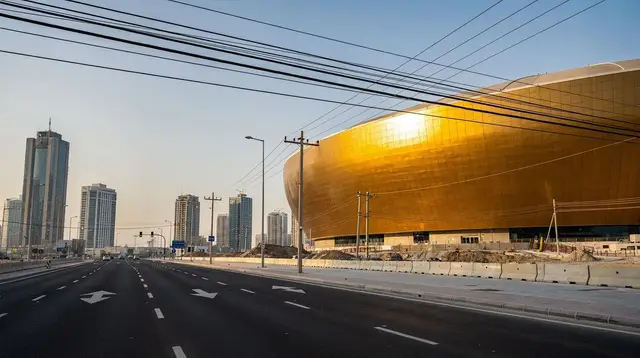
The Aspire Zone is Qatar’s flagship sports and academy campus, built around Khalifa International Stadium, the Aspire Dome (one of the world’s largest indoor multi-purpose sports domes) and the Aspire Academy for sporting excellence. Much of the zone functions as working training facilities rather than public attractions, but two elements are genuinely visitor-facing.
The first is Khalifa International Stadium itself, one of the stadiums used during the 2022 FIFA World Cup, which offers stadium tours on a schedule set by the venue — a natural stop for visitors already interested in the stadium tours available across Qatar.
The second, and the main reason most visitors add Al Rayyan to an itinerary, is the 3-2-1 Qatar Olympic and Sports Museum. Built inside part of the former Aspire academy building, it is organised into galleries covering the ancient Olympic Games, the modern Olympic movement, the Olympic Games in the Arab world, and the history and future of sport in Qatar, including its bid and preparations for the 2022 World Cup.
It is a large, purpose-built museum with hands-on and interactive exhibits, which is part of why it suits families and sport-minded visitors particularly well. As with every museum in this guide, exact opening days, ticket prices and current exhibitions should be checked directly before a visit rather than assumed from an older source — museums in Qatar do close one day a week and revise their calendars.
A guided option removes the guesswork over what is included and how to combine the museum with the rest of Aspire Zone:
a guided visit to the Olympic Museum covering Qatar’s sporting history and the 2022 World Cup story is built specifically around the 3-2-1 collection.
Full practical detail — galleries, what’s interactive, how long to allow — lives on the dedicated page for the 3-2-1 Qatar Olympic and Sports Museum.
Who Al Rayyan actually suits
This is not a destination for a visitor with one day in Doha who wants the classic skyline-and-souq experience — that time is better spent between the Corniche, Msheireb Downtown and Katara. Al Rayyan earns its place on longer itineraries, and for specific traveller profiles:
| Profile | Why Al Rayyan fits |
|---|---|
| Families with children | 3-2-1’s interactive galleries and the Aspire Park green space nearby give kids something physical to engage with, unlike a purely object-based museum |
| Sport and football fans | The direct line from Qatar’s Olympic ambitions to the 2022 World Cup is told in one place, close to an actual World Cup stadium |
| Architecture enthusiasts | The Education City Mosque and National Library are among the most distinctive contemporary buildings in the country |
| Visitors with 3+ days | There’s enough here to justify a half or full day once the classic Doha sights are covered |
| First-timers with one day | Better served by Doha’s central sights — Al Rayyan is a genuine add-on, not a must-see |
If you are trying to work out how Al Rayyan compares with a day spent in the desert or on the water instead, the day trips from Doha guide sets it alongside the other common half- and full-day options.
Getting to Al Rayyan
Al Rayyan sits roughly 15–25 kilometres west of central Doha, and unlike the desert sites or the north of the country it is well within reach of ordinary road transport — no 4x4 or tour operator is required simply to get there, only to see the museum and campus at your own pace.
By taxi or ride-hailing app: the simplest option. A Karwa taxi or an Uber/Careem ride from West Bay or Souq Waqif to Education City or the Aspire Zone typically takes 20–35 minutes depending on traffic, and this is how most independent visitors make the trip, exactly as covered in the general guide to taxis and ride-hailing in Doha.
By metro: the Doha Metro’s Green Line runs through the area and serves Education City directly with its own station, making the district one of the more metro-accessible destinations outside the city centre — useful if you’d rather not rely on a taxi for a single stop.
By rental car: straightforward, since Al Rayyan sits on ordinary paved roads rather than the desert tracks needed further south or west; see the car rental in Qatar guide if you’re already planning to self-drive elsewhere in the country.
As part of a guided day: several city tours combine Al Rayyan’s landmarks with other Doha sights in one booking, which suits visitors who’d rather not manage transport between several separate stops themselves:
a full-day city tour that includes Education City alongside Doha’s other main sights is the most efficient way to see Al Rayyan without organising your own transport between each stop, and a broader city tour covering Doha’s key landmarks is a good option if Al Rayyan is one stop among several rather than the main focus of your day.
Combining Al Rayyan with the rest of Doha
Because nothing in Al Rayyan requires a full day on its own for most visitors, it pairs naturally with other stops rather than standing alone on an itinerary. A common pattern is to combine 3-2-1 in the morning with lunch and an afternoon at The Pearl-Qatar or Lusail, both a short drive north. Families often prefer to treat Al Rayyan as a dedicated day, since children tend to need less rushing through an interactive museum than adults do — see the general Doha with kids guide for how that fits alongside other family-friendly stops in the city.
Visitors building a longer stay rather than a single Al Rayyan day should look at the multi-day options in the two days in Doha for first-timers itinerary or the three days in Doha essentials itinerary, both of which leave room to slot in a half-day at Education City or Aspire Zone without displacing the central Doha sights. For the wider context of how Al Rayyan fits among Doha’s other neighbourhoods and districts, the Doha neighborhoods guide lays out how each area functions relative to the others.
Practical notes
Al Rayyan’s attractions are institutional buildings — a mosque, a library, university campuses, a national museum — rather than commercial tourist sites, and the same modest-dress expectations that apply across Qatar’s public buildings apply here, if anything more strictly at the mosque and library. Cover shoulders and knees, and bring a headscarf if you plan to enter the mosque itself.
Because this guide deliberately avoids stating opening hours, ticket prices or which specific buildings can be entered on a given day — these details change, and a wrong number printed here would be worse than no number at all — always check the current status of the 3-2-1 Museum, the Education City Mosque and the Qatar National Library directly before setting out, particularly around Friday’s later opening times and during Ramadan, when hours across Qatar shift significantly.
Al Rayyan: frequently asked questions
Is Al Rayyan part of Doha city?
Al Rayyan is a separate municipality immediately west of central Doha, close enough that most visitors treat it as a Doha day trip rather than a separate destination, typically 20–35 minutes away by car or taxi.
What is the difference between Education City and the Aspire Zone?
Education City is the university and public-institution district developed by the Qatar Foundation, home to the Education City Mosque and the Qatar National Library. The Aspire Zone is a separate sports campus nearby, built around Khalifa International Stadium, and it is where the 3-2-1 Qatar Olympic and Sports Museum is located.
Is the 3-2-1 Museum suitable for children?
Yes — it is built with interactive and hands-on exhibits covering the Olympic movement and Qatar’s sporting history, which is why families are one of the main audiences for this part of the city, alongside sport fans and architecture enthusiasts.
Can I visit Al Rayyan without a car?
Yes. The Doha Metro’s Green Line serves Education City directly, and taxis and ride-hailing apps reach both Education City and the Aspire Zone in around 20–35 minutes from central Doha, so no rental car or tour is strictly necessary.
How much time should I set aside for Al Rayyan?
A visit to the 3-2-1 Museum alone can be done in half a day. Combining it with the Education City Mosque, the Qatar National Library and a look at the wider campus architecture is closer to a full day.
Is Al Rayyan worth visiting on a one-day Doha stopover?
Generally not — a single day in Doha is better spent on the central sights covered in the one-day Doha highlights itinerary. Al Rayyan suits visitors with more time, or a specific interest in sport, education architecture or family activities.
Does Al Rayyan have hotels or a place to stay?
This guide covers Al Rayyan as a day-visit destination from central Doha rather than as a base; most visitors stay in West Bay, The Pearl or around the Corniche and visit Al Rayyan as a half- or full-day excursion.
What should I wear when visiting the mosque or the museum?
Modest dress — shoulders and knees covered — is expected at both, and the mosque additionally expects covered arms and legs with a headscarf for women, consistent with dress expectations across Qatar’s public and religious buildings.