Education City and Aspire Zone: Al Rayyan for Visitors
What are Education City and the Aspire Zone in Doha?
They are two adjoining districts in Al Rayyan, west of central Doha: Education City is a campus area built around branches of international universities, with a landmark mosque and public art, while the Aspire Zone is a sports precinct anchored by the 3-2-1 Qatar Olympic and Sports Museum. Both are open to visitors and are usually combined with a wider Al Rayyan or west-Doha itinerary.
Al Rayyan’s other side: campus, mosque and stadium
Most first-time visitors to Doha spend their time between West Bay, the Corniche and Souq Waqif, then head out to the desert or the coast. Al Rayyan, the municipality west of the city centre, rarely makes that shortlist, yet it holds two districts that reward a half-day detour: Education City and the Aspire Zone. Together they show a side of Qatar that the museums and the souq do not — a country investing heavily in universities, sport and contemporary architecture, laid out on a scale built for cars and trams rather than for wandering on foot.
This guide sticks to what can be said with confidence: how the two districts relate to each other, why they draw families and design or sport enthusiasts, and how to get there. Opening hours, ticket prices and the exact roster of buildings open to the public change, so rather than list specifics that could be wrong by the time you travel, this page points you to our dedicated guide for the one attraction here with fixed, checkable details worth listing: the 3-2-1 Qatar Olympic and Sports Museum.
What Education City actually is
Education City is a large campus development in Al Rayyan built to host branches of several international universities under one administrative umbrella, alongside research centres and public buildings. For a visitor, the interest is less in the individual university buildings — which mostly serve enrolled students — and more in the public architecture and open space woven between them: landscaped walkways, plazas, and a scale of building that is unusual anywhere in the Gulf.
The best-known public building in the district is its mosque, a modern structure known for its twin minarets and for combining contemporary design with references to traditional Islamic architecture. A number of tours package a visit to this mosque together with a broader look at the campus, since access on your own can be less straightforward than joining a guided group that knows the current entry procedure.
Education City is also connected internally by its own tram line, a short, free-to-ride system that loops between key points on campus. It is a pleasant, air-conditioned way to see the layout of the district without needing a car once you have arrived, and it links up with the Doha Metro’s Green Line at Education City station, which is the most straightforward way to reach the area from central Doha without driving.
Because the district was built as a long-term project rather than finished all at once, which buildings are open, which host public exhibitions, and which are restricted to students changes over time. Rather than commit to a specific list here, the practical approach is to treat Education City as a place for a walk and a look at the architecture, with the mosque as the fixed point most visitors aim for, and to confirm current public access before planning around any particular building.
The Aspire Zone: Qatar’s sports precinct
Immediately connected to Education City is the Aspire Zone, a large sports and recreation precinct built to host regional and international competitions and to serve as ongoing training infrastructure for Qatari athletes. Its most visible landmark is the Khalifa International Stadium area, one of the venues used during the buildup to and hosting of major football tournaments in the country, and the Aspire Zone as a whole has hosted a range of international sporting events over the years.
For most visitors without a background in elite sport, the single reason to come to the Aspire Zone is the 3-2-1 Qatar Olympic and Sports Museum, which sits within the precinct. It is one of the larger sports museums in the region, tracing the history of the Olympic movement alongside Qatar’s own sporting story, and it is generally treated by visitors as a half-day destination in its own right rather than a quick stop. Because its hours, ticket structure and current exhibitions are the kind of detail that changes and needs to be checked at the source, this page defers entirely to our dedicated 3-2-1 guide rather than repeating figures that could go stale.
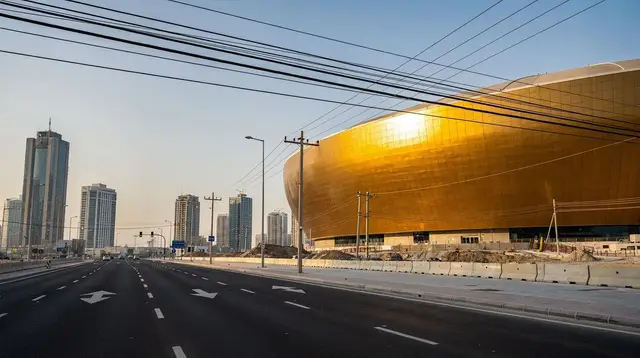
Beyond the museum, the Aspire Zone includes public parkland, an indoor sports dome recognisable by its shape on the Doha skyline, and training facilities that are generally not open to casual visitors. As with Education City, the honest summary is: come for the museum and the open space, and check current access for anything beyond that before you build a plan around it.
Why this area appeals to families
Education City and the Aspire Zone work well for families visiting Doha for a few concrete reasons. First, both districts are built around wide, landscaped, walkable public space rather than dense indoor retail, which gives children room to move that the malls and souqs do not. Second, the 3-2-1 Museum is explicitly designed as an interactive, multi-sensory experience aimed at a broad age range, which makes it one of the more reliably engaging indoor stops in the city for children with an interest in sport. Third, the Aspire Zone’s sporting facilities and open parkland give the area a different rhythm from the rest of Doha’s sightseeing, closer to a city park than a heritage site or a museum island.
None of this requires advance planning beyond deciding how much time to give it: a family with an afternoon free can walk part of Education City, ride the internal tram, and spend the remaining hours at the 3-2-1 Museum, then head back into the city for dinner.
Why architecture and design visitors come here
Education City’s campus buildings were designed by an international roster of architects, and the district is frequently discussed alongside the Museum of Islamic Art and the National Museum of Qatar as evidence of how much contemporary architecture Qatar has commissioned in a short span of time. Unlike those two landmark museums, which sit on the Corniche and are built as single, self-contained statements, Education City is a dispersed campus: its architectural interest is cumulative, building by building and plaza by plaza, rather than concentrated in one striking form.
The mosque is the piece most visitors photograph and remember, but the wider campus rewards a slower look at how the individual buildings sit against the flat desert light and against each other. If your interest in Doha leans toward architecture rather than history or shopping, this is one of the few parts of the city built at a scale and density that supports an unhurried walk.
Getting there and getting around
Al Rayyan sits west of central Doha, and Education City and the Aspire Zone sit next to each other within it, close enough to combine in a single outing. The most direct way in without a car is the Doha Metro’s Green Line to Education City station, from which the free internal Education City tram covers the campus itself; reaching the Aspire Zone on foot from the same station is straightforward given the flat, walkable layout of the precinct. A taxi or ride-hailing app from West Bay or the Corniche is the alternative most visitors use, and it removes the need to think about connections at all.
Because both districts are spread out and built for a warmer climate, plan around the cooler parts of the day for anything outdoors, and treat the museum and any air-conditioned public buildings as your fallback during the hottest hours — a pattern that applies across Doha in summer generally, not just here.
Tours that cover this area
A guided tour is the simplest way to see Education City’s mosque and grounds without needing to work out current access rules yourself, and several operators combine it with a look at the wider Aspire Zone or with other West Bay-adjacent sights on the same day. If you would rather build the day around a fixed group departure than navigate transit connections, one of the following covers the ground described above.
For a broad look at the district alongside other city sights, a full-day city tour that takes in Education City is the most complete single option. Visitors focused specifically on the campus mosque and the sports precinct next door are better served by a tour pairing the Education City mosque with the Aspire Zone.
For a closer look at the mosque itself along with the district’s library and gardens, there is a visit to the Education City mosque, library and Quranic garden. Families wanting to combine this area with one of Doha’s larger green spaces can consider a combined outing to Al Bidda Park and Education City, with pickup included.
Comparing Education City and the Aspire Zone
| District | Main draw for visitors | Typical time needed | Best suited to |
|---|---|---|---|
| Education City | Campus architecture, mosque, internal tram | 1.5–2.5 hours | Architecture and design interest, families |
| Aspire Zone | 3-2-1 Qatar Olympic and Sports Museum, open parkland | 2–4 hours (mostly the museum) | Sport enthusiasts, families with children |
Active ways to see the Aspire Zone
The 3-2-1 Museum draws most of the attention, but the parkland around it is worth a separate mention: Aspire Park is a large, landscaped green space threaded with paths, and it is used by residents for walking, jogging and cycling rather than only as the museum’s front lawn. Visitors who would rather cover this ground actively than as part of a coach itinerary have a couple of options built specifically around the park itself.
A guided cycling tour of Aspire Park takes in the precinct’s paths and open space at a pace a walking visit cannot match, which suits travellers who have already seen the museum and want a different way to spend the rest of a half-day. For those who would rather stay on foot, a guided nature tour of Aspire Park focuses on the park’s landscaping and outdoor features at a slower pace, with a guide on hand to point out what a self-directed walk might miss.
If the museum itself is the priority and you would rather book the ticket ahead of arrival than queue on the day, an admission ticket to the 3-2-1 Qatar Olympic and Sports Museum covers just that, without the wider tour packaging described above. Our dedicated 3-2-1 guide is still the place to check current hours and pricing before you commit to a time.
Beyond Al Rayyan: heading further west
Visitors with a car and a full day free sometimes extend a trip to Education City and the Aspire Zone further west into Al Rayyan municipality, toward Al Shahaniya, roughly 40 km from central Doha and home to Qatar’s main camel racetrack, where races are run with small robot jockeys rather than human riders, and to the nearby Sheikh Faisal Bin Qassim Al Thani Museum. This is a different kind of outing from Education City’s campus architecture or the Aspire Zone’s sports museum — closer to the desert and to Qatar’s Bedouin heritage than to its contemporary building programme — and it makes more sense as a separate half-day than as an add-on to the same day.
Our guide to camel racing in Qatar covers what a visit there involves, and travellers who want to combine the racetrack with the nearby museum in one outing can look at a combined visit to the Sheikh Faisal Museum and the camel race track. Treat this as a note for a longer stay rather than a detour to fit into the same afternoon as Education City.
Where this fits in a wider Doha trip
Education City and the Aspire Zone are not usually a first stop for a short Doha stopover; they suit visitors with at least a couple of days who have already covered West Bay, the Corniche and Souq Waqif and want to see a different part of the city. They pair naturally with a broader look at Doha’s neighborhoods, and travellers planning a fuller three-day Doha itinerary or longer often slot a half-day here alongside a visit to Lusail or The Pearl-Qatar on the same side of a multi-day plan.
If sport is the main reason for your trip, treat the 3-2-1 Museum as anchor and build the rest of the day around it; our dedicated guide to the museum covers what to expect inside in more depth than fits here. If architecture and open space are the draw, give Education City itself the larger share of your time and treat the museum as a strong but optional add-on.
Education City and Aspire Zone: frequently asked questions
Is Education City open to the public?
The public realm of Education City, including its mosque and outdoor art, is generally accessible to visitors, though university buildings themselves serve students and staff. Check current access rules before visiting a specific building.
What is inside the Aspire Zone?
The Aspire Zone is a sports precinct built for regional and international competitions, including the Khalifa International Stadium area and training facilities. Its best-known visitor draw is the 3-2-1 Qatar Olympic and Sports Museum.
What is the 3-2-1 Qatar Olympic and Sports Museum?
It is a museum dedicated to the Olympic movement and to Qatar’s sporting history, located in the Aspire Zone. For opening hours, ticket prices and current exhibitions, see our dedicated guide.
Is Education City connected by tram?
Yes, the Education City tram runs within the district and connects to the wider public transport network at Education City metro station on the Doha Metro’s Green Line.
Why do families visit this area?
Education City and the Aspire Zone combine open, walkable public space, striking modern architecture, and sport-related attractions such as the 3-2-1 Museum, which appeals to children and adults with an interest in the Olympics and football.
Do I need a car to get here?
A car or taxi is the easiest way to reach Al Rayyan from central Doha, though the Doha Metro’s Green Line and the Education City tram also serve the area directly.
How much time should I set aside?
Most visitors treat this as a half-day stop, combining a walk through Education City’s public spaces with a visit to the 3-2-1 Museum in the Aspire Zone.
Doha by Neighborhood
Verified deep-linked GetYourGuide tours. Book through these links and we earn a small commission at no cost to you.
GetYourGuide does not provide a product photo for this activity — the image shows the meeting point, photographed by us.