Is Doha Safe? What I Tell Every First-Time Visitor
Is Doha safe to visit?
Yes. Qatar is consistently described as one of the safest countries to travel in, and I never felt uneasy walking around Doha at any hour. The real risks I'd actually plan around are heat exhaustion, dehydration and off-road driving in the desert, not crime.
What I actually worried about in Doha (and what I didn’t)
Before my first trip, I did what everyone does and typed “is Doha safe” into a search box at midnight. What I found was reassuring in a slightly unsatisfying way — lots of confident claims, not many specifics. So here’s what I can tell you honestly, from having walked the Corniche alone after 11pm, wandered Souq Waqif at dusk, and driven out into the desert south of the city more than once. If this is your first time putting together a Doha trip at all, our guide for first-timers and the trip planning checklist cover the broader groundwork this article doesn’t.
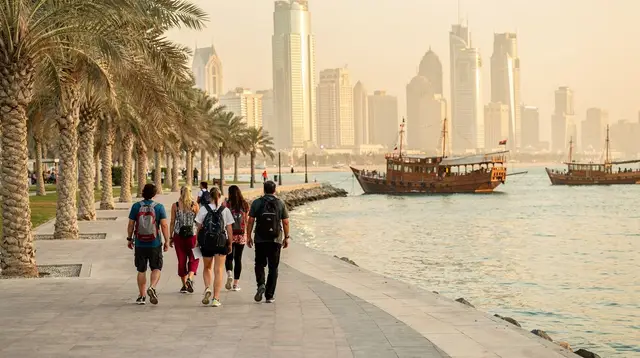
I’m not going to quote you a crime statistic. I looked, and I couldn’t find one from an official Qatari source that I’d feel comfortable repeating, so I won’t invent a number just to sound authoritative. What I can tell you is the pattern that every visitor, every guide, and every local I spoke to described the same way: Doha has a reputation as one of the safest capital cities you can visit, and nothing in my own experience contradicted that. I never had a moment of feeling watched, followed, or targeted, whether I was in West Bay at night or in a quiet corner of Msheireb in the middle of the day.
The risks that are real, and worth respecting
Precisely because Doha’s reputation for low crime is so solid, I think it’s more useful to talk about the things that genuinely can go wrong — because they’re not the things most first-time visitors expect.
Heat is the first one, and it’s not a minor caveat. Qatar’s summer, roughly May to September, is extremely hot and humid, routinely above 40°C. I underestimated this on my first afternoon and paid for it with a headache that ruined an evening. If you’re visiting in summer, the honest plan is to do your outdoor sightseeing early or late and treat the middle of the day as indoor time — museums, malls, the aquarium at Katara, anything with air conditioning. The cooler months, roughly November to March, are genuinely pleasant and make the whole question moot.
Driving is the second one, and it caught me off guard. Doha’s roads are fast, wide and full of confident drivers, and Qatar drives on the right. City driving felt manageable once I adjusted, but the desert is a different matter entirely. Dune bashing and a visit to the Inland Sea (Khor Al Adaid) require an experienced driver and a proper 4x4 — this is not a place for a rental saloon car, and every operator I saw took it seriously.
I did my own desert run with a guide rather than attempting it myself, and I’d recommend the same to anyone. If you want the short version of how to prepare, our own team wrote it up in detail in the desert safari safety tips guide, and I’d read it before you book anything. If you’re weighing whether to rent a car at all for the rest of your stay, our guide to renting a car in Qatar lays out where it does and doesn’t make sense.
Getting there and around felt entirely ordinary. Hamad International Airport is efficient, and the Doha Metro is clean, cheap, and genuinely a pleasure to use for anything within the city. The desert, the north and the west aren’t served by metro, so you’re looking at a taxi, a ride-hailing app, or a tour operator’s vehicle — all things I used without a second thought. Our guide to taxis and ride-hailing in Doha covers fares and apps in more detail than I can here.
Respect for local law and custom, not “safety”
Here’s the correction I most want to make, because I got it wrong myself before I arrived: the dress expectations and alcohol rules in Qatar are not a safety issue. Nobody is going to hurt you for wearing the wrong thing. They’re a matter of respect for a conservative, Muslim-majority society, and treating them that way changed how I approached the whole trip.
In practice, that meant covering shoulders and knees in malls, museums, souqs and government buildings, and packing something with sleeves for mosque visits, where arms, legs and a woman’s hair need to be covered. Swimwear stayed at the beach and the hotel pool, where it belongs. None of this felt restrictive once I stopped thinking of it as a rule to dodge and started thinking of it as the local standard of public modesty — the same instinct that tells you not to wear a bikini into a European cathedral. We go into more detail, including what actually works in the heat, in our dress code guide.
Alcohol works on a similar logic. It isn’t sold in supermarkets or the souqs, but it’s served in licensed hotel bars and restaurants to adults, and I had a drink with dinner more than once without any friction. Public drunkenness is an offence, and bringing alcohol into the country — including from duty-free — isn’t allowed, so I just didn’t try. Our alcohol rules in Qatar guide has the fuller picture if you want it before you land.
If your trip overlaps with Ramadan, which shifts about eleven days earlier every year on the Islamic calendar, the daytime rules tighten further: no eating, drinking or smoking in public during daylight hours, shifted opening times, and a completely different, livelier character after sunset. I’d check the dates for your travel year specifically rather than assume a fixed month, and our Ramadan in Qatar guide walks through what changes for visitors.
Entry requirements depend on your nationality and do change, so rather than repeat a rule here that might be out of date by the time you read this, I’d point you to the official Qatari immigration portals, our own visa and entry requirements guide, or your own government’s travel advisory before you book. It’s a five-minute check that saves you from an unpleasant surprise at Hamad Airport.
What safety actually looked like, day to day
The number I did commit to memory was 999, the emergency number, and I never needed it. What I noticed instead were small, cumulative signals of a genuinely secure place: I saw families out at The Pearl at 10pm without a hint of tension, I left a phone on a café table at Souq Waqif for a few minutes and it was exactly where I left it, and taxi drivers were, without exception, straightforward about fares.
If you want a concrete way to test the water, a half-day out with a licensed operator is a low-stress way to get comfortable with how things run here. I booked the sunrise desert safari for my first full day, mostly because it started early enough to dodge the heat, and it doubled as a good introduction to how professionally the desert tours here are run. Later in the trip I added an evening out with the night desert safari and Inland Sea visit , which felt just as secure after dark as anything I did in the city.
For a lower-key first day, the guided highlights tour of Doha is a gentle way to get your bearings with someone who knows the roads. And if you’re travelling with children and want the desert experience without wondering whether it’s appropriate for them, the family-oriented desert experience is built with exactly that in mind.
Practical safety checklist
| Risk area | What to actually do |
|---|---|
| Heat and dehydration | Carry water, avoid midday outdoor plans May–September, prefer indoor sites at peak heat |
| Desert driving | Book a licensed operator with an experienced driver for dune bashing or the Inland Sea; never attempt it in a rental saloon car |
| Dress code | Cover shoulders and knees in public buildings, souqs and malls; full cover for mosque visits |
| Alcohol | Only in licensed hotel bars and restaurants; none in supermarkets, none brought in from abroad |
| Ramadan travel | Check the current-year dates; expect changed hours and no public daytime eating or drinking |
| Entry rules | Confirm current visa requirements for your nationality before booking flights |
| Emergencies | Save 999; tap water is treated but most people still drink bottled |
None of this reads as alarming to me, and it didn’t feel that way on the ground either. It’s the same kind of preparation I’d do for any unfamiliar country, adjusted for a desert climate and a more conservative culture than I was used to.
Doha safety, answered directly
Is Doha safe for tourists?
Yes. Qatar has a strong, widely repeated reputation as one of the safest countries to visit, and nothing in my own time there contradicted it. The practical risks worth planning around are heat, dehydration and desert driving, not crime.
Is Doha safe for solo travellers, including women?
I met solo travellers, including women, moving around Doha comfortably at all hours, on the metro, in taxis and on foot along the Corniche. Ordinary precautions apply, but the city itself didn’t feel like a place that required extra vigilance.
Is it safe to drive in Qatar?
City driving is fast but manageable if you’re used to busy roads and remember Qatar drives on the right. Off-road driving in the desert, including dune bashing and any route to the Inland Sea, should be left to an experienced 4x4 driver rather than attempted in a regular rental car.
Are the dress code rules in Qatar about safety?
No. They’re a matter of respect for local, conservative Muslim customs, not personal security. Covering shoulders and knees in public buildings, and dressing modestly for mosques, is the expected standard rather than a protective measure.
Can I drink alcohol in Doha?
Only in licensed hotel bars and restaurants, and only as an adult. It isn’t sold in supermarkets or souqs, and bringing your own into the country, including from duty-free, isn’t permitted.
What should I actually worry about in Doha’s climate?
Heat, especially from roughly May to September, when temperatures routinely pass 40°C with high humidity. Plan outdoor activities for early morning or evening, and treat the middle of the day as time for museums, malls or your hotel pool.
What’s the emergency number in Qatar?
- I never had to use it, but it’s worth saving in your phone the way you would in any country before you land.
Does visiting during Ramadan change how safe or comfortable Doha feels?
It changes the rhythm more than the safety: no eating, drinking or smoking in public during daylight hours, different opening times, and a livelier, later evening scene. It moves roughly eleven days earlier each year, so check the current dates rather than assuming a fixed month.
tours.Practical
Verified deep-linked GetYourGuide tours. Book through these links and we earn a small commission at no cost to you.
GetYourGuide does not provide a product photo for this activity — the image shows the meeting point, photographed by us.