One Day in Doha: National Museum, Msheireb and Souq Waqif
Can you see the National Museum of Qatar, Msheireb Downtown and Souq Waqif in a single day?
Yes. The National Museum of Qatar and Msheireb Downtown sit a short ride apart and are linked by the free Msheireb tram, and Souq Waqif is a few minutes further by taxi or metro, so a museums-in-the-morning, souq-in-the-evening structure works comfortably in one day without a car.
Why this day works without a car
This itinerary strings together three of Doha’s most walkable culture stops into a single, unhurried day: the desert-rose silhouette of the National Museum of Qatar, the rebuilt heritage quarter of Msheireb Downtown with its four house-museums, and an evening among the lanterns and coffee stalls of Souq Waqif. None of it requires a rental car. A short taxi or ride-hailing hop, the metro, and the free Msheireb tram cover every leg, which makes this a good pick for a first visit, a stopover with a full day, or a low-budget day between longer desert excursions from our day trips from Doha guide.
Pack for modest dress throughout the day: shoulders and knees covered in the museums and the souq, and a scarf or long sleeves within reach if you plan to step into a mosque. Our dress code guide for Doha has the specifics, and it is worth reading before you leave the hotel rather than at the museum entrance.
Day 1: Morning at the National Museum of Qatar
Start early, since the museum’s galleries are best absorbed without a rush and the building itself, designed by Jean Nouvel and wrapped around the old palace of Sheikh Abdullah bin Jassim, rewards slow walking. Its interlocking disc structure, inspired by the desert rose mineral formation, is one of the most photographed pieces of architecture in the city, and the galleries inside trace Qatar’s geology, Bedouin heritage and the pearling economy through to the modern state.
The National Museum of Qatar is a ticketed Qatar Museums attraction, not a free public building, so budget for an entry fee and check current prices and opening days on the official Qatar Museums channels before you go — the museum, like the Museum of Islamic Art, closes one day a week and hours are updated periodically. Our National Museum of Qatar visit guide and the wider attraction tickets guide both walk through what to check before you buy.
If you would rather have a guide contextualise the museum alongside Doha’s other landmarks on the same morning, the following tour bundles it into a broader loop of the city:
a guided loop that takes in Msheireb, West Bay and Lusail alongside the museum districtPlan on two to three hours inside, plus time in the surrounding park along the Corniche if the heat allows a walk outside afterward.
Day 1: Midday — Msheireb Downtown and its four museums
From the National Museum of Qatar, a short taxi or metro ride brings you to Msheireb Downtown, the rebuilt heritage quarter that anchors the old commercial heart of Doha. This is not a restoration of a single old building but an entire redeveloped district, mixing contemporary low-rise architecture with four preserved historic houses that now operate as the Msheireb Museums: Bin Jelmood House on the history of the slave trade in the Gulf, Company House on the origins of the oil and gas industry, Mohammed Bin Jassim House on the Al Thani family, and Radwani House on everyday Qatari domestic life before the oil era.
Getting between the houses is easy on foot, and Msheireb also runs its own free tram loop, which circles the district and saves the legs on a hot day. This is one of the few genuinely free rides in the city and pairs naturally with a walk through Barahat Msheireb, the district’s central plaza. Our Msheireb Museums guide covers what each house holds, and the Msheireb Downtown walking guide lays out a sensible walking order.
Check each museum’s own current opening days and any entry requirements before you visit, since they are separately run from the National Museum and do not necessarily share the same schedule. Our broader Doha Metro and tram guide explains how the Msheireb tram connects into the Doha Metro network if you want to continue toward West Bay or the Corniche afterward.
A comparison worth reading if you are unsure how to split your museum time across the trip is Museum of Islamic Art versus National Museum of Qatar — useful if a second museum day is on your itinerary later in the week.
For visitors who prefer a single booked experience that covers Msheireb alongside other city sights and a later stop near the water, this combination tour is worth a look:
a half-day city highlights tour covering Msheireb and central Doha landmarksDay 1: Late afternoon — cross to the Corniche
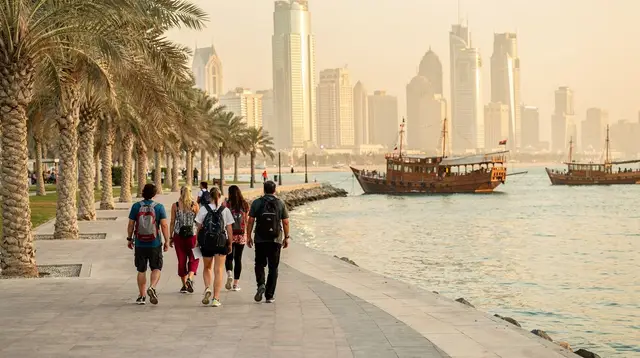
With the museums done, take a taxi or the metro toward the Corniche for a breather before the evening. The waterfront promenade gives good late-afternoon light over the West Bay skyline and the traditional dhows moored along the water, and it is a natural staging point before heading into Souq Waqif a few minutes’ walk or short ride inland. If you are curious about the boats themselves, our dhow cruise practical tips page explains how sunset and evening cruises from this stretch of waterfront work, in case you want to add one on a different evening of your trip.
This is also a sensible point to reconsider the heat: outdoor walking in the middle of the day is genuinely hard for much of the year, and the cooler months from roughly November to March make this whole itinerary far more comfortable than the peak of summer. If you are travelling in the hot season, our Doha in summer indoor activities guide has ideas for shortening the outdoor stretches of a day like this one.
Day 1: Evening at Souq Waqif
Souq Waqif is a restored traditional market rebuilt in the 2000s on the footprint of the historic souq, not an untouched ancient bazaar, and it comes into its own in the late afternoon and evening once the day’s heat has eased. Many stalls stay closed or quiet earlier in the day, so an evening arrival is the right call rather than a compromise.
Wander the alleys for spices, textiles and souvenirs, and make time for the Falcon Souq next door, where falconry is still a working part of Qatari culture rather than a display for visitors — our Falcon Souq guide explains what you will see there and how the adjoining falcon hospital works. For food, the souq’s cafes and karak tea stalls are the easiest introduction to Qatari street food; our Souq Waqif food and karak walk lays out a route between them.
Dress modestly here as everywhere else on this itinerary. The souq is busy, family-oriented and photogenic after dark, with lantern-lit alleys and live music some evenings, and it is the natural place to end a culture-focused day rather than to rush through.
If you would rather join a guided evening loop that folds Souq Waqif into a wider night tour of the city’s illuminated landmarks, either of these covers it:
an evening tour through Souq Waqif and the lit-up skylines of Lusail and The Pearl a combined souq, museum and Lusail outing with hotel pickupA rough shape for the day
| Time | Stop | Notes |
|---|---|---|
| Morning | National Museum of Qatar | Ticketed; allow 2–3 hours; check hours before you go |
| Midday | Msheireb Downtown and its museums | Free tram loop between the four house-museums |
| Late afternoon | Corniche | Short stop for the view and to shift toward the souq |
| Evening | Souq Waqif and Falcon Souq | Busiest and liveliest after the day’s heat eases |
Getting between these stops costs little: metro fares and short taxi or ride-hailing rides are inexpensive, and the Msheireb tram itself is free. This keeps the whole day firmly in budget territory, which is why it suits travellers who want a full, well-paced day of culture without renting a car or booking a private guide, though the tours above remain an option if you would rather have the logistics handled. If you want to see how this day sits inside a longer stay, our one-day Doha highlights itinerary and two days in Doha for first-timers both build on the same neighbourhoods.
Frequently asked questions about this Msheireb and National Museum day
Is the National Museum of Qatar free to enter?
The National Museum of Qatar is a ticketed attraction run by Qatar Museums. Check current ticket prices and opening hours before you go, since they are subject to change.
What time does the National Museum of Qatar open and close?
Hours vary and the museum closes one day a week, so confirm the current schedule on the official Qatar Museums channels before planning your visit rather than relying on a fixed time.
Is the Msheireb tram really free?
Yes, the Msheireb tram loop that circles Msheireb Downtown Doha is free to ride and is the easiest way to move between its museums and squares without a car.
What should I wear to the National Museum of Qatar and Souq Waqif?
Modest dress is expected in both places: shoulders and knees covered for men and women. It is a good habit to carry a light scarf or long sleeves for the evening at the souq as well.
Do I need a car for this itinerary?
No. The National Museum of Qatar, Msheireb Downtown and Souq Waqif are all within a short taxi, ride-hailing or metro connection of each other, and the Msheireb tram covers the middle stretch for free.
When is the best time to visit Souq Waqif in the evening?
Souq Waqif comes alive in the late afternoon and evening, when the heat eases and stalls, cafes and the Falcon Souq are at their busiest; many stalls close earlier in the day.
Are the Msheireb Museums included with the National Museum of Qatar ticket?
No, they are separate sites run separately. Check each one’s own current ticketing before you go rather than assuming a combined pass exists.
Museums and Culture in Doha
Verified deep-linked GetYourGuide tours. Book through these links and we earn a small commission at no cost to you.
GetYourGuide does not provide a product photo for this activity — the image shows the meeting point, photographed by us.