What to Wear and Bring on a Qatar Desert Safari
What should you wear on a desert safari in Qatar?
Loose, breathable, light-coloured clothing that covers the shoulders and lower legs, closed shoes you can easily shake sand out of, a head covering, and sunglasses or goggles against blown sand. Add a warmer layer for an evening or overnight trip and swap back to more modest clothing once you return to the city.
Packing for the dunes, not for the beach
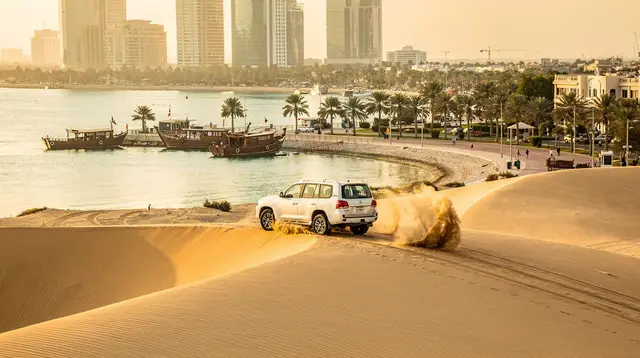
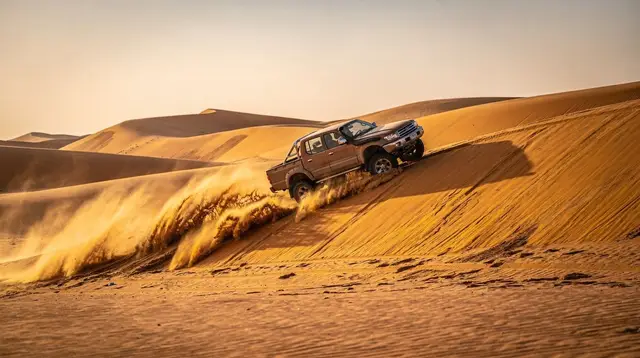
A desert safari out of Doha is a different kind of day from a museum morning or a Corniche stroll, and it rewards a different kind of packing. Most trips gather visitors from their hotel, drive south for roughly an hour to Sealine, near the port of Mesaieed, and spend the rest of the day or evening on the dunes: dune bashing in a 4x4, sandboarding down a slip face, sometimes a quad bike, and often a run out to the Inland Sea at Khor Al Adaid, on the border with Saudi Arabia.
None of that is compatible with the kind of outfit that works well in an air-conditioned mall or a Corniche dhow. This guide focuses specifically on what to put on your body and what to carry in a bag for that stretch of the day, and how to think about the switch back to city-appropriate dress once the safari is over. For the fuller list of everything worth packing for a Qatar trip as a whole, from documents to electronics, see the separate Doha trip planning checklist rather than trying to hold two different packing lists in your head at once.
The starting point is simple: loose, breathable, light-coloured clothing, closed shoes you don’t mind filling with sand, something for your head, and eye protection against blown grit. Everything else in this guide expands on those five ideas and on the layer you add once the sun goes down.
Clothing: loose, breathable, and ready for sand
The single biggest adjustment for a desert safari, compared with an ordinary sightseeing day, is how much sand ends up on your skin and inside your clothes. Dune bashing throws the vehicle around, sandboarding puts you directly on a slip face, and any time spent outside the vehicle near Sealine or on the way to the Inland Sea means walking on loose sand in open air.
Loose-fitting trousers or leggings work better than tight jeans, both for comfort in the vehicle and for shaking sand out afterwards. A breathable long-sleeved shirt or a t-shirt with a light layer over it protects the arms from both sun and abrasion if you end up sitting or kneeling on sand for photos or a sandboarding attempt. Light colours reflect rather than absorb heat and also make it easier to see how much sand has actually settled on the fabric before you get back in the vehicle. Synthetic or technical fabrics that dry quickly and shed sand are more forgiving than heavy cotton, which tends to hold onto both moisture and grit.
On the vehicle and the dunes themselves, most operators do not expect the same coverage that applies in the city: shorts and a t-shirt are common and fine for the setting. The more considered approach is to think of the safari outfit and the city outfit as two separate wardrobes for the same day, addressed in more detail below, rather than trying to find one outfit that works for both a sand dune and a mosque.
Headwear and eyewear against sun and blown sand
A head covering earns its place in the bag well before the vehicle leaves tarmac. Dune bashing and any walking around near the dunes at Sealine or the Inland Sea expose you to direct sun with no shade for long stretches, and a cap, wide-brimmed hat or light scarf makes a real difference over a half or full day. A scarf has the advantage of doubling as extra protection around the neck and lower face if the wind picks up sand while the vehicle is moving or during sandboarding.
Eyewear matters just as much, for a different reason: it is less about sun glare and more about sand thrown up by the vehicle’s tyres or kicked up during sandboarding. Sunglasses that sit close to the face and wrap slightly around the sides do a noticeably better job than flat, open-framed sunglasses, which let grit in from the edges. Some visitors bring dedicated goggles for the bumpiest dune-bashing stretches, particularly if they wear contact lenses, since sand in the eyes is one of the more common minor irritations of the day rather than a serious risk.
Footwear you can shake out easily
Shoes are worth more thought than most visitors give them before the trip. Sandals, flip-flops and open shoes fill with sand within minutes on the dunes and are genuinely easy to lose during sandboarding, when a shoe can slide away down the slip face faster than you can. Closed trainers or light hiking shoes are the more practical choice: they protect the feet during quad biking or when walking near the vehicle, and they are far easier to sit down, remove, empty out and put back on than a boot with a complicated lacing system.
Some visitors choose to go barefoot specifically for the sandboarding section, since bare feet grip the board differently and there is nothing to empty afterwards, then put shoes back on for the rest of the day. Either approach works; what tends not to work is trying to sandboard, dune bash and walk around a rest stop in the same pair of open sandals.
Water, sun protection, and what the operator already provides
Sun protection is not optional for a day that includes real time outside a vehicle: sunscreen, reapplied through the day, and lip balm with SPF are worth carrying regardless of the season, since Qatar’s sun is strong even outside the hottest stretch of the year. A light, breathable layer over bare shoulders or arms does double duty as sun protection and as the kind of coverage that will matter again once you are back in the city.
Most organised desert safaris supply drinking water as part of the package, and many also include a stop for tea, coffee or a light snack, particularly on longer or overnight itineraries. It is still worth carrying your own bottle rather than assuming a single supply point will be enough, especially on a full day that combines dune bashing with a run to the Inland Sea and back. A small dry bag or a bag with a secure closure is useful for keeping a phone, wallet and any electronics away from blown sand, which finds its way into open pockets and unzipped bags with some persistence.
Evening and overnight trips need a warmer layer
A sunset desert safari or an overnight stay in the desert changes the packing list in one specific way: temperatures drop noticeably after the sun goes down, even outside the hottest months, and the desert offers none of the shelter that a city street or a hotel courtyard provides.
A packable layer, such as a light jacket, a fleece or even a warm hoodie, is worth having in the bag for anyone joining an evening or overnight itinerary, regardless of what the daytime temperature has been. This guide deliberately does not attach a number to that advice, since desert nights vary through the year; the practical rule is simply to bring a layer you can put on after dark rather than assuming the warmth of the afternoon will carry through the evening.
An overnight stay adds a short additional list on top of the safari basics: a change of clothes for the next morning, a torch or a phone with a reliable light for moving around the camp after dark, and any personal toiletries, since overnight camps are set up as simple desert camps rather than resort accommodation. Visitors combining the overnight stop with dune bashing, sandboarding or a night at the Inland Sea should still expect a full and active first day before the calmer overnight stretch begins.
Safari clothes are not city clothes
The clearest way to think about dress for the day is as two separate outfits rather than one compromise outfit. On the dunes, near Sealine and around the Inland Sea, the setting is open desert, and most operators do not expect the same coverage that applies to a public street, a market or a religious building. Shorts, t-shirts and swimwear-adjacent layers are common and unremarkable there.
That relaxed standard does not carry over once the safari ends and the day moves back into the city. Doha expects modest dress in its public and cultural spaces: shoulders and knees covered in Souq Waqif, in shopping malls, and inside the Museum of Islamic Art or the National Museum of Qatar. A mosque asks for more again, with covered arms and legs for everyone and a headscarf for women.
The practical solution for a day that combines a morning or afternoon safari with an evening back in the city is simple: pack a lightweight cover-up, a longer skirt or trousers, and a scarf alongside the safari outfit, and change before heading back into Souq Waqif or a museum rather than arriving there in dune-bashing shorts. The same logic applies in reverse on a day that starts in the city and ends with a sunset or overnight safari: dress modestly for the morning’s sightseeing, then change into looser, sand-ready clothing before the vehicle leaves for Sealine.
For the wider question of what to wear in Doha generally, beyond the specific safari-to-city switch covered here, the separate guide on what to wear in Doha and the local dress code sets out the expectations for malls, souqs and mosques in more detail.
Choosing which safari to book around your packing
What you pack shifts a little depending on the exact style of safari booked, since a sunrise trip, a sunset trip, an overnight stay and a full-day itinerary with extra activities all put different demands on clothing and gear.
| Safari style | Typical timing | Packing emphasis |
|---|---|---|
| Sunrise safari | Early morning, before the day’s heat builds | Warm layer for the pre-dawn start, sun protection for later |
| Standard day or afternoon safari | Midday to late afternoon | Sun protection, hat, closed shoes, water |
| Sunset safari | Late afternoon into evening | Daytime sun kit plus a layer for after dark |
| Overnight desert safari | Afternoon through the following morning | Full day kit plus a warm layer, change of clothes, torch |
| Full-day safari with extra activities | Extended day, quad biking, camel rides, more stops | All of the above, plus a secure bag for electronics |
Visitors who want the widest mix of activities in a single outing, from dune bashing to sandboarding to a camel ride, often look at a full-day Doha desert safari that bundles several activities into one trip, which rewards the fuller packing list above rather than the shorter one for a simple sunset run. Anyone specifically drawn to the quieter light and cooler air of early morning can compare that against a sunrise desert safari departing before the rest of the day’s heat builds, which needs a warmer layer at the start more than at the end.
For a broader look at how these different tour styles compare before booking, including the more general questions of timing and what each format actually includes, the dedicated Doha desert safari guide and the guide to dune bashing and what to expect are worth reading alongside this packing-focused page. The sandboarding guide covers the specific footwear question in more depth for anyone planning to spend a lot of the day on the slip faces.
Booking an overnight or multi-day desert trip
Visitors planning to stay out under the stars rather than returning to Doha the same evening should look specifically for an overnight itinerary, since the packing list above assumes exactly that scenario for its warmer-layer and camp-toiletries advice. An overnight desert safari that includes dune bashing, dinner and a night under the stars is the most common way to combine the daytime activities with the cooler, quieter evening in the desert, and the separate guide to overnight desert camps in Qatar covers what the camps themselves are actually like.
For visitors who would rather compare several operators and formats side by side before deciding between a day trip and an overnight stay, a general listing such as the range of desert safari tours available across Qatar makes it easier to match the packing advice above to the specific itinerary being booked, since a two-hour sunset run and a full overnight stay call for genuinely different bags.
Safety comes before styling
None of the packing advice above substitutes for the basic safety point that matters more than any single item on the list: dune bashing and any trip to the Inland Sea should always be with an experienced driver in a proper 4x4, arranged through an organised safari rather than attempted in an ordinary rental car. The clothing and gear covered here make the day more comfortable; the choice of vehicle and driver is what actually keeps it safe. The dedicated guide to desert safari safety in Qatar goes into that side of the trip in more detail, alongside practical notes on heat and hydration that sit outside the scope of a packing list.
Frequently asked questions about desert safari clothing and packing
Do I need to cover my head for a desert safari?
A hat, cap or light scarf is strongly recommended rather than required. It protects against sun and wind-blown sand during dune bashing and makes the walk between the vehicle and a sandboarding dune or the camp far more comfortable.
What shoes are best for sandboarding and dune bashing?
Closed shoes that are easy to slip off and shake out, such as trainers or light hiking shoes, work better than sandals or flip-flops, which fill with sand and can be lost on a dune. Some visitors sandboard barefoot for that section only, then put shoes back on to walk.
Can I wear shorts and a t-shirt on the desert safari itself?
On the safari vehicle and dunes, shorts and a t-shirt are fine for most operators, since the setting is open desert rather than a public street or religious site. The stricter dress expectations apply afterwards, back in Doha’s souqs, museums and mosques, not during the drive out or the dune bashing.
Do I need to bring my own water on a desert safari?
Most organised desert safaris supply water, but carrying your own bottle is still sensible, particularly on a longer or overnight itinerary. It also avoids relying entirely on a single supply point once the group has left Doha.
What should I pack for an overnight stay in the desert?
Add a warmer layer for the evening and night, since desert temperatures drop noticeably after dark even outside the hottest months, along with a change of clothes, a torch or phone light, and any personal toiletries, since overnight camps are simple rather than resort-style.
Do I need sunglasses or goggles for dune bashing?
Sunglasses that wrap reasonably close to the face help with both glare and blown sand during dune bashing, and some visitors prefer proper goggles for the bumpiest stretches. Either is more useful than open-frame sunglasses, which let sand in from the sides.
What do I wear once I’m back in Doha after the safari?
Once back from the desert, the informal safari outfit should give way to the more modest dress expected in Souq Waqif, the Museum of Islamic Art, the National Museum of Qatar and any mosque: shoulders and knees covered, and for a mosque, covered arms and legs plus a headscarf for women.
Desert Safari and Dune Bashing Excursions
Verified deep-linked GetYourGuide tours. Book through these links and we earn a small commission at no cost to you.
GetYourGuide does not provide a product photo for this activity — the image shows the meeting point, photographed by us.