Sandboarding in Qatar: A Practical Guide to the Sealine Dunes
Is sandboarding in Qatar suitable for beginners and kids?
Yes. Sandboarding at Sealine needs no prior board-sport experience, and most operators welcome children old enough to walk back up the dune on their own. It is almost always bundled into a desert safari rather than booked as a separate activity.
What sandboarding at Sealine actually involves
Sandboarding is one of the simplest activities you’ll do on a trip to Qatar, and that simplicity is the point. You stand or sit on a board, a guide gives you a short push or a run-up, and you slide down a face of the Sealine dunes on loose, dry sand. There’s no lift, no piste, no queue system, and no instructor certification to check — just a patch of dune, a board, and a guide who has done this hundreds of times with visitors who have never touched a board before.
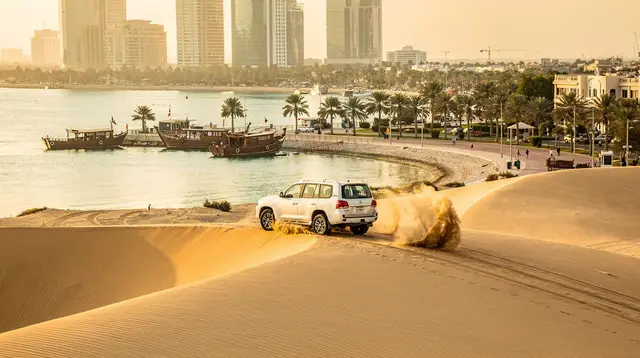
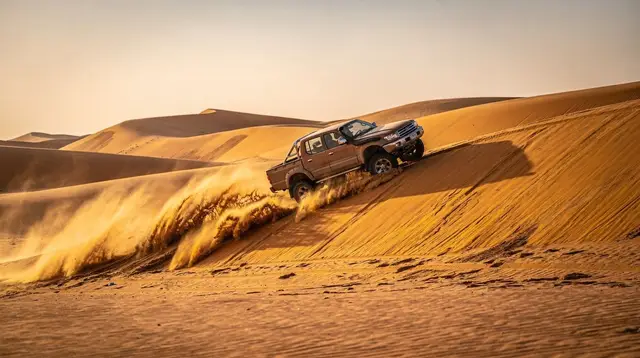
The dunes at Sealine sit close to the industrial port of Mesaieed, roughly an hour’s drive south of central Doha, and they’re the base for almost every desert activity in the country: dune bashing, quad biking and the run out to Khor Al Adaid, the Inland Sea, all start from this same stretch of desert. Sandboarding is rarely the reason people drive out here on its own — it’s one stop within a longer desert safari, squeezed in between the 4x4 dune bashing and either a sunset stop, a barbecue, or the drive back to the city.
That bundling matters for how you plan the day. If sandboarding is the one thing you care about, you’ll still end up booking a safari that includes dune bashing, transfers and often camel rides or a meal, because pure sandboarding-only trips are unusual on the local tour market. Knowing this upfront saves you from hunting for something that mostly doesn’t exist as a standalone product.
Who this suits
Sandboarding at Sealine is built for people with zero board-sport background. You don’t need to have skated, surfed, skied or snowboarded before — the guides assume nobody has, and they teach from scratch every time. The learning curve is short: sit or lie on the board, guide gives instructions, you slide a short distance down a slope, you get up, you do it again if you want to.
It also works well for travellers who are nervous about the more intense parts of a desert safari. Dune bashing — the fast 4x4 driving over the dunes — can be uncomfortable if you’re prone to motion sickness, but sandboarding is a calm, ground-level activity that most people find genuinely relaxing rather than adrenaline-heavy. If you’re choosing a safari partly because a member of your group doesn’t want the bashing, ask the operator whether sandboarding stops are separate from the driving segment, since some routes let you opt out of one and still join the other.
Older kids are usually fine here too — see the family angle below — as are older adults who want to try something on the dunes without anything physically demanding beyond a short uphill walk. If you have mobility issues that make walking on loose, sloped sand difficult, mention that when booking, since the dune surface itself, not the board, is what causes the most difficulty.
The one thing nobody mentions in advance: you walk back up
This is the detail that surprises first-timers most. After every run down the dune, there’s no vehicle, lift or tow rope to bring you or the board back to the top — you carry it and walk. Loose sand on an incline is tiring in a way flat ground never is, and depending on how many runs you do, this uphill walk ends up being the main physical effort of the whole activity, more than the sliding itself.
Plan around this rather than being caught out by it. A few short runs with a couple of climbs back up is enough for most people to feel they’ve properly tried it; if you’re aiming for a longer session, pace yourself, drink water between runs, and don’t feel obliged to match a fitter member of your group run for run. Guides are used to groups splitting off at different points — some do two runs and sit the rest out in the shade, others keep going for twenty minutes. Both are normal.
What to wear and bring
There’s no dedicated sandboarding kit to rent beyond the board itself, so what you wear matters more than any other planning detail. For a full breakdown that also covers the rest of a desert safari day, see our guide on what to wear and bring on a desert safari. For sandboarding specifically:
| Item | Why |
|---|---|
| Closed shoes or strapped sports sandals | Loose sand gets into open sandals and flip-flops fall off mid-run |
| Long trousers or leggings | Protects skin from hot sand and friction during the slide |
| Long-sleeved top | Sun protection during the walk back up between runs |
| Sunglasses | Blowing sand and strong glare off the dune surface |
| Hat, cap or scarf | Sand and sun on an exposed, shade-free dune |
| Reusable water bottle | The climb back up the dune is where dehydration creeps up on people |
| Change of clothes for the car | Sand goes everywhere, including inside shoes and pockets |
Swimwear has no place here despite the desert setting — it belongs to the pool or the beach stops that sometimes follow later in a safari, not to the sandboarding slope itself. Sunscreen, reapplied rather than applied once in the morning, matters more on an open dune than almost anywhere else on a Qatar itinerary, since there’s no natural shade at all.
How it fits into a wider desert safari
Sandboarding is almost never the entire booking — it’s a stop within a longer format. A typical Sealine day starts with the drive south from Doha, a period of dune bashing in a 4x4, then a stretch where the vehicle stops and the group gets out to try sandboarding on a suitable slope. From there, the day might continue toward the Inland Sea, wrap up with a barbecue and camel rides, or head back for a sunset view over the dunes, depending on which package you’ve booked.
For the full picture of how these formats differ — half-day versus overnight, morning versus sunset departures, shared versus private vehicles — read our Sealine desert stay with dune adventure and sandboarding option alongside the main desert safari guide, which is the right starting point for choosing a formula before you commit to a specific tour.
If you’d rather do the dune bashing and sandboarding early and beat the heat, a sunrise desert safari with sandboarding gets you onto the dunes while temperatures are still manageable, which also tends to mean softer light for photos. Families or groups on a budget often look at a shared desert safari with sandboarding and a camel ride, which groups you with other travellers in the same vehicle and keeps costs down without cutting the sandboarding stop.
Some operators fold sandboarding into an evening format instead — see our notes on sunset desert safaris and on tours that add a barbecue dinner after the activities wind down. If you want more time on the dunes generally, our piece on what to expect from dune bashing and on quad biking at Sealine covers the other activities you’ll likely be offered alongside sandboarding on the same trip.
Sandboarding with children
Sandboarding is one of the more child-friendly parts of a Qatar desert safari, largely because the risk profile is low and the activity is self-paced. Most operators are comfortable with children from around six or seven years old, provided they can walk back up the dune under their own steam and follow simple safety instructions from the guide. Toddlers and very young children usually aren’t suitable, less because of the sliding and more because of the walk back up and the sun exposure over a longer session.
If you’re travelling with kids, it’s worth confirming the operator’s specific age policy at the time of booking rather than assuming, since practices vary between companies and can depend on the particular dune site used that day. Our dedicated guide to a family desert safari in Qatar goes into more detail on which formats, timings and add-ons tend to work best with children, including which safaris skip the more aggressive dune bashing in favour of gentler driving before the sandboarding stop.
A note on comparisons
It’s tempting to size up sandboarding against skiing or snowboarding, but the two don’t map cleanly onto each other, and quoting a speed or a difficulty grade for the dunes would be misleading. Sand and snow have different densities and friction, the slopes at Sealine are informal rather than graded runs, and there’s no lift system, piste marking or timing to compare against. Treat sandboarding as its own activity — a short, playful slide down a dune, walked back up by hand — rather than judging it by the standards of a winter sport it only superficially resembles.
Practical timing
Qatar’s climate should shape when you book this. From roughly November to March, daytime temperatures on the dunes are comfortable enough for an extended session with several runs and walks back up; see our notes on the best time to visit Doha for the fuller seasonal picture. Through the summer months, roughly May to September, midday heat on open, shade-free sand is a genuine health risk, not just a discomfort, and operators shift their sandboarding stops to early morning or evening accordingly — our summer survival guide has more on adjusting plans for the heat, and our packing guide covers sun protection for the wider trip.
Whichever season you’re visiting in, ask your operator when the sandboarding stop happens within the day’s schedule — some sunrise and sunset formats time it deliberately for softer light and lower temperatures, while midday-heavy itineraries in summer are worth double-checking before you book. For everything else you need to know about staying safe on the dunes more broadly, including the driving side of a safari, see our desert safari safety guide and, for those extending the day, what an overnight desert camp adds to the experience.
Frequently asked questions about sandboarding in Qatar
Do I need any experience to try sandboarding at Sealine?
No. Sandboarding on the Sealine dunes is designed for first-timers. Guides show you how to sit or stand on the board, and most runs are short slopes rather than long descents, so there is little to master before your first attempt.
Can children go sandboarding in Qatar?
Most desert safari operators allow children to sandboard, typically from around six or seven years old, as long as they can walk back up the dune themselves and follow basic instructions. Ask the operator about their age policy when booking, since it varies.
Do I have to walk back up the dune after each run?
Yes. There is no lift, tow rope or vehicle assistance on the Sealine dunes. After each descent, you carry or drag the board back up on foot through loose sand, which is the main physical effort involved.
What should I wear for sandboarding?
Closed shoes or sports sandals that strap on, long trousers or leggings, a long-sleeved top, sunglasses, and a hat or scarf. Sand gets everywhere and the surface can be hot, so covering skin is more useful than swimwear.
Can I book sandboarding on its own, without a full desert safari?
It is possible in theory, but almost every operator sells sandboarding as part of a wider desert safari package that also includes dune bashing and often sandboarding, camel rides or a barbecue. Standalone sandboarding-only bookings are rare.
Is sandboarding at Sealine similar to skiing or snowboarding?
The two involve sliding down a slope on a board, but that is where a fair comparison stops. Sand and snow behave differently, the dunes are informal and short, and there is no piste grading, lift system or timed run, so it is best judged on its own terms rather than against winter sports.
When is the best time of day or year to go sandboarding?
The cooler months, roughly November to March, are the most comfortable, and safaris often run in the morning or late afternoon to avoid the harshest sun. In the summer months, midday heat on open sand is genuinely risky, so operators shift timings accordingly.
Is sandboarding safe, and is there any real risk?
The activity itself is low-risk with a competent guide, since falls happen into soft sand at a moderate pace. The bigger safety factors around a desert safari are heat, dehydration and the driving on the dunes, which is why choosing an experienced operator matters more than the sandboarding itself.
Desert Safari and Dune Bashing Excursions
Verified deep-linked GetYourGuide tours. Book through these links and we earn a small commission at no cost to you.
GetYourGuide does not provide a product photo for this activity — the image shows the meeting point, photographed by us.