Doha's Cool Season: Why November to March Is When I Actually Go Outside
When is the cool season in Doha and why does it matter?
Roughly November through March is Doha's cool season, when the heat and humidity of summer ease off enough to make walking, desert trips and outdoor evenings comfortable again. It's also the busiest booking window, so tours, dhow cruises and desert camps fill up well in advance.
Why I plan every Doha trip around this one window
I’ve been back to Doha in different months now, and the difference isn’t subtle. Outside the cool season, my days get compressed into two short windows, morning and evening, with the middle of the day spent retreating into whatever air-conditioned building is nearest. During the cool season, roughly November through March, that whole calculation disappears. I can walk the Corniche at midday, linger at Souq Waqif, and not treat the outdoors as something to be rationed.
That’s the entire case for this season in one sentence: it gives the outdoors back to you. Everything else in this guide is really just a list of what that unlocks.
What actually changes when the heat backs off
I’m not going to hand you a temperature chart, because a number on a page doesn’t tell you what it feels like to stand in West Bay at sunset without needing to dash for shade. What I can tell you is what changes in practice.
Walking becomes a real way to see the city again. I can cover Msheireb Downtown on foot, cross over to the Corniche, and still have energy left for the Museum of Islamic Art in the same afternoon. In the hotter months I’d have split that into two separate, air-conditioned errands with a taxi in between.
Evenings stop being the only acceptable outdoor slot. Outdoor evenings are still wonderful in the cool season, don’t get me wrong, but they’re no longer the only option, which changes how I structure a whole day rather than just the last few hours of it.
The desert opens up properly
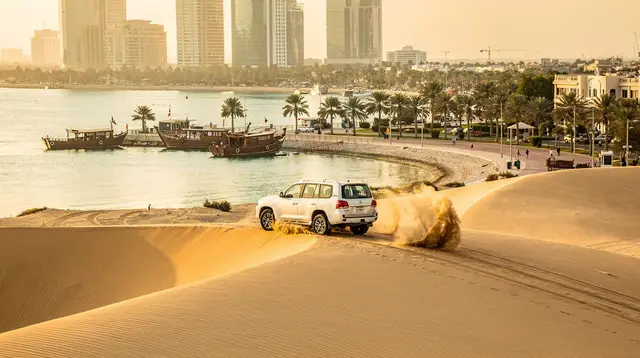
This is the part I look forward to most. A desert day to Sealine and the Inland Sea works year-round in the sense that tours still run, but in the cool season it stops feeling like an endurance exercise. I can actually stay out for the dune bashing, the sandboarding, and the run out to Khor Al Adaid without watching the clock for when I need to get back into a vehicle with air conditioning.
If you want the full rundown of what a desert day involves, I’ve written about it separately in the desert safari guide. For the cool season specifically, one thing I’d add: this is when I actually book the drive-and-see version rather than the shortest possible package, because a longer afternoon in the dunes stops being a liability.
a guided desert safari built around families, with time built in rather than rushed is the one I’d point a first-timer toward in these months, since the pace assumes you’ll actually want to stay out there.
Camel racing at Al Shahaniya is another cool-season fixture. It doesn’t run year-round the way city sightseeing does, and the cooler months are when it’s actually worth the drive out. I’ve covered the practical side of watching a race day elsewhere, but the short version is: check before you drive, because dates move.
North Qatar and the mangroves, without the rush
The cool season is also when I finally get around to the north-Qatar trips I’d otherwise put off. Kayaking through the grey mangroves around Al Thakira is genuinely pleasant on the water when the air isn’t working against you, and it pairs naturally with a stop at Al Zubarah, the walled pearling town that’s Qatar’s only UNESCO site.
a guided day trip north that combines the mangrove kayaking with the historic sites is how I’d do this if I only had one day to give the north coast, rather than trying to string together the drive myself.
Getting around, day and night
One more thing shifts in the cool season: I use taxis and ride-hailing less for short hops and walk more instead, which changes how I experience Lusail, The Pearl and Katara. For longer city days I still like having a driver on hand, and I’d usually pair that with the flexibility of a guided city ride through the main sights at a relaxed pace rather than fixed public transport stops.
Doha at night in these months has its own character, too, cooler air, lit-up skylines, and souqs that stay lively later. If evenings are when I want to see the most, a longer guided night tour that strings together the major landmarks after dark covers more ground than I’d manage wandering alone in the same hours.
Why I book early for this window
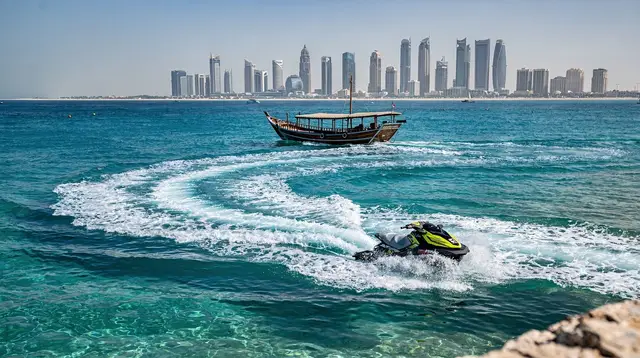
Here’s the part that catches people out: the cool season being the best time to visit means it’s also when the most people are trying to do the exact same things I am. I’m not going to quote you occupancy figures, because I don’t trust point-in-time numbers to still be true when you read this, but the pattern I’ve seen repeat is consistent. The best-timed dhow cruises, the desert camps with the nicest setups, and the rooms with an actual Corniche or skyline view get reserved well ahead of the date, not the week before.
My own rule of thumb: once I know my travel dates fall anywhere in December, January or February, I book the desert day and any evening cruise first, before hotels, because those are the pieces with genuinely limited daily capacity. Everything else in the city, the museums, the souqs, the walking, I can improvise once I land.
Picking your month inside the season
I treat this window as having a shape rather than being one uniform stretch. November and March sit at the edges, still comfortable, with a bit more breathing room on bookings than the peak. December through February is when the season is at its fullest, both in terms of comfort and in terms of everyone else having noticed the same thing I have.
One wrinkle worth flagging: Ramadan follows the Islamic lunar calendar and moves earlier each year, so it can land inside this cool season in some years and not in others. If your dates might overlap, I’d check the specific year rather than assume, since opening hours and daytime routines change noticeably during it.
For planning a fuller trip around this season, I’d start with the general best time to visit Doha piece, then look at how many days actually makes sense with how many days in Doha, and if you’re building out a longer stay, my one-week Qatar itinerary leans specifically on cool-season pacing.
Doha’s cool season, the questions I get asked most
Is November to March really the best time to visit Doha?
For me, yes, without much debate. It’s the only stretch of the year where I can walk the Corniche at midday, sit outside at Souq Waqif for hours, and do a full desert day without planning my whole schedule around the heat.
Do I need to book desert safaris and dhow cruises early in the cool season?
I’d book as soon as your dates are fixed. This is the window when everyone else wants the same evening slots, and the popular sunset cruises and desert camps sell out days ahead, not hours.
What outdoor activities open up that aren’t realistic in summer?
Long stretches of walking in Msheireb and around the Corniche, full-day desert trips to Sealine and the Inland Sea without cutting them short, mangrove kayaking around Al Thakira, and camel racing at Al Shahaniya, which mostly happens in these cooler months anyway.
Which months inside the cool season should I pick?
I treat November and March as the shoulder months, still comfortable but with fewer other travellers than the heart of winter, and December through February as the peak, when everything is at its best and its busiest.
Does the cool season affect prices and availability?
It affects availability more than headline prices for me. Hotels and tours don’t collapse into scarcity, but the best rooms with a skyline or Corniche view, and the earliest or latest desert safari departures, go first.
Is the cool season also when Eid or Ramadan might fall?
It can, because both follow the Islamic lunar calendar and shift roughly eleven days earlier each year, so they land in a different part of the cool season from one year to the next. I always check the dates for my specific travel year rather than assuming.
What should I still pack even in the cool season?
A light jacket for the evenings, comfortable walking shoes, and modest clothing for museums, souqs and mosques. Days are pleasant, but Doha’s air conditioning indoors and the breeze off the Gulf in the evening can both catch you underdressed.
Seasonal Guide
Verified deep-linked GetYourGuide tours. Book through these links and we earn a small commission at no cost to you.
GetYourGuide does not provide a product photo for this activity — the image shows the meeting point, photographed by us.