What to Pack for Doha: My Real Packing List
What should I pack for a trip to Doha?
Pack light, loose, covering clothes for the heat and for mosques and museums, a warm layer for winter desert evenings, a Type G plug adapter, and strong sun protection. Skip duty-free alcohol entirely — it cannot be brought into the country.
I overpacked for my first trip to Doha, and I underpacked for my second. Somewhere between those two suitcases is the list I actually use now, and it changes more with the season than with anything else I read before I first landed at Hamad International.
If this is your first time putting a Doha trip together, packing is really the last step. I’d sort the bigger pieces first — visa and entry requirements, a rough sense of what things cost, and how you’ll stay connected with an eSIM or local data plan — before worrying about what goes in the suitcase. My full guide to planning a Doha trip walks through that order if you want the whole sequence in one place.
Start with the season, not a generic list
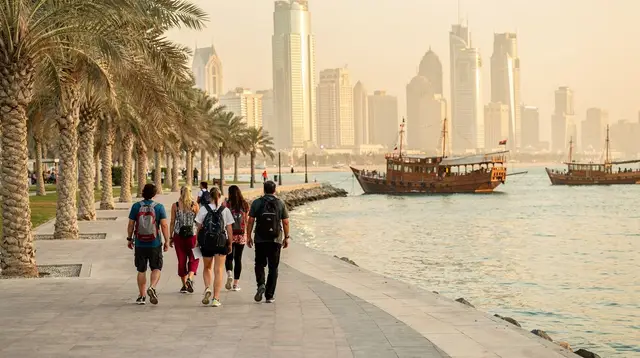
Doha runs on two very different packing lists depending on when you go. If you land in the cooler months, roughly November through March, you’ll be comfortable outdoors most of the day and genuinely cold after sunset, especially out on the sand. If you land in the hotter stretch, roughly May through September, everything you pack is about surviving the walk from an air-conditioned taxi to an air-conditioned mall, museum, or hotel lobby, because you won’t be spending much time outside in the middle of the day either way.
I’m not going to give you a number for how hot it gets — it’s genuinely extreme, and every guidebook that quotes a figure is out of date by the time you read it. Just plan around “indoors by midday” and you’ll be fine. If you’re still choosing dates, my notes on the best time to visit Doha go into the trade-offs, and I’ve got season-specific guides for both ends: the cool season and surviving the summer heat.
Whichever season you land in, the base layer of the list is the same: light, loose, covering clothes. I go into the actual rules and the reasoning behind them in what to wear in Doha and the local dress code, but for packing purposes, the short version is that shoulders and knees stay covered in malls, museums, souqs and government buildings, and mosques ask for covered arms and legs, with a headscarf for women. That one rule shapes half of what’s in my bag.
The same modesty expectations run through everyday etiquette more broadly — worth a skim in my notes on Qatari etiquette and majlis culture — and if your dates overlap with Ramadan, the rules for visitors during Ramadan affect a few packing choices too, on top of when things are open, which I cover in Friday opening hours in Doha.
The base layer: light and covering, always
For both seasons I pack:
- Loose linen or cotton trousers and long, breathable skirts or dresses — cooler than they look, and they clear the “knees covered” bar everywhere without a second thought.
- Short-sleeve or three-quarter-sleeve tops in breathable fabric, plus one or two long-sleeve linen shirts I can throw on for a mosque visit or a museum without needing to change.
- A large, light scarf. I use mine as a headscarf at the mosque, as sun cover on my shoulders, and as an extra layer on the plane. One scarf does three jobs.
- Closed, comfortable walking shoes for the Corniche, Souq Waqif and the museums, plus sandals for the hotel pool or beach.
- Swimwear, kept strictly for the pool, the beach and hotel grounds — not for the souq or the Corniche.
I keep the cut loose everywhere. Tight, sheer or very short clothing works against you twice over in Doha: it’s uncomfortable in the heat, and it draws the kind of attention that loose linen just doesn’t.
What changes for a winter trip
If you’re visiting in the cooler months, the piece everyone forgets is a proper warm layer for the evening — not for the city, but for the desert. A desert safari that runs into sunset or overnight, out toward Sealine or the Inland Sea, gets noticeably cold once the sun is down and the wind picks up over open sand — a night desert safari and Inland Sea visit is exactly the kind of after-dark trip this applies to.
I’ve been caught out there in just a light jacket and regretted it. Pack a fleece or a packable down layer, plus proper socks, if any part of your trip includes an evening or sunset desert safari or an overnight desert camp. During the day, the cooler season is genuinely pleasant, so a light jacket for the morning and evening in the city is plenty; you won’t need real winter clothing anywhere else.
I’ve got a whole guide dedicated to what to wear and bring on a desert safari if you want the full checklist beyond just the warm layer, plus a separate rundown of desert safari safety tips that’s worth reading before you book.
What changes for a summer trip
In the hotter months, the packing list gets simpler, not harder: more of the light, loose cotton and linen pieces above, a hat, and nothing warm at all. The one thing that matters more in summer is planning your day around indoor time — museums, malls, Msheireb — and saving outdoor stops like the Corniche or Souq Waqif for the early morning or after sunset, which is when Souq Waqif is liveliest anyway. It’s also why a desert safari sunrise tour works well in the hotter months — you’re back before the heat builds.
If you’re only in Doha on a layover
A lot of what I get asked about packing actually comes from people on a stopover rather than a full trip. The good news is the list doesn’t really change — see the FAQ below — but if you’re still working out what’s realistic in the time you have, my guides on what’s possible on a short layover in Doha and the broader Doha stopover guide are the place to start, along with a practical note on getting from Hamad Airport into the city centre.
Sun protection, every season
Doha’s sun is strong year-round, cooler months included, so this stays in the bag whatever the calendar says:
| Item | Why |
|---|---|
| High-SPF sunscreen | Reapply outdoors even in winter; the desert and the Corniche offer little shade |
| Sunglasses | Glare off the water on the Corniche and off the sand is sharper than it looks |
| Wide-brim hat or cap | For the souq, the desert, and any walking tour |
| Refillable water bottle | Tap water is treated, but most people still drink bottled; a bottle you can refill cuts down on plastic either way |
| Lip balm with SPF | Easy to forget, easy regret on a desert safari day |
The adapter you cannot skip
Qatar runs on Type G sockets — the same three-pin plug as the UK — at 240V. If you’re coming from continental Europe, North America, or most of Asia, you need an adapter, and I’d pack two: one for your phone and one for everything else, because hotel rooms often have fewer sockets than devices. I buy mine before I fly; airport shops sell them but at a markup, and it’s one more thing to hunt down after a long flight.
Worth charging that adapter’s devices before you head out for the day, too — between taxis, the metro and walking, you’ll want your phone for maps and ride-hailing apps more than you’d expect. My guide to getting around Doha covers the options.
The one thing to leave at home: duty-free alcohol
This trips people up more than anything else on this list. Alcohol is not sold in supermarkets or souqs in Qatar, and it’s served only in licensed hotel bars and restaurants, to adults, on-site. What catches travellers out is assuming duty-free is an exception — it isn’t. Bringing alcohol into the country, including anything bought duty-free at your departure airport, is not allowed. If you want a drink with dinner, it’ll be at your hotel, not from your suitcase.
My actual carry-on, condensed
If I’m boiling it down to what goes in the bag I keep on me, not checked: one long-sleeve linen layer and a headscarf for an impromptu mosque or museum stop, sunscreen, sunglasses, my adapter, a refillable water bottle, and — in winter only — a packable fleece in case the day runs long into a desert evening. Everything else is exactly what I’d pack for any warm-climate city trip, cover-up rules aside.
Frequently asked questions about packing for Doha
Do I need to cover my hair in Doha?
Only inside mosques, where a headscarf is expected for women. Elsewhere in the city — malls, the souq, the Corniche, restaurants — covering your hair is not required, though shoulders and knees should stay covered.
Can I wear shorts and a t-shirt in Doha?
You can on the beach, at the pool, or on hotel grounds. In malls, souqs, museums and government buildings, modest dress with shoulders and knees covered is expected instead.
What plug adapter do I need for Qatar?
A Type G adapter, the same three-pin type used in the UK, for 240V/50Hz sockets. Pack more than one if you’re travelling with several devices.
Can I bring alcohol into Qatar from duty-free?
No. Alcohol is not permitted into the country under any circumstances, including duty-free purchases from your departure airport. It’s available only at licensed hotel bars and restaurants once you’re there.
How cold does it get in the desert at night in winter?
Cold enough to need a proper layer — I don’t quote exact temperatures because they vary year to year, but evenings on an overnight or sunset desert safari are noticeably colder than the city, so pack a fleece or packable jacket if your winter itinerary includes one.
Do I need special shoes for the desert or the souq?
Closed, comfortable walking shoes work for both. Sand gets into sandals quickly on a desert safari, and Souq Waqif’s stone paths are easier in flat, closed footwear.
Should I pack differently for a stopover than for a longer stay?
Not really — the same base layer of light, covering clothing and sun protection applies whether you have a few hours or a week. A stopover just means you’ll want it all easy to reach in one bag rather than spread across checked luggage.
Is bottled water necessary if tap water is treated?
Not strictly, since Doha’s tap water is desalinated and treated, but most residents and visitors drink bottled water anyway. A refillable bottle you top up from bottled water is a reasonable middle ground.
tours.Planning
Verified deep-linked GetYourGuide tours. Book through these links and we earn a small commission at no cost to you.
GetYourGuide does not provide a product photo for this activity — the image shows the meeting point, photographed by us.