Private Desert Safari in Doha: Is It Worth the Upgrade?
Is a private desert safari in Doha worth booking over a shared one?
A private desert safari uses the same dunes at Sealine and the same route to the Inland Sea as a shared tour; what changes is the vehicle, the group and the schedule. It suits families, layover passengers with a narrow window and anyone prone to motion sickness who wants to set their own pace, at a moderate premium over the shared price rather than a fixed dollar gap.
Same Dunes, Different Rhythm
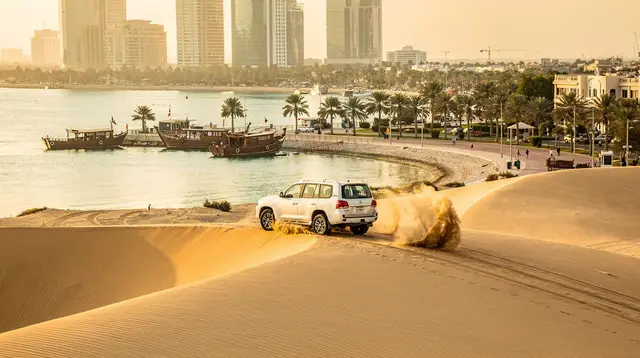
Almost every desert safari that leaves Doha, private or shared, is heading to the same place: the dune field around Sealine, roughly an hour south of the city near the industrial port of Mesaieed. The confusion many first-time visitors have is thinking that “private” means a different, more exclusive stretch of desert, or a different route to the Inland Sea.
It doesn’t. The sand is the same sand. What a private booking actually buys is a 4x4 reserved for your own family or group, a driver working to your schedule instead of a fixed departure board, and the freedom to slow down, speed up, stop for photos or skip a stage without checking with strangers sitting next to you.
That distinction matters more than the marketing around “private” and “exclusive” safaris usually suggests, and it’s worth being clear about it before comparing prices, because the two products solve different problems rather than offering different experiences of the desert itself. For the full rundown of what a Sealine safari involves from pickup to return, our desert safari guide covers the standard shape of the day; this page focuses specifically on when paying for a private vehicle is worth it and when it isn’t.
Private vs Shared: What Actually Changes
A shared desert safari groups unrelated travellers, usually four to six per 4x4, on a fixed departure time set by the operator. You are on someone else’s schedule: the driver waits for stragglers at the hotel pickup, the group moves through dune bashing, a stop for photos, sandboarding and often a sunset viewpoint at a pace that suits the average of everyone on board, and the vehicle heads back once the operator’s itinerary says so.
A private safari puts one family or one group in the vehicle. The driver still knows the same dune circuit and still runs the same core stages, but the order, the pacing and the stops are negotiable. Want to skip sandboarding and spend longer at the Inland Sea instead? Ask before you leave Doha. Need to be back at a specific time for an airport transfer? A private booking can be built around that constraint in a way a shared tour, which has other passengers to consider, cannot.
The table below sets out the practical differences without pretending to fix a dollar amount on either option, since that varies by operator, season and how many people share the private vehicle.
| Factor | Shared safari | Private safari |
|---|---|---|
| Dunes and route | Same Sealine dune field | Same Sealine dune field |
| Group in the vehicle | Strangers, fixed group size | Your own family or party only |
| Departure time | Fixed slot set by operator | Negotiable within reason |
| Pace of dune bashing | Set to suit the group average | Adjustable driver to driver |
| Ability to skip or add stops | Limited, follows shared plan | Flexible, agreed in advance |
| Relative price per person | Lower | Higher, narrower gap in larger groups |
| Best suited to | Solo travellers, budget-conscious groups | Families, layovers, motion-sensitive travellers |
Who Actually Benefits from Going Private
Three groups get the most out of paying for a private vehicle, and it’s worth being honest that outside these situations, a shared safari does the same core experience for less.
Families with young children. A driver sharing a vehicle with unrelated adults has to bash dunes at a pace those adults expect, which can be more aggressive than what a nervous seven-year-old wants. In a private vehicle, the same driver can dial the ride down, take gentler lines over the crests, and stop more often without holding up anyone else. Our family desert safari guide goes into more detail on preparing children for the dune-bashing stage specifically.
Layover passengers with a narrow window. Doha’s position as a Qatar Airways hub means a meaningful share of desert safari bookings come from passengers on a long stopover rather than a full holiday. A shared tour’s fixed departure and return times can eat into a tight connection; a private vehicle can leave the moment you clear immigration and be timed precisely against your onward flight. See doha layover desert safari for how this is usually structured, and the broader Doha stopover guide for what else fits into a short window.
Anyone prone to motion sickness. Dune bashing is, by design, a series of sharp climbs, drops and side-to-side lurches over soft sand, and it is the single most common reason people feel unwell on a Sealine safari. In a shared vehicle the driver has little room to adjust for one uncomfortable passenger without affecting everyone else’s experience. In a private vehicle, telling the driver to ease off, take a straighter line, or pause on a ridge for a few minutes is a normal request, not an inconvenience to the group.
Outside these three cases — a solo traveller, a group of friends who don’t mind a fixed schedule, or anyone mainly booking to tick the dune-bashing box — a shared safari delivers essentially the same core experience for a lower relative cost, and the money saved is often better spent on an add-on like a barbecue dinner or an overnight stay at the desert camp.
Timing Flexibility: The Real Advantage
If there’s one advantage that separates private from shared more than any other, it’s control over timing, not luxury. A shared safari operator sets a single departure window for the whole vehicle — commonly a mid-afternoon pickup timed so dune bashing and the desert photo stops happen before sunset. That window works well for most visitors but poorly for anyone whose day doesn’t match it: an early arrival wanting to be back for an evening flight, a family wanting an earlier start to avoid the worst heat, or a group that would rather do dune bashing at sunrise than sunset.
A private vehicle removes that constraint. You can typically choose between an early-morning departure, the standard afternoon-to-sunset run, or in some cases an overnight stay that folds into a stargazing evening at the desert camp — see our overnight desert camp guide and sunrise desert safari guide for how those variants differ from the standard sunset run. None of this changes which dunes you visit; it changes what time of day you’re on them, and in a hot-desert climate where midday heat is a genuine consideration for most of the year, that choice is worth more than it sounds.
Motion Sickness and Dune-Bashing Pace, in Practice
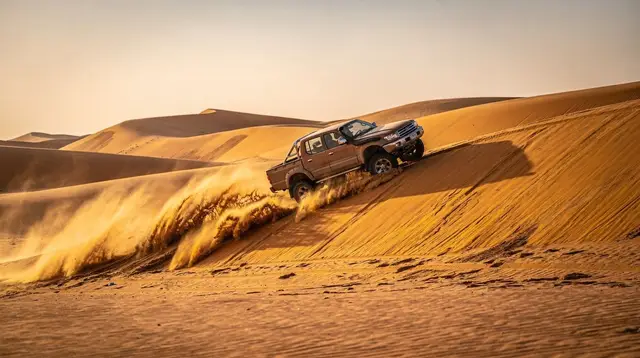
Dune bashing itself doesn’t change between private and shared bookings — the same experienced drivers, the same 4x4s, and the same general technique of climbing and descending the dune faces at an angle that keeps the vehicle stable. What changes is how much say you have over the intensity. For background on what the stage actually involves before you book either option, dune bashing: what to expect is a useful primer, and desert safari safety tips covers the off-road risks that apply regardless of vehicle type.
In a shared vehicle, the driver reads the mood of the group as a whole; if most passengers are enjoying a fast, aggressive ride, a quieter voice asking to slow down can go unheard or feel like it’s spoiling things for everyone else. In a private vehicle, that conversation happens before you even leave Doha: tell the operator when booking, or the driver at pickup, that someone in the group gets carsick, and a good driver will adjust from the first dune rather than the fifth.
It’s worth noting that no vehicle type eliminates motion sickness entirely — the movement itself is inherent to the terrain — but a private booking gives you meaningfully more control over the variables that make it worse or better.
What a Private Desert Safari Actually Includes
Most operators build a private Sealine safari around the same core stages as a shared one: hotel pickup, transfer roughly an hour south, a stretch of dune bashing, a photo stop, sandboarding on a suitable dune face, and often an option to continue on to the Inland Sea before returning to Doha. Some private packages fold in extras that are harder to arrange on a shared tour, such as a barbecue dinner at a private setup, a camel or horse ride, or a quad bike session timed to avoid queuing behind other groups.
a private 4x4 safari with dune bashing and sandboarding at Sealine is the most direct match for travellers who want the standard safari shape with a vehicle to themselves. Families or small groups who want the flexibility of a private vehicle but at a lower relative cost sometimes look at a combo tour that mixes private and shared elements with an ATV ride, which can be a useful middle ground.
For a longer private day that ends with dinner in the desert, a private desert tour with a barbecue dinner and swim stop adds an evening component that a rushed shared tour rarely has time for.
Layover passengers with a tightly defined window between flights tend to prioritise a guaranteed return time over any of the add-ons above; a private layover desert safari with an ATV ride built around flight timing is aimed specifically at that case, and for a shorter add-on that doesn’t need a full 4x4 circuit, a private horse and camel ride in the desert is a gentler, lower-cost alternative that still gets you into the dunes without the dune-bashing stage.
For what to wear and bring on any of these variants, desert safari: what to wear and bring applies equally to private and shared bookings, since the terrain and climate don’t change with the vehicle.
Booking a Private Safari: What to Ask Before You Pay
Because “private” is used loosely by different operators, it’s worth confirming a few specifics before booking rather than assuming every private listing means the same thing:
- Vehicle exclusivity. Confirm the 4x4 is genuinely reserved for your party alone, not a smaller shared group marketed as semi-private.
- Departure flexibility. Ask whether the pickup time is genuinely adjustable, particularly if you’re timing the safari around a flight — see airport transfer combinations for how some operators link transport and safari bookings.
- What’s included versus optional. Sandboarding, quad biking, camel rides and the barbecue dinner are sometimes bundled and sometimes charged as add-ons even on private bookings.
- Inland Sea inclusion. Not every safari continues to Khor Al Adaid; if reaching the Inland Sea matters to you, confirm it’s part of the private itinerary rather than assuming it.
- Group size cap if “private” means small-group. Some listings labelled private actually mean a cap of two or three unrelated bookings rather than one party — worth a direct question if that distinction matters to you.
If you’re still weighing whether Sealine’s standard dunes or the longer run to the Inland Sea suits your group better, Sealine vs Inland Sea safari lays out that comparison directly, and the one-day desert safari and Inland Sea itinerary shows how a full day combining both is typically structured, private or shared.
Private Desert Safari FAQ
Does a private desert safari visit different dunes than a shared one?
No. Both leave Doha for the same stretch of dunes around Sealine, and both can continue to the Inland Sea. The operator, the vehicle and the timing change, not the terrain.
How much more does a private safari cost than a shared one?
Pricing varies by operator, season and group size, so a fixed figure goes stale fast. As a rule of thumb, expect a private vehicle to cost noticeably more per person for a small group, with the gap shrinking as more people share the same 4x4.
Can a private safari help with a short Doha layover?
Yes. A private vehicle can depart as soon as you land and clear the airport, run to a schedule you set, and return you in time for a connecting flight, which a fixed-departure shared tour cannot guarantee.
Is a private desert safari better for people who get carsick on dunes?
It generally is, because the driver can slow down, take gentler lines over the dunes, or pause more often, none of which is possible when a shared vehicle is following a group schedule.
Do private safaris still include dune bashing?
Yes, dune bashing is the core of both private and shared safaris at Sealine. A private booking simply lets you ask for a gentler or more aggressive style depending on who is in the vehicle.
Is a private safari safer for young children or older travellers?
It can be, since the driver isn’t balancing the preferences of strangers in the same vehicle and can adapt speed and route to the passengers on board, though the Inland Sea and dune bashing still carry the same off-road risks regardless of vehicle type.
Can I combine a private desert safari with other stops?
Most private operators will build in a camel ride, a stop for photos at the Inland Sea, or a barbecue dinner on request, since the itinerary is not shared with another party.
Desert Safari and Dune Bashing Excursions
Verified deep-linked GetYourGuide tours. Book through these links and we earn a small commission at no cost to you.
GetYourGuide does not provide a product photo for this activity — the image shows the meeting point, photographed by us.