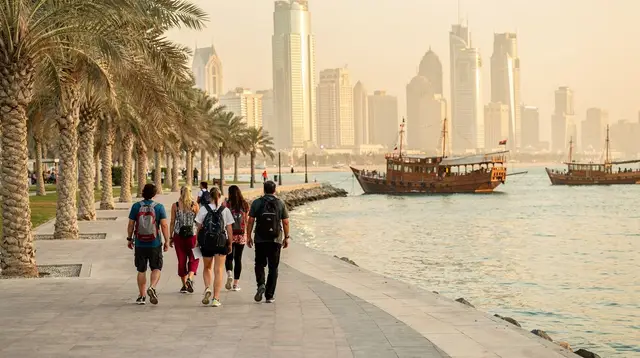
Doha Food Tour: Souq Waqif Tastings and What to Expect
What does a Doha food tour actually include?
Most Doha food tours are evening walks through Souq Waqif combining tastings of dishes like machboos and karak with commentary on the different communities behind the food. They are usually part of a wider city or heritage tour rather than a standalone restaurant crawl, and exact stops depend on the operator and the day.
Where Doha’s food culture actually lives
Doha does not have a single “food district” the way some cities do. Its most interesting eating happens where its history and its present-day population overlap, and that place is Souq Waqif. The market itself was rebuilt in the 2000s on the footprint of the old trading souq, so what you’re walking through is a restored version of a historic layout, not an untouched relic.
What makes it worth a dedicated food visit is less the buildings and more who cooks there: Qatari families running stalls alongside cooks from South Asia, the Levant, East Africa and beyond, reflecting the fact that the large majority of Doha’s residents are expatriates. A food-focused walk through Doha is really a walk through that mix, and Souq Waqif in the evening is where it’s most visible and most edible.
This guide explains what a guided food tour adds to that experience, what you can expect to actually eat, and the practical rules — timing, Ramadan, alcohol — that shape when and how food is available in Qatar.
What a guided food tour adds over eating on your own
Nothing stops you from wandering into Souq Waqif alone, picking a stall, and ordering. Plenty of visitors do exactly that, and it works fine. A guided tour adds a few specific things rather than access you couldn’t otherwise get:
- Context on the dishes. A guide can explain what distinguishes machboos from a generic spiced rice dish, why karak tea is served the way it is, or which stall’s specialty comes from which community’s cooking tradition — information that isn’t written on any sign.
- A route through a genuinely large, maze-like market. Souq Waqif’s alleys aren’t laid out for first-time efficiency, and a guide who already knows the layout can move you between tastings without the wrong-turns and backtracking that eat into an evening.
- A structured pace across several small tastings, rather than committing your whole appetite (and evening) to one restaurant’s menu.
- Bundling with a wider visit. Most food-focused options in Doha aren’t sold as a standalone restaurant crawl; they are woven into a broader evening or city tour that also takes in the Corniche waterfront, the skyline, or Souq Waqif’s shopping lanes, so you see more of the city around the food.
What it does not add is exclusive access — nobody needs a booking to sit down at a public stall in the souq — and it is not a guarantee of any specific dish or restaurant, since stalls and offerings change and no operator can promise a fixed menu months in advance.
Machboos, karak, and the layers behind them
Three things are worth understanding before you go, because they explain a lot of what you’ll see and taste.
Machboos is the dish most associated with Qatari and wider Gulf home cooking: rice, usually basmati, cooked with a blend of warming spices and slow-cooked meat or fish, often finished with fried onions or dried lime. It’s less a single fixed recipe than a family of dishes, and versions vary from one cook to the next.
Karak is strong black tea boiled with milk, sugar and usually cardamom, sold from small stalls and karak houses across Doha, not just in the souq. It’s inexpensive, ubiquitous, and as much a social ritual — something people sit around and talk over — as a drink.
The expatriate layer is what makes Doha’s food scene wider than Qatari cuisine alone. Because the large majority of the population is made up of expatriate communities, Souq Waqif and the streets around it host cooking from South Asia, the Levant, Iran, East Africa and elsewhere, alongside pastry stalls selling sweets from several of those traditions side by side. A food tour that only covers Qatari dishes is telling half the story; the more interesting ones acknowledge this mix directly.
When Souq Waqif actually comes alive
Timing matters more here than in most markets, because Souq Waqif genuinely has an off state and an on state.
| Time of day | What’s actually happening |
|---|---|
| Morning to early afternoon | Many stalls are closed or quiet; heat for much of the year makes this an unappealing time to walk around anyway |
| Late afternoon | Stalls begin reopening, foot traffic picks up |
| Evening | The souq is at its busiest and most atmospheric — the main window for a food-focused visit |
| Friday, before midday prayers | Many stalls open later than usual, in line with the wider Friday and Saturday weekend |
If you’re weighing when to schedule a food-focused evening against everything else on a Doha itinerary, see one day of Doha highlights for how it fits alongside the Corniche and the museums, and what to eat in Qatar for more on the dishes themselves.
Ramadan: what changes and why it matters here specifically
This is the single most important practical point for a food tour, and it’s easy to get wrong because Ramadan doesn’t fall on a fixed date: it follows the Islamic lunar calendar and shifts about eleven days earlier each year, so a rule tied to “March” or “April” one year won’t hold the next.
During Ramadan, eating, drinking and smoking in public in daylight hours is not allowed, for residents and visitors alike. Restaurant and stall opening hours shift accordingly — many places close through the day and reopen after sunset, when the souq and the wider city become genuinely lively, often busier at night than at any other time of year. A food tour booked without checking the calendar could land in the middle of the day, when the tasting stops you’d expect simply aren’t operating the way they do the rest of the year. If your visit might overlap with it, read Ramadan in Qatar: rules for visitors before you book anything, and check the current dates rather than relying on last year’s.
Alcohol: not part of this experience
Worth stating plainly, since it surprises some first-time visitors: alcohol is not sold in supermarkets or in the souq. It’s available only in licensed hotel bars and restaurants, served to adults, and public drunkenness is treated as an offence. Bringing alcohol into the country — including anything bought at duty-free — is not permitted. A Souq Waqif food tour is a dry experience by default; tea, juices and soft drinks are the norm alongside the food itself, and karak is arguably the signature drink of the whole visit.
What we won’t do in this guide
We’re not going to name specific restaurants, stalls or price points here. Souq Waqif’s food scene changes — stalls open, close and change hands, menus shift, and prices move — and a fixed list risks sending you to a restaurant that no longer exists or quoting a price that’s since changed. What we can tell you reliably is how the experience works, when to go, and what to expect; for current names and numbers, check the tour operator’s own listing or current local reviews at the time you book.
Dress and etiquette for an evening food walk
Souq Waqif is a public market in a country where modest dress is the norm: shoulders and knees covered is the general expectation in shops, museums and public spaces, and swimwear has no place here regardless of the heat. None of this is unusually strict for an evening walk and a few tastings — it’s simply the same standard that applies to the Corniche and most of the rest of the city — but it’s worth dressing for it rather than for a beach evening. For a wider sense of what to expect around cafés, families and general souq behaviour, see Qatari etiquette and majlis culture.
How a food-focused tour usually fits into a wider visit
In practice, few Doha operators sell a pure, standalone food crawl. Food tastings are usually one element of a broader evening or city tour, which tends to work in your favour: you get the souq’s food alongside its wider sights, rather than only the food.
A tour built around traditional food and a city overview is the most direct match for what this guide covers — see a Doha city tour built around a traditional food tasting for the closest fit to a food-first evening. Several operators frame the same idea around Arabic cuisine specifically: a private Doha city tour paired with Arabic food covers similar ground with a smaller-group format.
If you’d rather see Souq Waqif at night alongside Doha’s newer districts, an evening tour taking in Souq Waqif, Lusail and The Pearl puts the souq’s food scene in context against the skyline and the newer waterfront developments, useful if you want the food evening to double as your introduction to the city after dark. For a fuller sit-down option rather than a tasting walk, a city tour that includes a four-star buffet lunch is a daytime alternative if an evening slot doesn’t suit your schedule.
Souqs and food, beyond the tastings themselves
Food is only one reason to spend an evening in Souq Waqif. The adjoining Falcon Souq and falcon hospital sit right next to the main market and are worth a look even if you’re there primarily to eat — see the Falcon Souq guide for what’s there.
The souq is also Doha’s main shopping destination for spices, textiles and souvenirs, covered in the Souq Waqif shopping guide, and a dedicated walk through the food and tea culture specifically is covered in the Souq Waqif food and karak walk. If you’d like a guided version of the souq itself rather than a food-specific tour, the Souq Waqif guided tour page covers that option.
Beyond the souq, Doha’s dining scene extends into its hotels and newer districts too — the Doha dinner experiences guide looks at that side of things, and if you’re weighing an evening food walk against a broader night out, the Doha night tour guide covers how the two compare.
Practical notes before you book
A short table of what to check before committing to a food-focused evening:
| Check this | Why it matters |
|---|---|
| Calendar dates for Ramadan | Daytime eating rules and opening hours change completely during this period |
| Evening vs daytime slot | Souq Waqif’s food scene is an evening phenomenon; a daytime slot will feel quiet |
| Whether the tour is food-only or bundled | Most Doha tours combine tastings with a wider city or night visit, not a standalone crawl |
| Dress expectations | Shoulders and knees covered is the general norm across the souq and most public venues |
| Day of the week | Friday opening times shift later around midday prayers |
For general planning around when to visit Doha at all, best time to visit Doha and the wider travel tips hub are useful starting points, and the food tours category lists other food-focused options across the city beyond Souq Waqif alone.
Frequently asked questions about Doha food tours
Is a Doha food tour the same as a restaurant tour?
Not exactly. Most operators frame it as a cultural walk through Souq Waqif with tastings along the way, often bundled into a broader city tour, rather than a fixed multi-course restaurant crawl.
Can I just eat in Souq Waqif on my own instead of booking a tour?
Yes, the souq is open to everyone and nothing stops you wandering and ordering independently. A guided visit adds context on the dishes and communities, a fixed route in the evening crowds, and someone who already knows which alleys and stalls are worth the walk.
What kind of food will I actually try?
Qatari staples such as machboos (spiced rice with meat or fish) and karak (strong milky tea) sit alongside dishes brought by Doha’s large expatriate communities from South Asia, the Levant and East Africa, plus pastries and sweets typical of souq stalls.
Can I eat and drink in public during the day in Ramadan?
No. During Ramadan, eating, drinking and smoking in public in daylight hours is not allowed for residents and visitors alike, and food tours are timed around this rather than run as usual through the day.
Do I need to worry about alcohol on a food tour?
Souq Waqif tastings do not involve alcohol, which is not sold in the souq or in supermarkets; it is only served in licensed hotel bars and restaurants, and public drunkenness is an offence.
When is the best time of day for a food tour in Doha?
Late afternoon into the evening, when Souq Waqif genuinely comes alive: many stalls are quiet or closed in the early afternoon, especially given the heat for much of the year, and reopen as the sun goes down.
Do I need to book in advance?
It is worth booking ahead, particularly for evening slots in the cooler months (roughly November to March) when the souq is busiest with both residents and visitors.
Food Tours and Qatari Cuisine Tastings
Verified deep-linked GetYourGuide tours. Book through these links and we earn a small commission at no cost to you.
GetYourGuide does not provide a product photo for this activity — the image shows the meeting point, photographed by us.