Purple Island (Jazirat Bin Ghanim): Qatar's Mangrove Kayaking Spot
What is Purple Island in Qatar and is it actually purple?
Purple Island, or Jazirat Bin Ghanim, is a small tidal island in the Al Thakira mangroves near Al Khor, about 50 km north of Doha. It is not visually purple; the name comes from a historical dye trade once carried out there, and today the site is visited for walking, birdwatching and mangrove kayaking rather than for scenery.
A Small Tidal Island Off Al Khor, Not a Postcard Beach
Purple Island, known locally as Jazirat Bin Ghanim, is a low, tidal island tucked inside the grey mangrove channels of Al Thakira, just north of the coastal town of Al Khor, roughly 50 km up the coast from central Doha. It is one of the more talked-about stops on any north-Qatar itinerary, and also one of the most misunderstood, because the name suggests a colour that the landscape simply does not deliver. Set expectations correctly before you go: this is a quiet, ecologically interesting corner of the coast, good for a couple of hours of kayaking or walking among mangroves, not a place with dramatic violet cliffs or lavender sand.
This guide covers where the island actually is, what the name is genuinely believed to refer to, what a visit looks like in practice, how it fits into a wider north Qatar day, and the tours that include it.
Where Purple Island Sits on the Map
Purple Island lies within the tidal mangrove system of Al Thakira, on the northern edge of Al Khor town. The mangroves here are the largest natural stand on Qatar’s coast, a network of shallow creeks lined with grey mangrove trees (Avicennia marina) that flood and drain with the tide. The island itself is one of several low landmasses within that system, reachable by kayak through the channels or, at low tide, partly on foot across exposed mud and sand flats.
It sits close enough to Al Khor and to Al Zubarah that almost every visitor treats it as part of a broader north-Qatar loop rather than a standalone trip from Doha. A typical day pairs a morning kayak or walk at Purple Island with an early-afternoon visit to Al Zubarah fort, Qatar’s only UNESCO World Heritage Site, before heading back south.
Getting There From Doha
There is no metro or tram coverage this far north; the Doha Metro’s lines stay within the city and its immediate suburbs. Reaching Purple Island means a road trip of roughly 45 to 60 minutes from central Doha, either self-driven, by taxi or ride-hailing app, or as part of an organised tour that includes transport in both directions. Self-driving is straightforward on paved roads as far as Al Khor and Al Thakira; no 4x4 or off-road driving is required to reach the mangrove put-in point, unlike the sand tracks further west at Zekreet or the approach to the Inland Sea.
Because the site depends on tide levels for both kayaking depth and how much of the flats are exposed for walking, most independent visitors check conditions before setting off, and most guided tours are timed around the tide rather than a fixed clock time.
What “Purple” Actually Means
It is worth being direct about this, because the name raises expectations that the place does not meet: Purple Island is not visually purple, and there are no purple rock formations, purple water or purple sand to photograph. The name is tied to a historical account of dye production once carried out on the island, using shellfish-derived dye in a tradition connected to the wider Gulf and eastern Mediterranean dyeing trade of earlier centuries. That history is the reason for the name, not the colour of the landscape a visitor sees today.
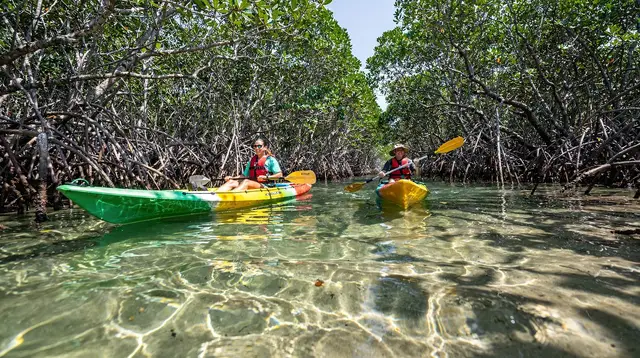
What you will actually see is grey-green mangrove foliage rising out of pale, sun-bleached mudflats and shallow turquoise-grey water, changing character with the tide and the light. It is a genuinely interesting, quietly beautiful stretch of coast on its own terms, worth visiting for the mangroves, the birdlife and the change of pace from Doha’s skyline, but it should be visited for what it is rather than for a colour it was never going to show you.
What Visitors Actually Do There
A visit to Purple Island usually combines two or three of the following, depending on the tour or on how you arrange your own trip:
- Kayaking through the mangrove channels. This is the main activity, paddling narrow, tide-fed creeks lined with mangrove roots, generally in a stable double or single kayak provided by a local operator.
- Walking on the exposed flats at low tide. When conditions allow, part of the route to or around the island can be covered on foot across firm sand and mud, useful for a closer look at crabs, small fish left in tidal pools, and the mangrove root systems themselves.
- Birdwatching. The mangroves are a feeding ground for herons, ospreys, and, in season, flamingos, along with a range of smaller shorebirds. Early morning tends to bring the most activity.
- A short stop on the island itself, where guides sometimes point out the dye-trade history behind the name, rather than any visual feature.
None of this involves museums, ticket booths, or built infrastructure; Purple Island is a natural site with essentially no development, which is part of its appeal after the density of central Doha.
Kayaking the Al Thakira Mangroves
Purple Island is usually described as one stop within the larger Al Thakira mangrove system rather than a separate destination with its own launch point. Most kayaking tours put in from the Al Thakira shoreline and paddle through the channels toward and around the island, rather than starting from the island itself. For a fuller picture of how the mangrove paddling works, including route options and what a typical session covers, see the dedicated Al Thakira mangrove kayaking guide.
Timing matters more here than at most Qatar attractions, because the channels are tidal: too low, and some routes become too shallow to paddle; too high, and some of the flats and root systems disappear underwater. Operators plan sessions around the tide tables, which is one of the practical advantages of booking a guided trip over arranging your own kayak and guesswork. For the mechanics of how tides affect a mangrove outing and how operators schedule around them, see mangrove kayaking tides and timing.
a guided kayaking session through the Al Thakira mangrove forest is the most direct way to experience the channels without arranging your own gear or navigation, and it typically routes past or around Purple Island as part of the paddle.
How Purple Island Fits Into a North Qatar Day
Because of its location near Al Khor, Purple Island is almost always visited alongside other north-Qatar stops rather than as a there-and-back trip from Doha on its own. The most common pairing is with Al Zubarah fort, the 18th-century walled pearling town and fort that is Qatar’s only UNESCO World Heritage Site, a further drive north-west from Al Khor. A full north-Qatar day typically looks like: mangrove kayaking or walking at Purple Island in the morning, lunch or a break in Al Khor, then Al Zubarah in the early-to-mid afternoon before the return drive to Doha.
For travellers planning this as a single day out from the capital, the one-day north Qatar itinerary covering Zubarah and the mangroves lays out a workable order and rough timings. A north Qatar day trip built around Al Khor town itself is a lighter alternative for travellers who want the coastal town and the mangroves without pushing on to the fort.
a full north-Qatar tour combining Purple Island with Al Zubarah fort covers both stops in one outing with transport included, which suits visitors without a rental car.
Tours That Include Purple Island
Several operators run Purple Island into broader north-Qatar or mangrove-focused itineraries. The table below compares the main options by focus and rough scope; exact durations and inclusions vary by operator and should be checked at booking.
| Tour focus | What it covers | Best for |
|---|---|---|
| Mangrove kayaking only | Al Thakira channels, paddle around Purple Island | Travellers who want the kayaking itself, minimal driving |
| Purple Island eco/culture tour | Walking, kayaking and the dye-trade history at the island | First-time visitors wanting context, not just paddling |
| North Qatar combo (Zubarah + Purple Island) | Mangroves plus Al Zubarah fort, sometimes Al Khor town | A single, efficient north-Qatar day |
| Private north Qatar tour | Custom pacing across Al Jassasiya, Al Zubarah and Purple Island | Groups or travellers wanting flexibility over a fixed schedule |
| Art and heritage combo | Purple Island and Al Zubarah paired with Olafur Eliasson’s public artwork near Doha | Visitors combining nature, heritage and contemporary art in one day |
a mangrove kayaking tour with a dedicated Purple Island stop is a good middle option between a pure paddling session and a full north-Qatar day trip.
For travellers who prefer a private pace rather than a fixed group schedule, a tour combining Al Zubarah fort, Al Khor, Purple Island and the Olafur Eliasson sculpture near Doha covers heritage, nature and public art in a single, longer day.
Practical Tips for Visiting Purple Island
- Footwear: closed water shoes are worth packing. The mud and shell fragments on the flats are not comfortable, or always safe, in bare feet or flip-flops.
- Sun protection: there is minimal shade around the mangroves. A hat, sunglasses and reef-safe sunscreen matter more here than the paddling itself.
- Tide-dependent planning: if arranging an independent visit rather than a guided tour, check tide times before setting out; a channel that is paddleable in the morning may be too shallow a few hours later.
- Water and heat: bring more drinking water than feels necessary, particularly outside the cooler season, since there is nowhere to buy anything once you are out on the mangrove flats.
- Combine, don’t isolate: given the drive involved, pairing Purple Island with Al Khor town or Al Zubarah fort makes far better use of the trip north than visiting it alone and driving straight back.
- Camera expectations: bring a camera for the mangroves, the birdlife and the light on the water, not in expectation of a purple landscape.
a round-trip tour from Doha covering Al Zubarah fort, Al Khor and Purple Island bundles transport, the fort ticket logistics and the mangrove stop into one booking, which removes most of the planning above for visitors who would rather not self-drive.
Best Time of Year and Day
Qatar’s cooler season, roughly November through March, is the more comfortable window for any outdoor activity that involves direct sun and open water, and Purple Island is no exception. Summer months from May to September bring extreme heat and humidity that make an extended kayak session or a walk across exposed flats genuinely uncomfortable, if not risky, in the middle of the day; an early-morning slot is the only sensible option in summer, if the trip is made at all.
Within the day, morning departures tend to offer calmer water, softer light for photography, and more active birdlife than a midday or afternoon session, regardless of season.
Purple Island and Al Thakira Mangroves FAQ
Why is Purple Island called Purple Island if it isn’t purple?
The name is tied to a historical account of shellfish-based dye production on the island, not to the colour of the landscape you see today. Visitors who arrive expecting violet cliffs or purple sand are looking for something that was never there; the island is grey-green mangrove and pale sabkha flats like the rest of the Al Thakira coast.
How do you get to Purple Island from Doha?
Purple Island sits off Al Khor and Al Thakira, roughly 50 km north of central Doha, about 45 to 60 minutes by road. There is no metro or tram service this far north, so most visitors go by rental car, taxi, or on an organised tour that includes transport.
Can you walk onto Purple Island, or do you need a kayak?
At low tide it is possible to walk out across the exposed flats to parts of the island, and organised tours often combine a short walk with time in a kayak. A kayak is the better way to see the mangrove channels themselves, since the deeper creeks stay water-filled regardless of tide.
Is Purple Island worth visiting if I only have one day in north Qatar?
It is one stop on a north-Qatar day that usually also includes Al Khor town and Al Zubarah fort, rather than a full-day destination on its own. Most visitors spend one to two hours at the mangroves and island before continuing to Al Zubarah or heading back to Doha.
What wildlife can you see around Purple Island?
The mangrove channels around Purple Island are a feeding ground for herons, flamingos in season, ospreys and other shorebirds, along with crabs and small fish visible in the shallow water. Sightings vary with season and tide, and early morning tends to be the most active time.
Do I need to book a guide, or can I kayak there independently?
Independent kayaking is possible for experienced paddlers who bring their own equipment, but most visitors go with a guided tour, since local operators know the tide-dependent channels, provide kayaks and safety gear, and usually combine the paddle with a stop at Al Zubarah or Al Khor.
What should I wear and bring for a Purple Island mangrove trip?
Wear quick-dry clothing that covers shoulders and knees, closed water shoes for muddy shallows, a hat and reef-safe sunscreen, and bring drinking water, since there is little shade once you are out on the water or the flats.
When is the best time of year to visit Purple Island?
The cooler months from roughly November to March are the most comfortable for kayaking and walking, with mild mornings and pleasant water conditions. Summer heat between May and September makes the exposed mangrove flats and open water uncomfortable for anything beyond an early-morning outing.
For the wider mangrove-kayaking picture beyond this one island, see the Al Thakira mangrove kayaking guide, and for combining the paddle with Qatar’s only UNESCO site, the north Qatar and Zubarah kayak combo lays out how the two fit into one day. Travellers building a broader trip can also check renting a car in Qatar for the self-drive option, or the general travel tips hub and best time to visit Doha for season-by-season planning across the whole country.
Kayaking in the Al Thakira Mangroves
Verified deep-linked GetYourGuide tours. Book through these links and we earn a small commission at no cost to you.
GetYourGuide does not provide a product photo for this activity — the image shows the meeting point, photographed by us.